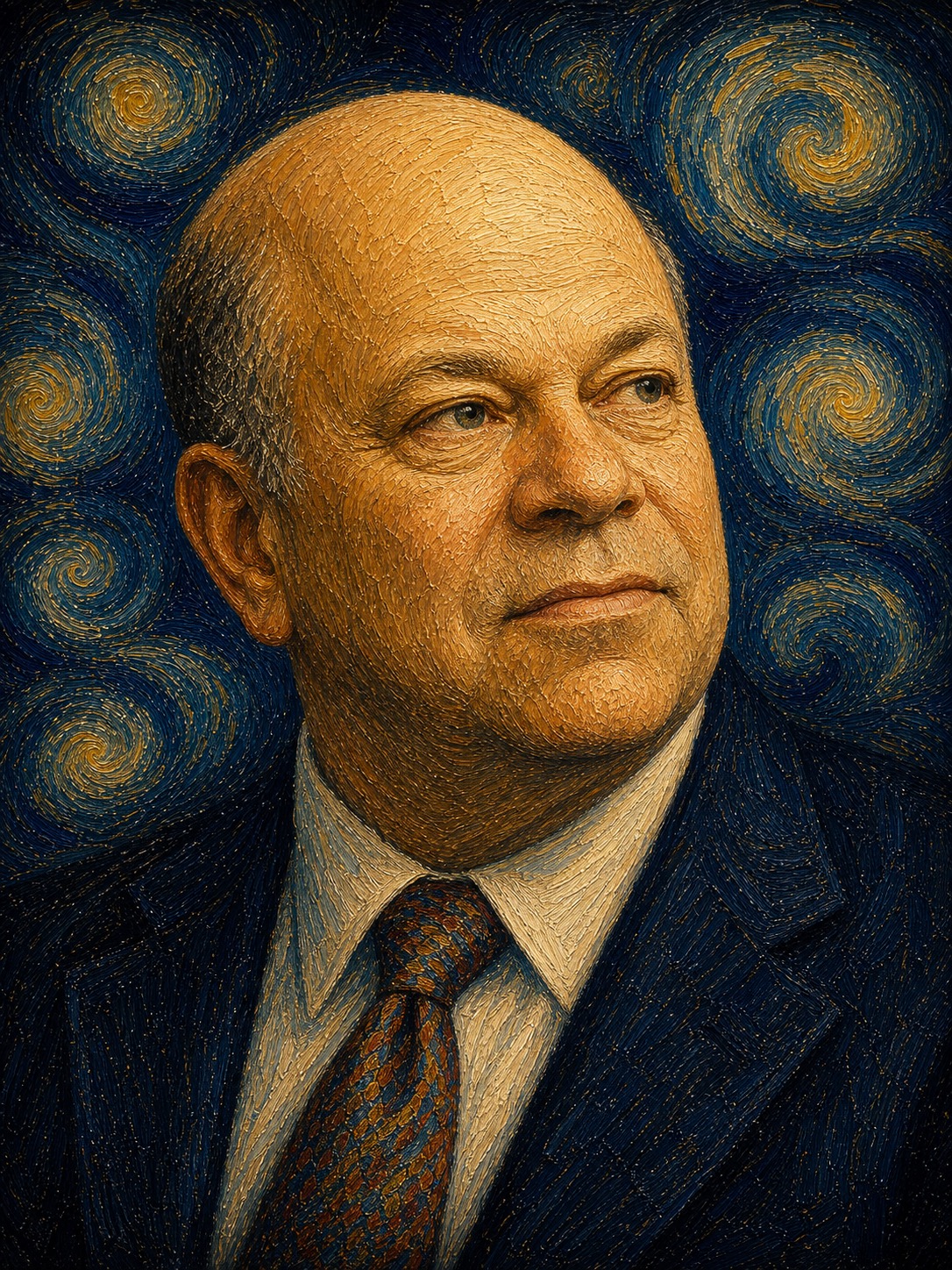
David Tepper
Turned credit-trained panic underwriting into a flexible Appaloosa playbook for buying mispriced policy optionality, while exposing non-transferable risks around legal process, 13F opacity, and regulator discretion.
As of 2026-06-25T10:21:07Z, David A. Tepper is alive and active. He remains publicly visible through Appaloosa LP filings, the Carolina Panthers and Charlotte FC, philanthropy, and a live 2026 Whirlpool activist campaign. This profile treats Appaloosa's private-fund return record as highly credible but not fully auditable from open primary documents.
Snapshot
| Field | Details |
|---|---|
| Born / died | Born September 11, 1957, Pittsburgh, Pennsylvania; living as of this profile's date (New York Magazine, 2010; CMU bio, 2025). |
| Nationality | American. |
| Education | BA economics, University of Pittsburgh, 1978; MSIA/MBA-equivalent graduate degree from Carnegie Mellon University's business school, 1982 (CMU bio, 2025; CMU gift announcement, 2004). |
| Main vehicles | Appaloosa Management / Appaloosa LP; historical Appaloosa Investment, Palomino Fund, Thoroughbred vehicles; current Appaloosa-managed/advised entities include Palomino Master Ltd. and Azteca Partners LLC in public filings (Bloomberg Markets, 2010; SEC Whirlpool Schedule 13D, 2026). |
| Years active | Credit/securities analyst and trader from early 1980s; Goldman Sachs high-yield desk from mid-1980s to 1992; Appaloosa founder from 1993 onward (New York Magazine, 2010; Institutional Investor, 2019). |
| Asset classes | Distressed debt, high yield, bank debt/preferreds, public equities, ETFs, special situations, activist equity, and crisis-policy trades. 13F filings capture only listed long U.S. securities, not shorts, credit, derivatives, cash, or non-U.S. holdings (SEC 13F cover, 2026). |
| Style tags | Distressed credit; event-driven; policy-backstop investing; concentrated opportunism; capital-structure arbitrage; late-career family-office flexibility. |
| Verified track record + period | Strong secondary sources report Appaloosa compounded at more than 25% net annually since its 1993 inception; New York Magazine reported 30% net annualized over the first 17 years. These are credible but not audited in open primary records, so the headline record is marked [secondary-source] (Institutional Investor, 2019; New York Magazine, 2010). |
| Peak AUM / current visible assets | Publicly reported AUM was about $12B in 2009, about $16.5B around early 2018, and $11.6B at year-end 2018 after capital returns and other reductions. Appaloosa's Q1 2026 13F listed 31 long positions worth $5.93B, but 13F value is not total AUM (Bloomberg Markets, 2010; Institutional Investor, 2019; SEC 13F cover, 2026). |
Life & Career Timeline
Tepper grew up in Pittsburgh's Stanton Heights neighborhood, the middle child of a public-school teacher and an accountant. New York Magazine's 2010 profile describes an early affinity for numbers, sports statistics, wisecracking, and risk; he began buying penny stocks in high school and worked his way through college before entering finance (New York Magazine, 2010). Carnegie Mellon later summarized the formal path: BA in economics from the University of Pittsburgh in 1978, graduate business degree from CMU in 1982, then a finance career that made him one of the school's signature alumni (CMU bio, 2025).
After business school, Tepper worked in corporate treasury and credit roles before joining Goldman Sachs's high-yield group. The important apprenticeship was the distressed and junk-bond desk: Goldman was late to high yield, the 1987 crash and late-1980s credit stress created broken securities, and Tepper's job trained him to look at capital structures under duress. New York Magazine reports that he helped Goldman by buying underlying bonds of damaged financial institutions and expected partnership, but his personality and internal politics worked against him; after being passed over, he left in 1992 (New York Magazine, 2010).
In 1993, Tepper started Appaloosa with backing from Jack Walton after trading from a desk lent by Michael Price. Appaloosa began as a distressed-debt and high-yield boutique. Its early edge was not a "quality compounder" mindset; it was willingness to buy legally senior or recovery-sensitive claims when conventional investors were fleeing. The strategy produced feast-or-famine years: the Russia 1998 loss-and-recovery cycle, the 2002 junk-bond collapse followed by a 2003 rebound, and later crisis-era bank securities (New York Magazine, 2010; Institutional Investor, 2004).
The 2009 financial-crisis trade made Tepper a public investing celebrity. Bloomberg Markets reported that Appaloosa bought banks, preferred shares, debt, and AIG-linked securities while nationalization fears were intense; the flagship fund returned 117.3% for the nine months ended September 30, 2009, and the firm gained $6.5B through that date after a 2008 drawdown (Bloomberg Markets, 2010). New York Magazine later framed the same episode as a bet that the U.S. government would follow through on bank support rather than wipe out private investors (New York Magazine, 2010).
The late-career arc is a move away from outside-capital hedge-fund scale toward personal-capital flexibility. Institutional Investor reported in 2019 that Appaloosa planned to return outside capital and eventually become a family office, after years of returning capital to keep the opportunity set manageable (Institutional Investor, 2019). Separately, Tepper bought the Carolina Panthers for a reported $2.275B in 2018, after previously holding a minority stake in the Pittsburgh Steelers (NFL.com, 2018; Panthers, 2018).
Philanthropy became part of the public biography. Carnegie Mellon reported a $55M 2004 naming gift to the business school and a later $67M gift toward the Tepper Quadrangle, bringing his CMU commitments above $125M by 2013 (CMU, 2004; CMU, 2013). Charlotte FC's 2026 philanthropy release reported that TIME named Tepper to its 2026 philanthropy list and that he had contributed more than $529M to three giving vehicles the prior year, according to the Chronicle of Philanthropy (Charlotte FC, 2026).
Vehicles & Structure
The investable Tepper record belongs primarily to Appaloosa, not to a public operating company. Bloomberg Markets identified four funds and separate accounts in 2009: Appaloosa Investment, Palomino Fund Ltd., and offshore/onshore Thoroughbred vehicles, with $12B under management across funds and accounts at that time (Bloomberg Markets, 2010). The exact vehicle-by-vehicle record is not fully public, and later press accounts often blend flagship, firmwide, and personal-capital outcomes.
The current public legal structure visible in SEC filings is Appaloosa LP and related entities. The Q1 2026 Form 13F lists Appaloosa LP as the institutional investment manager, Michael L. Palmer as CFO/signatory, 31 reportable long entries, and $5,933,477,986 of 13F value for the quarter ended March 31, 2026 (SEC 13F cover, 2026). The holdings table shows a modern long book led by Amazon, Micron, Alphabet, Uber, Taiwan Semiconductor, Alibaba, Vistra, Nvidia, and Whirlpool, but that is only the SEC-reportable long equity sleeve (SEC 13F information table, 2026).
The 2026 Whirlpool Schedule 13D is useful because it shows how Tepper sits atop the reporting chain in a live activist situation. It identifies Appaloosa LP, Azteca Partners LLC, Palomino Master Ltd., Appaloosa Capital Inc., and David A. Tepper as reporting persons, with Tepper signing as president of Appaloosa Capital Inc. and as an individual. It reports 3,190,207 Whirlpool shares, or 4.9%, on the filing date, and the legal-proceedings disclosure checkbox for Tepper and the reporting persons is not checked (SEC Schedule 13D, 2026).
The capital base changed materially after 2018. Institutional Investor reported Appaloosa at $11.6B of AUM at year-end 2018, down from $16.5B roughly a year earlier, with the decline driven by capital returns, taxes, Tepper's Panthers purchase, and some redemptions rather than solely by investment losses (Institutional Investor, 2019). The same outlet reported that Appaloosa had returned capital in eight of the prior nine years and preferred to maximize returns on Tepper's own capital rather than asset-gathering fees (Institutional Investor, 2019).
Track Record Detail With Caveats
The headline record is extraordinary, but it needs precise labels. Institutional Investor reported in 2019 that Appaloosa had compounded at more than 25% annually net of all fees since inception in 1993; New York Magazine reported 30% net annualized over the first 17 years; Bloomberg Markets reported 30.7% average return to investors for the flagship in its 2010 profile package (Institutional Investor, 2019; New York Magazine, 2010; Bloomberg Markets, 2010). These numbers are directionally consistent, but they are not a public audited monthly return series, so later tasks should keep the [secondary-source] caveat unless original investor letters or audited performance schedules are found.
The open record is strongest around drawdowns followed by explosive rebounds. Institutional Investor reported Appaloosa Investment I up 67% in 2001, down 25% in 2002, and up 149% in 2003, with Conseco and Marconi among the winners (Institutional Investor, 2004). New York Magazine independently describes the same 2002-2003 pattern as a junk-bond collapse followed by a rebound in bankrupt-company bonds (New York Magazine, 2010).
The best-documented single cycle is 2008-2009. Bloomberg Markets reported that Appaloosa Investment LP I fell 26.7% in 2008, then returned 117.3% for the nine months ended September 30, 2009; firmwide gains were $6.5B through that date. New York Magazine later reported Appaloosa made more than $7.5B in the 2009 panic-to-recovery trade, while other sources use roughly $6.5B-$7B depending on period and measurement. The conservative profile statement is that Appaloosa's crisis trade made about $6.5B-$7.5B firmwide in 2009 and turned a prior-year drawdown into one of the hedge-fund industry's defining wins (Bloomberg Markets, 2010; New York Magazine, 2010).
There are also caveats. In 2010, the SEC found that Appaloosa Management violated Rule 105 in connection with short sales before a Wells Fargo public offering, ordered disgorgement, interest, a civil penalty, and compliance undertakings; Appaloosa settled without admitting or denying the findings except jurisdiction (SEC order, 2010). In Washington Mutual, a bankruptcy-court opinion found colorable claims around trading while receiving restructuring information, but the opened record does not show a final liability finding against Tepper personally; Appaloosa denied wrongdoing in contemporaneous reporting (Delaware Bankruptcy Court, 2011; Business Insider, 2011). In 2024-2026, Appaloosa-linked entities pursued Credit Suisse AT1 litigation; Bloomberg Law reported in March 2026 that securities-fraud claims could proceed while racketeering claims were insufficiently pleaded, which is a live litigation milestone, not a merits finding (Swissinfo/Bloomberg, 2024; Bloomberg Law, 2026).
Why They Matter
Tepper belongs in the Canon because he is one of the clearest examples of credit-trained crisis investing at public-market scale. He did not build his record by buying great businesses and waiting. He built it by asking whether a broken security's implied disaster was too severe, whether a legal or policy mechanism could change the distribution of outcomes, and which part of the capital structure offered the best asymmetry.
The practical contribution is threefold. First, he shows that a distressed investor can cross asset classes without abandoning a core method: downside first, catalyst second, sizing third. Second, he shows that temperament can be an edge if it is paired with evidence. Buying bank securities in early 2009 required social and emotional tolerance for looking wrong, but the trade worked because it was tied to Treasury terms and conversion math, not just bravado. Third, he demonstrates that capital structure matters as much as stock selection. Appaloosa could buy common, preferred, bank debt, distressed bonds, or later activist equity depending on where panic was most mispriced.
The caution is equally important. Tepper's method can confuse policy incentive with policy guarantee; Russia 1998 and Credit Suisse AT1s are reminders that governments and regulators can change outcomes in ways spreadsheets do not control. The public cannot safely copy Appaloosa's 13F because the filing omits shorts, credit, hedges, cash, derivative overlays, cost basis, and intraperiod trading. The transferable lesson is process, not cloning.
Open Questions for Later Tasks
- Find original Appaloosa investor letters or audited performance schedules for inception-to-date returns; current 25%+ and 30% compounding figures are strong secondary-source claims, not open audited records.
- Reconstruct vehicle-level returns by year for Appaloosa Investment, Palomino, and Thoroughbred rather than blending flagship, firmwide, and Tepper personal-capital results.
- Verify the precise founding capital and early AUM path from primary documents; open secondary accounts cite $57M starting capital and rapid growth, but primary sourcing is still needed.
- Page-check book treatments and long-form profiles for the Goldman exit, the Michael Price desk period, and Jack Walton's role in Appaloosa's launch.
- Track the Whirlpool activist campaign, including any amended 13D, settlement, board action, exit, or P&L outcome.
- Track Palomino Master Ltd. v. Credit Suisse / AT1 litigation beyond the March 2026 threshold ruling.
- Identify original CNBC or video-source material for Tepper's 2010 Squawk Box comments and replace transcript-carrier citations where possible.
- Separate Tepper's investment record from sports-team ownership controversies and philanthropy; the latter matter to public biography, but not all are investment-process evidence.
As of 2026-06-25, this Task B file was researched while T0146 (A-profile) was freshly claimed but no David Tepper folder content was yet committed on main. This document therefore includes enough vehicle and status context to make the philosophy usable, while leaving full biography and track-record reconstruction to the profile task.
Core Worldview
David Tepper's investing philosophy is best understood as credit-trained opportunism: start with the downside claim, ask what the market is assuming about institutional failure, and then buy the security whose price most overstates that failure. The method grew out of distressed debt and high yield, but it is not limited to bonds. Appaloosa's observable record includes distressed bank debt and preferreds, common equities, options and ETFs, international equities, and activist equity situations. The 2026 Form 13F shows a concentrated public-equity book with 31 reportable long positions and about $5.93 billion of listed 13F value as of March 31, 2026, led by Amazon, Micron, Alphabet, Uber, Taiwan Semiconductor, Alibaba, Vistra, Nvidia, and Whirlpool (SEC 13F cover, 2026; SEC 13F information table, 2026).
The worldview is not "buy cheap" in a static Graham sense. Tepper's recurring question is: what has to be true for the market's panic price to be wrong, and is the relevant authority, balance sheet, or restructuring process likely to make that true? In 2009, Bloomberg Markets reported that Appaloosa bought deeply marked-down financial-company securities after the Treasury's Capital Assistance Program made nationalization less likely and after conversion terms implied upside to common shares (Bloomberg Markets, 2010). New York Magazine framed the same trade as a bet that government would keep its explicit bank-support promise, not as a heroic forecast of a clean economy (New York Magazine, 2010).
That distinction matters. Tepper is a "policy plus price" investor when policy is the clearing variable, and a "distress plus recovery value" investor when bankruptcy, restructuring, or fear is the clearing variable. In his 2010 CNBC appearance, carried in a transcript mirror, he argued that quantitative easing could support risk assets if the economy did not recover on its own, while warning that endless QE would be unhealthy (CNBC transcript carrier, 2010). In 2024 he again linked a macro policy shift to tradable securities, arguing that Chinese stimulus, buyback encouragement, and low valuation multiples made Chinese equities unusually attractive (Markets Insider, 2024).
The Edge - What Markets Misprice and Why
Tepper's edge is the combination of credit work, willingness to concentrate during institutional fear, and a trader's sense for policy reaction functions. Markets misprice three things in his playbook.
First, forced sellers and institutional fear can drive viable claims below recovery value. Appaloosa's 2009 bank trade is the canonical example: shares and preferreds were being priced as if nationalization or wipeout was probable, while policy documents and conversion mechanics pointed to a less catastrophic path (Bloomberg Markets, 2010). The same logic appears in the 2010 New York Magazine account of earlier distressed wins in Enron, WorldCom, Conseco, Russian debt, and PG&E-type situations: securities looked toxic because the headlines were toxic, but the investable question was the recovery path, not the stigma (New York Magazine, 2010).
Second, investors can underprice official-sector incentives. Tepper's famous "don't fight the Fed" stance is not blind bullishness; it is a belief that liquidity and policy backstops change the distribution of outcomes. In 2025, he said he did not love equity multiples but would not fight the Fed while rate cuts were still expected; at the same time, he warned that too much easing could move into "danger territory" through inflation, weaker currency, or bubbles (MarketWatch, 2025). The edge is judging when policy support is real enough to own risk, and when policy excess itself becomes the risk.
Third, markets can misprice governance and capital-allocation failure. Appaloosa's 2026 Whirlpool campaign shows Tepper applying distressed logic to a live public-equity situation. The SEC Schedule 13D reported 3,190,207 Whirlpool shares, about 4.9% beneficial ownership, and identified Appaloosa LP as adviser to Palomino and managing member of Azteca, with Tepper controlling Appaloosa Capital Inc. and owning a majority of Appaloosa LP limited partnership interests (SEC Schedule 13D, 2026). The public letter criticized Whirlpool's equity issuance as high-cost dilution, argued that management had failed to use tariff-driven strategic options, and explicitly tied the analysis to fiduciary duty and shareholder value (Appaloosa letter, 2026).
Process: Idea Sourcing to Sell Discipline
Idea sourcing. Tepper's ideas usually begin in broken places: bankruptcy, distressed credit, post-crisis financials, countries receiving policy support, sectors where investors are overreacting to macro fear, or companies whose capital allocation looks self-defeating. His edge is not a proprietary screen so much as a habit of looking where other capital is constrained or embarrassed. The Bloomberg 2010 profile describes bank securities bought amid panic, while New York Magazine emphasizes that the trade required ignoring consensus fear when the key government documents had changed the odds (Bloomberg Markets, 2010; New York Magazine, 2010).
Research. The research process appears credit-first even when the instrument is equity. Tepper asks what the security is worth under multiple legal, policy, and liquidity outcomes. In the bank trade, that meant reading Treasury terms, conversion prices, and the nationalization scenario. In Whirlpool, it meant comparing the cost of newly issued equity with the trading cost of the company's debt, then asking whether strategic combinations could create value (Appaloosa letter, 2026). In China, it meant connecting Fed cuts, Chinese central-bank rhetoric, liquidity support, buybacks, and valuation multiples rather than merely saying "China is cheap" (Markets Insider, 2024).
Valuation and entry. Tepper's entry discipline is asymmetry plus catalyst. Price alone is insufficient; the mispricing needs an event, policy shift, restructuring, or sentiment reversal that can unlock it. His public comments often sound casual, but the entries are grounded in a specific "why now." In 2010, the why-now was the Treasury's public support architecture. In 2024 China, it was a package of monetary easing, liquidity support, buybacks, and explicit official willingness to do more. In 2026 Whirlpool, it was dilution and strategy failure that created both a grievance and a campaign hook.
Sizing and portfolio construction. Tepper's sizing is opportunistic and sometimes very large. Reuters reported in 2019 that Appaloosa had compounded at about 25% per year for more than a quarter century and managed about $13 billion [single-source for the $13B figure], while also noting Tepper's plan to return outside capital and focus on personal capital (Reuters via Investing.com, 2019). Institutional Investor reported that Appaloosa had long returned capital to investors to avoid asset bloat, and that since inception it had compounded at more than 25% net of fees (Institutional Investor, 2019). The practical implication is that Tepper treats capacity as part of edge. A giant asset base makes panic trades harder to execute and harder to exit.
Sell discipline. Tepper's sell discipline is less publicly codified than his buy logic, but the evidence suggests three exit rules. Exit when the panic discount closes, when policy support is already priced, or when the risk/reward has migrated elsewhere. Institutional Investor described Appaloosa running large cash balances and underexposed equity when visibility was poor in 2018-2019, while 13F data show large public-equity exposure can later reappear when Tepper sees a better setup (Institutional Investor, 2019; SEC 13F information table, 2026). The sell rule is therefore not "hold forever"; it is "own the spread between panic and normalization until the spread is gone or the facts change."
Risk Management
Tepper's risk management starts with capital flexibility. Appaloosa has repeatedly returned capital, and by 2019 was planning to become a family office, which reduces redemption pressure and fee-business incentives (Reuters via Investing.com, 2019; Institutional Investor, 2019). This is not cosmetic. The strategy often requires buying when marks are ugly, headlines are hostile, and liquidity is uncertain. Permanent or patient capital is a risk-control tool.
Second, he manages risk by avoiding excessive structural leverage, at least as described in public comments. The 2010 CNBC transcript carrier has Tepper discussing returns and the difficulty of maintaining a record, while Business Insider's contemporaneous live-blog summary noted his claim that Appaloosa did not use leverage in its funds (CNBC transcript carrier, 2010; Business Insider, 2010). This should be treated as an interview-based claim, not audited leverage disclosure, but it fits the broader evidence: Tepper prefers large mispriced claims over mechanical leverage.
Third, he distinguishes "bad looking" from "bad." That is not the same as ignoring drawdown risk. Russia in 1998 cost the fund hundreds of millions before recovering, according to New York Magazine [single-source for the loss magnitude], which makes the method look both resilient and dangerous (New York Magazine, 2010). The risk control is not avoiding pain; it is underwriting whether the pain is survivable, whether the thesis has improved or broken, and whether capital is still available to add at better prices.
Fourth, the WaMu controversy shows a legal and process risk specific to distressed investing. Jones Day's summary of the 2011 Washington Mutual bankruptcy decision explains that the court allowed an equity committee to pursue a colorable insider-trading/equitable-disallowance claim against settlement noteholders after confidential restructuring negotiations, while staying prosecution pending mediation (Jones Day, 2011). This file should not overstate the point as a finding of securities-law liability against Tepper personally; it is a warning that distressed investors operating inside restructurings face information-barrier and temporary-insider risks.
Temperament and Psychology
Tepper's temperament is the strategy. The public persona is blunt, irreverent, and conflict-tolerant. In his 2018 Carnegie Mellon commencement speech, he opened by warning that a polished, proper speech was "not going to happen," then emphasized adversity, work, and the professional value of his CMU training (CMU transcript, 2018). New York Magazine's profile presents the same trait in market form: he tries to "drown out the noise" and focus on important facts during panic (New York Magazine, 2010).
The constructive side of that psychology is independence under stress. He is willing to be publicly wrong-looking before he is right. The dangerous side is confidence. Marc Lasry told New York Magazine that Tepper succeeds because he believes he is the exception, which is a powerful trait until the exception stops being true (New York Magazine, 2010). His philosophy therefore requires not only courage but evidence discipline; otherwise the same personality that buys banks in 2009 can rationalize a broken thesis.
Evolution Over Career
Tepper began as a credit analyst and distressed/high-yield trader, and Appaloosa's earliest identity was distressed debt. By the 2000s, the playbook expanded into equities tied to bankruptcy and policy recovery. By 2009, he had fused distressed credit with macro-policy interpretation. By the 2010s and 2020s, the public evidence shows a more flexible family-office-style book: large technology platforms, China stimulus, power/AI beneficiaries, Korea ETFs, options/puts in prior filings, and activist governance pressure at Whirlpool (SEC 13F information table, 2026; SEC Schedule 13D, 2026).
The biggest structural evolution is capital base. Appaloosa moved from outside-client hedge fund to a firm intending to return outside capital and manage Tepper's personal fortune (Reuters via Investing.com, 2019). That makes the philosophy less constrained by monthly or quarterly client optics, but also less externally legible. Later 13Fs show the public long book, not the full portfolio, shorts, credit, cash, swaps, or international positions.
What He Explicitly Rejects
Tepper rejects paralysis by macro doom. In 2010, he argued against both hyperinflation and depression/deflation extremes and emphasized adaptation rather than apocalyptic extrapolation (New York Magazine, 2010). He also rejects fighting a powerful central bank when liquidity is still supportive, even when valuations are uncomfortable (MarketWatch, 2025).
He rejects asset-gathering for its own sake. Institutional Investor reported Appaloosa's repeated capital returns and preference for staying small enough to maximize returns rather than management fees (Institutional Investor, 2019). He rejects managerial entrenchment when it destroys shareholder value, as the Whirlpool letter makes explicit (Appaloosa letter, 2026).
What he does not reject is risk. Tepper's philosophy rejects uncompensated risk, stale consensus, and timid sizing when the evidence and price line up. That is very different from conservative investing.
Regimes Where It Thrives vs. Struggles
The strategy thrives in crisis aftermaths, restructuring waves, policy inflections, and ugly sectors where investors are forced to sell. It also thrives when valuation, policy, and liquidity all point in the same direction, as in the 2009 bank trade and Tepper's 2024 China argument. It can work in activist situations where a balance-sheet or capital-allocation error creates a discrete campaign path, as Whirlpool illustrates.
It struggles in slow, grinding, valuation-rich markets without clear catalysts. It can also struggle when policy is not actually supportive, when the investor misreads sovereign or legal willingness, or when a cheap security is cheap because the recovery value is illusory. The 1998 Russia episode, as summarized by New York Magazine, is the clean warning: a government that "should" avoid default still can default (New York Magazine, 2010). The 2025 Fed comments show Tepper's own recognition that liquidity support can become dangerous if it reignites inflation or bubbles (MarketWatch, 2025).
Tensions Between Stated Philosophy and Actual Behavior
The first tension is between "obvious" facts and genuinely uncertain policy outcomes. Tepper's great trades often look obvious in hindsight, but the world can refuse to cooperate. Russia 1998 and the WaMu process risk both show that distressed investing is partly a legal and political game, not just valuation.
The second tension is between flexibility and style drift. Appaloosa's modern 13F has large exposures to mega-cap technology, semiconductors, China ADRs, energy/power, and Whirlpool. That may be a rational extension of the same opportunistic method, but it is not the pure distressed-debt shop suggested by Tepper's reputation (SEC 13F information table, 2026).
The third tension is between blunt activism and governance humility. The Whirlpool letter is analytically precise about dilution and cost of capital, but public campaigns can mix investment judgment with temperament. The same forcefulness that lets Tepper buy into panic can become a liability if it turns a debate into a personality contest.
Finally, the post-2019 family-office transition improves patience but reduces transparency. For individual investors, the transferable lesson is not to copy Appaloosa's 13F. It is to copy the sequence: identify forced selling or policy inflection, underwrite downside first, demand a catalyst, size only when the asymmetry is exceptional, and exit when the panic discount has normalized.
As of 2026-06-25T13:30:43Z, David A. Tepper is alive and active. This stale-claim retry was completed after the David Tepper profile and investment-philosophy files had landed on main. The trade write-up therefore leans on public filings, long-form profiles, press reports, court materials, and the Task A/B source maps because Appaloosa's investor letters and full position ledgers are not public. Tepper personally signed Appaloosa's March 2026 Whirlpool Schedule 13D, and that filing reported no recent criminal proceeding or securities-law injunction for the reporting persons.
Evidence Notes and Ranking Method
The strongest evidence is for Appaloosa's 2009 financials trade and the 2002-2003 distressed-credit rebound. Those trades are covered by multiple independent sources and have fund-level return figures, even though the underlying investor letters and full position ledgers are not public. Later trades have cleaner SEC position data but weaker realized-P&L evidence because Appaloosa is now largely a family-office-style vehicle and 13F reports reveal only listed long positions after quarter-end.
Ranking below uses: absolute P&L, percentage return, evidence quality, difficulty of the path, and transferability of the lesson. Figures that are not independently triangulated are labeled single-source or press-reported.
Retry verification note: additional searches during this run did not find a completed public exit for the 2026 Whirlpool campaign or a public realized-P&L bridge for the 2024-2026 China basket. Those positions remain filing-backed open evidence rather than completed "greatest trade" wins.
Ranked Trade Map
| Rank | Trade / cycle | Dates | Evidence confidence | Why it matters |
|---|---|---|---|---|
| 1 | U.S. financials panic: banks, preferreds, debt, AIG, WaMu/Wachovia | Late 2008-2009 | High for fund returns and broad securities; medium for security-level P&L | Single best Tepper trade by dollars and reputation. |
| 2 | 2002-2003 distressed bankruptcy debt: Conseco, Marconi, Enron, WorldCom | 2002-2003 | High for fund return; medium for security-level P&L | Classic credit-cycle bottom after a -25% drawdown. |
| 3 | 2001 California utilities distress: PG&E / Edison-linked recovery | 2001 | Medium-low; security details are mostly secondary-source | Shows Tepper's public-interest/policy backstop playbook before 2009. |
| 4 | Russia sovereign debt loss-and-recovery | 1998-1999 | Medium for path; weak for exact P&L | Not a clean win, but essential for understanding drawdown tolerance. |
| 5 | 2010 QE2 / risk-asset policy trade | 2010 | Medium; return data from secondary reports | A macro-policy trade that extended the 2009 lesson. |
| 6 | China stimulus equity basket | 2024-2026 | High for positions; incomplete for realized P&L | Modern example with primary 13F evidence but open exit math. |
| 7 | Whirlpool activist equity campaign | 2026-open | High for position and cost; no outcome yet | Live governance trade, not yet a completed greatest trade. |
1. The Single Best Trade: 2009 U.S. Financials Panic
Context and dates. The trade began in late 2008 and accelerated in February-March 2009, when investors feared nationalization or wipeout across U.S. banks and insurers. Bloomberg Markets reported that Appaloosa bought financial-company securities after Treasury's bank-support framework changed the nationalization odds, and that Bank of America and Citigroup shares rebounded 330% and 223%, respectively, from February 28 through September 2009 (Bloomberg Markets, 2010). The Guardian's December 2009 account independently described the same bet as a wager that Citigroup and Bank of America would survive without nationalization (Guardian, 2009).
Thesis and discovery. Tepper's key read was that policy documents and conversion terms made outright nationalization less likely than market prices implied. Bloomberg reported that the preferred-share conversion prices embedded in the government's bank support were above then-market common stock prices, making the common look severely underpriced if the government intended private-market recovery rather than wipeout (Bloomberg Markets, 2010).
Size and structure. This was a capital-structure trade, not just a common-stock punt. Bloomberg says Appaloosa owned common and preferred shares plus junior subordinated debt across Bank of America, Citigroup, Fifth Third, SunTrust, AIG, Washington Mutual, and Wachovia-related securities, with peak exposure of about 30% of Appaloosa assets across financial companies (Bloomberg Markets, 2010). Institutional Investor later summarized Tepper's method as moving around bonds, preferreds, bank debt, and equity to find the best value within the capital structure (Institutional Investor, 2010).
Entry and path. Entry occurred while prices and confidence were still falling. Business Insider wrote in December 2009 that Tepper instructed traders to buy when nationalization fears were intense and that he was told at one point he was nearly alone among major buyers (Business Insider, 2009). The path included the prior year's damage: Appaloosa Investment I had dropped 26.7% in 2008 before the 2009 snapback (Bloomberg Markets, 2010).
Exit and P&L. The headline figures differ by measurement date. Bloomberg reported Appaloosa Investment I up 117.3% for the nine months ended September 30, 2009, and the firm up $6.5 billion through that date. Business Insider and The Guardian reported roughly $7 billion of 2009 profits by December, with Tepper's personal take estimated around $2.5 billion in those contemporaneous accounts (Bloomberg Markets, 2010; Business Insider, 2009; Guardian, 2009). Institutional Investor later put Tepper's 2009 personal earnings near $4 billion including gains on his own capital and fees, while reporting Appaloosa Investment I's 2009 net return as 133% and Palomino's as 129% (Institutional Investor, 2010). The best conservative statement is: Appaloosa made roughly $6.5-$7 billion in 2009 from the financials-led crisis trade, with the flagship fund returning about 117%-133% depending on source and measurement period.
What it teaches. Tepper's greatest trade was not simply contrarian courage. It combined credit analysis, policy interpretation, capital-structure flexibility, and the willingness to size heavily when the downside scenario became less likely than the market price implied.
2. AIG, WaMu, and Wachovia: The Crisis Trade's Credit Sleeves
Context and dates. These were part of the same 2008-2009 financials complex, but they deserve separate treatment because they show Tepper working below the common stock. Bloomberg says Appaloosa bought Washington Mutual and Wachovia bonds and preferreds in late 2008 at about 20 cents on the dollar, then bought AIG debt in early 2009 at about 10 cents on the dollar (Bloomberg Markets, 2010).
Thesis and discovery. The thesis was that securities above common equity could recover sharply if acquirers, government support, or restructuring outcomes kept the institutions alive. Wachovia's sale to Wells Fargo and JPMorgan's acquisition of WaMu assets improved recovery expectations. AIG debt similarly offered a security where survival, not a clean business turnaround, was the main underwriting question.
Size and structure. Exact position size by security is not public. Bloomberg gives the best structure detail: preferreds, bonds, and debt bought at distressed cents-on-the-dollar prices, within a broader financials allocation that peaked near 30% of assets (Bloomberg Markets, 2010).
Entry and path. These entries happened amid an unstable policy environment. WaMu had failed, Wachovia required a rescue transaction, and AIG had received extraordinary government support. The drawdown risk was not a mark-to-model inconvenience; a wrong legal or policy outcome could have meant deep impairment.
Exit and P&L. Bloomberg reports Wachovia preferreds doubled after the Wells Fargo transaction and AIG bonds bought around 10 cents traded near 61 cents by December 2009. Security-level dollar profit is not disclosed, so this is a high-confidence multi-bagger price path but not a fully auditable P&L line (Bloomberg Markets, 2010).
What it teaches. The credit sleeves show why Tepper is dangerous in a panic: he can choose the part of the capital structure where market fear is maximal but survival upside is still large.
3. 2002-2003 Bankruptcy Debt Rebound: Conseco, Marconi, Enron, WorldCom
Context and dates. The junk-bond market broke badly in 2002. New York Magazine reports Appaloosa lost 25% that year, then rebounded the next year when bankrupt-company debt Tepper had bought appreciated about 150% (New York Magazine, 2010). Institutional Investor independently reports Appaloosa Investment I fell 25% in 2002 and returned 149% in 2003, net of fees (Institutional Investor, 2004).
Thesis and discovery. The trade was a classic distressed-credit bottom. Tepper bought debt in companies whose headlines were toxic but whose bankruptcy recoveries could be materially better than market prices implied. Institutional Investor names Conseco bonds and Marconi debt as the biggest winners. New York Magazine adds Enron, WorldCom, and Conseco as then-largest bankruptcies whose debt appreciated after emergence or restructuring progress (Institutional Investor, 2004; New York Magazine, 2010).
Size and structure. Exact position sizes are not public. The best size proxy is fund-level: Appaloosa had about $2.8 billion under management at year-end 2003 after returning about $1.3 billion to investors, including more than $800 million at year-end, according to Institutional Investor (Institutional Investor, 2004).
Entry and path. Tepper entered during the 2002 collapse, not after the turn was visible. The path required enduring a -25% fund year. The reward came in 2003 as distressed and junk markets recovered; the Wall Street Journal reported in August 2003 that Appaloosa was up 76% for the year and highlighted Marconi, where Appaloosa owned a reported 14% equity stake after the restructuring path (Wall Street Journal, 2003).
Exit and P&L. New York Magazine says the 2003 rebound drove a 148% fund return and that Tepper personally took home about $500 million, then his personal best (New York Magazine, 2010). Institutional Investor's 149% fund-return figure corroborates the scale, though not the exact personal-payout math (Institutional Investor, 2004).
What it teaches. The trade was not about forecasting a normal economy. It was about buying claims whose legal and recovery values had become detached from panic prices, while preserving enough capital and investor patience to survive the bad year before the good one.
4. 2001 California Utilities: PG&E and Edison-Linked Distress
Context and dates. During the California power crisis, utility credits and equities were distressed by political, regulatory, and liquidity uncertainty. Institutional Investor reports Appaloosa Investment I surged 67% in 2001, then fell 25% in 2002 (Institutional Investor, 2004).
Thesis and discovery. The published trade detail is thinner here. Hedge Fund Alpha and a recycled early profile report that Tepper bought PG&E and Edison-linked securities when the companies were near bankruptcy and their credit ratings had fallen to junk, expecting that essential-service politics and regulatory action would prevent a total wipeout (Hedge Fund Alpha, 2014; Moneymunch, 2011). Because these sources appear to share lineage, the security-level details should be treated as single-source until an investor letter, 13F, or contemporaneous newspaper report is found.
Size and structure. Not disclosed. The account says Tepper bought millions of shares in the low teens and sold in the mid-twenties, but this is not independently verified and should remain marked single-source (Hedge Fund Alpha, 2014).
Entry and path. The trade required buying when bankruptcy and political intervention were live risks. Unlike the 2009 bank trade, where federal support became the explicit catalyst, the utility trade depended on a state/regulatory solution around essential-service providers.
Exit and P&L. Fund-level 2001 return is corroborated by Institutional Investor at 67%. Security-level P&L is unverified beyond the repeated secondary account (Institutional Investor, 2004).
What it teaches. This was an early form of Tepper's policy-backstop trade: buy when the market prices failure, but only where the social or political cost of failure makes support plausible.
5. Russia 1998: Worst Trade, Then Recovery Discipline
Context and dates. In 1998, Tepper bought Russian debt before Russia devalued and defaulted. New York Magazine reports the default cost the fund hundreds of millions, but that Tepper kept buying cheaper bonds and the fund later rose 60% (New York Magazine, 2010). In a 2010 CNBC transcript carrier, Tepper identified Russia 1998 as his worst trade and said the error was assuming Russia might devalue but should not default after receiving IMF support (CNBC transcript carrier, 2010).
Thesis and discovery. The thesis was policy and sovereign rationality: Russia had incentives and international support not to default. The flaw was assuming that a sovereign would behave as the spreadsheet implied.
Size and structure. Exact security sizes are not public. The loss was large enough to dominate the fund year and force liquidity decisions in other emerging-market and high-yield holdings, according to Tepper's CNBC recollection and New York Magazine's reporting (CNBC transcript carrier, 2010; New York Magazine, 2010).
Entry and path. This was the ugliest path among the trades in this file. Tepper was too long and could not exit the Russian securities at acceptable prices. The later recovery came from adding or holding when prices were lower, but the initial underwriting error was real.
Exit and P&L. The available sources support a loss followed by a strong rebound, not a clean audited P&L. Treat the 60% recovery figure as profile-reported and the exact hundreds-of-millions loss as single-source. It belongs in a greatest-trades file only because it became part of Tepper's later crisis muscle memory; it also belongs in the mistakes file.
What it teaches. Policy support is not policy control. This trade foreshadows the 2009 success while warning that sovereign and legal outcomes can break even a sophisticated credit thesis.
6. 2010 QE2 / Risk-Asset Policy Trade
Context and dates. After the 2009 financials win, Tepper publicly argued in September 2010 that Federal Reserve policy made the distribution of risk assets favorable if the economy weakened, while a normal recovery would also support equities. The transcript used here is an unofficial carrier of a CNBC Squawk Box interview and should be treated as a transcript-carrier source, not an official CNBC transcript (CNBC transcript carrier, 2010).
Thesis and discovery. The thesis was the "policy put": either the economy improved, which helped earnings and risk assets, or the Fed eased, which lifted asset prices. This was not the same as saying every asset was cheap; it was a macro scenario tree with both branches favoring non-Treasury risk.
Size and structure. Public sources do not provide a full book. Institutional Investor reported in April 2010 that Appaloosa's main funds were already up 14.5% net in the first quarter, and that Tepper had bought collateralized mortgage-backed securities early in the year while also selling some credit-related securities and equities (Institutional Investor, 2010).
Entry and path. This was a less distressed entry than 2009, but still psychologically difficult because the debate centered on deflation, double-dip recession, inflation, and the limits of quantitative easing. The trade's public expression helped create the market label often called the "Tepper rally," but sourceable position-level entry is limited.
Exit and P&L. The best open evidence supports a profitable 2010 for Appaloosa, but the exact QE2 trade P&L is not public. Treat this as a successful policy-cycle trade, not an auditable single-position score.
What it teaches. Tepper's edge can migrate from distressed balance sheets to central-bank reaction functions, but the method is the same: map the scenarios, find the branch where market pricing is too pessimistic, and own the security basket with the best asymmetry.
7. China Stimulus Equity Basket: Alibaba, PDD, JD, Baidu, FXI, KWEB
Context and dates. In September 2024, Tepper argued publicly that Chinese policy had shifted enough to warrant buying Chinese equities. Markets Insider reported his bullish comments after stimulus measures and buyback encouragement, and his view that valuations were low relative to growth (Markets Insider, 2024).
Thesis and discovery. The trade echoed 2009 and 2010: policy change plus depressed valuation. The difference is jurisdictional and governance risk. Chinese equities had been cheap for reasons that included property stress, geopolitics, ADR risk, and policy unpredictability.
Size and structure. Here the filings are much cleaner. Appaloosa's Q3 2024 13F showed 10.0 million Alibaba ADS worth about $1.06 billion, 5.30 million PDD ADS worth about $714.6 million, 7.3 million JD.com ADS worth $292.0 million, 1.425 million Baidu ADS worth $150.0 million, 5.835 million FXI ETF shares worth $185.4 million, and 3.765 million KWEB shares worth $128.1 million (SEC Q3 2024 13F information table). Q4 2024 showed the China exposure still large, including 11.84 million Alibaba ADS and 10.47 million JD.com ADS (SEC Q4 2024 13F information table).
Entry and path. Public comments came after a sharp China stimulus rally. MarketWatch later reported that Appaloosa increased China exposure into Q4 2024 as the initial rally faded, consistent with Tepper saying he would buy pullbacks (MarketWatch, 2025).
Exit and P&L. By Q1 2026, Appaloosa still held China exposure but had reduced several positions: Alibaba was down to 3.465 million ADS, JD.com to 1.305 million ADS, PDD to 900,000 ADS, and KWEB to 1.08 million shares (SEC Q1 2026 13F information table). Because 13F reports quarter-end long holdings, not cost basis, short exposure, derivatives, or intraperiod trades, realized P&L cannot be computed from public filings alone.
What it teaches. The China trade shows the modern Tepper playbook still favors policy inflection plus cheap assets, but the evidence standard is different: filings prove exposure, not profitability.
8. Whirlpool Activist Campaign: Open Trade, Not Yet a Completed Great Trade
Context and dates. On March 3, 2026, Appaloosa filed a Schedule 13D for Whirlpool after sending a February 25 letter criticizing Whirlpool's equity issuance, tariff strategy, and management entrenchment concerns (SEC Schedule 13D, 2026; Appaloosa letter, 2026).
Thesis and discovery. The thesis was capital allocation and governance. Appaloosa argued Whirlpool had issued equity at a high cost, failed to exploit strategic options tied to tariffs, and needed to act more clearly for shareholder value.
Size and structure. The 13D reported 3,735,655 shares, or about 5.8%, on the event date, and 3,190,207 shares, or about 4.9%, as of filing date. It reported total cost of $265.1 million for the shares the reporting persons could be deemed to beneficially own as of filing date, with shares held through Azteca and Palomino and control attributed through Appaloosa Capital Inc. and Tepper (SEC Schedule 13D, 2026). Q1 2026 13F later showed 1.95 million Whirlpool shares valued at $105.1 million at quarter-end (SEC Q1 2026 13F information table).
Entry and path. The campaign was launched publicly after a contested equity issuance. The 13D says the reporting persons had no intention, as filed, to pursue a control transaction or contested director election, but reserved the right to change plans.
Exit and P&L. No completed exit or campaign outcome is public as of this file's date. This should be monitored by later tasks; it is not yet a greatest trade by results.
What it teaches. Tepper's distressed instincts can express as activism when the perceived mispricing is governance and capital allocation rather than bankruptcy recovery.
Legal and Process Risk Check
The main trade-adjacent legal caveat is Washington Mutual. In 2011, the Delaware bankruptcy court found that equity holders had stated a colorable claim for equitable disallowance based on alleged insider trading by settlement noteholders, including Appaloosa-related parties in the broader noteholder group, and stayed prosecution pending mediation (Delaware Bankruptcy Court opinion, 2011; Jones Day, 2011). This was not a final securities-law liability finding against Tepper personally. A later Washington Mutual SEC filing states that the standing-motion portions of the September opinion/order were vacated in connection with plan resolution, and Appaloosa denied wrongdoing in contemporaneous reporting (Washington Mutual SEC 8-K, 2012; Business Insider, 2011).
Open Evidence Gaps
- Find original Appaloosa investor letters or audited return sheets for 1998, 2001, 2002, 2003, 2009, and 2010.
- Page-check contemporaneous WSJ/Bloomberg/Alpha archives for security-level sizes in Conseco, Marconi, Enron, WorldCom, PG&E, Edison, and Bank of America.
- Reconcile 2009 return figures by vehicle and date: 117.3% through September, 120% through December press reports, 132%-133% in later summaries.
- Track the 2024-2026 China and Whirlpool exits; current filings prove exposure, not realized P&L, and no completed Whirlpool exit was found during this retry.
As of 2026-06-25T14:25:50Z, David Tepper is a living, active investor whose public footprint is now best observed through Appaloosa's SEC filings, selected activist situations, and litigation tied to distressed financial instruments rather than through a continuously marketed outside-capital hedge fund. This file covers Task D: the major losses, errors of omission, legal/process near-misses, behavioral roots, and process changes visible from public records. Because Appaloosa is private and does not publish an audited investor-letter archive, fund-level return figures below rely on strong secondary reporting unless otherwise noted.
Major losses, errors of omission, and near-death moments
1. Russia 1998: policy support did not equal enforceable protection
The cleanest self-identified mistake in the record is Russia. New York Magazine reported that in 1998 Tepper bought Russian debt on the assumption that the Russian government would not default; when Russia defaulted and the ruble collapsed, the episode cost Appaloosa hundreds of millions of dollars. Tepper kept buying into the collapse and the fund later rose about 60 percent, but the initial premise was wrong: official-sector incentives and international support did not prevent default (New York Magazine, 2010).
An unofficial transcript carrier of Tepper's 2010 CNBC appearance also captures him discussing Russia as the worst trade in the context of past drawdowns and recovery. Because the accessible transcript is a repost rather than CNBC's official transcript, exact wording should remain caveated, but the substance lines up with the New York Magazine account and with the later Appaloosa pattern of using big mark-to-market losses as a setup for rebounds rather than as automatic stop-loss events (CNBC transcript carrier, 2010).
The mistake was not merely that Russia defaulted. It was that a distressed sovereign trade was analyzed too much like a mispriced credit and not enough like a political option with discontinuous downside. The lesson later matters because Tepper's 2009 bank trade also depended on government behavior. The difference was that, in 2009, he had a specific Treasury term sheet and conversion math to underwrite; in Russia, he was underwriting a sovereign promise and macro rationality.
2. 2002 credit collapse: being early can be indistinguishable from being wrong
Institutional Investor reported that Appaloosa Investment I rose 67 percent in 2001, fell 25 percent in 2002, and then rebounded 149 percent in 2003, net of fees. The 2003 winners included bonds of Conseco and debt of Marconi, both classic stressed-credit situations (Institutional Investor, 2004). New York Magazine describes the same cycle in broader terms: junk bonds collapsed, Tepper lost 25 percent, and the following year bonds purchased in bankrupt companies surged (New York Magazine, 2010).
This is not a simple investment mistake, because the end result was a spectacular recovery. It is a path-risk warning. A 25 percent drawdown in an illiquid credit strategy can become fatal if investors redeem, financing disappears, or the manager is forced to sell. Tepper's edge was the ability to remain in the game long enough for the post-distress recovery. That does not erase the error mode: he was willing to be very early in cyclical distress, and early distressed buying looks irrational until liquidity and confidence return.
The near-death lesson is that high expected value does not eliminate financing risk. The same trade can be brilliant for permanent or patient capital and disastrous for capital that can leave at the bottom. Appaloosa's later habit of returning capital and resisting asset bloat belongs partly in this category: it reduced the chance that a correct but early trade would be killed by fund structure.
3. 2008 financial crisis drawdown before the 2009 bank windfall
The celebrated 2009 bank trade was preceded by a real loss. Bloomberg Markets reported that Appaloosa Investment LP I returned 117.3 percent for the nine months ended September 30, 2009, after a 26.7 percent drop in 2008; the firm gained $6.5 billion through September 30, 2009, across funds and accounts (Bloomberg Markets via Opalesque PDF, 2010).
The mistake/near-miss was not buying bank securities after the Treasury's Capital Assistance Program term sheet. That was the great trade. The risk was entering the crisis arena while the market could still plausibly price nationalization, dilution, and bank failures. A 26.7 percent annual drawdown in the flagship before the 2009 rebound means the trade family had a meaningful mark-to-market and survival component.
The public record suggests Tepper's process improved inside the crisis. Bloomberg's account emphasizes that the February 25, 2009 Treasury white paper and term sheet changed the underwriting. Tepper interpreted the conversion prices and policy language as evidence that the government did not intend to wipe out common equity holders in the major banks (Bloomberg Markets via Opalesque PDF, 2010). In other words, the 2008 loss became manageable because the later sizing was tied to a concrete policy document, not just to the idea that the government would eventually do the sensible thing.
4. Wells Fargo Rule 105: a small-dollar but high-signal compliance failure
The SEC's July 2, 2010 administrative order is the most important official legal source in Tepper's mistake file. The Commission found that Appaloosa Management sold short 1,034,896 shares of Wells Fargo during the Rule 105 restricted period before Wells Fargo's November 2008 follow-on offering, then bought 125,000 shares in the offering at $27.00 per share. The SEC found disgorgeable profits of $842,500 and ordered Appaloosa to pay disgorgement, prejudgment interest of $40,773.34, and a civil penalty of $421,250. Appaloosa settled without admitting or denying the findings, except as to jurisdiction (SEC Release No. 62447, 2010).
This was not a portfolio-threatening loss. It was a process failure with reputational value. The order is especially useful because it names the corrective controls: Appaloosa undertook to adopt and maintain Rule 105 compliance policies, train relevant employees, require review of public-offering trades, designate a senior employee for oversight, and certify the new policies to the SEC (SEC Release No. 62447, 2010).
New York Magazine later reported Tepper's investor-letter position that Appaloosa had not knowingly manipulated the stock price, while noting the roughly $1.3 million payment (New York Magazine, 2010). The critical point for the Canon is not intent; the official lesson is that fast-moving capital-markets trades require mechanical restricted-list and offering-participation controls. A brilliant crisis-trade shop can still fail at the plumbing.
5. Washington Mutual: information-wall risk in distressed negotiations
The Washington Mutual bankruptcy fight was not a final liability finding against Tepper or Appaloosa, but it is a major process-risk case for distressed investors. In September 2011, the Delaware Bankruptcy Court found that the equity committee had stated colorable claims that settlement noteholders received material nonpublic information, could be temporary insiders, and engaged in insider trading under classical and misappropriation theories. The court granted but stayed the equity committee's standing motion pending mediation (Delaware Bankruptcy Court opinion, 2011).
The opinion's facts are nuanced. It notes, for example, that Appaloosa and Centerbridge received information in connection with separate negotiations and then engaged in opposite trades; elsewhere it notes that Appaloosa voluntarily restricted trading after receiving certain information while Centerbridge continued to trade (Delaware Bankruptcy Court opinion, 2011). Business Insider reported Appaloosa's contemporaneous denial, including its statement that the allegations were demonstrably false and defamatory (Business Insider, 2011).
Jones Day's legal analysis is the cleanest practical takeaway: distressed investors that trade claims in bankruptcy should treat participation in settlement negotiations as a potential source of material nonpublic information and should consider trading restrictions or ethical walls (Jones Day, 2011). The final 2012 confirmation materials show the case moved forward under a Seventh Amended Plan after the prior confirmation disputes and mediation process (Washington Mutual SEC 8-K exhibit, 2012).
The WaMu lesson is therefore not "Tepper was found liable." He was not, on the opened record. The lesson is that Appaloosa's edge in distressed credit required being close to negotiations, and closeness itself created legal and process hazards.
6. Credit Suisse AT1 bonds: loss recovery is not the same as loss prevention
A current legal-development caveat belongs in the mistake file because it involves Appaloosa-managed vehicles pursuing recovery on a distressed-financials loss. In April 2024, Swissinfo, republishing Bloomberg, reported that Appaloosa LP, Palomino Master Ltd., and Azteca Partners LLC sued over Credit Suisse Additional Tier 1 bonds that were written to zero in the UBS rescue. The report says the plaintiffs alleged significant losses after buying AT1 bonds shortly before the wipeout and claimed Credit Suisse misled investors about its health (Swissinfo/Bloomberg, 2024).
As of March 30, 2026, Bloomberg Law reported that Appaloosa and two managed/advised funds could proceed with securities-fraud claims over the AT1 bonds, while the court said the firms had not sufficiently pleaded New Jersey racketeering claims. This is not a ruling that fraud occurred or that Appaloosa will recover; it is a live litigation status update showing that the securities-law claim survived a threshold challenge (Bloomberg Law, 2026).
For Tepper's process record, the AT1 episode is a modern cousin of Russia and 2009 financials: a bank-capital trade can depend on emergency-state action, regulator discretion, instrument hierarchy, and post-crisis litigation. The possible mistake is not that Appaloosa is litigating; suing may be rational recovery work. The risk is that a security whose contractual hierarchy appears analyzable can still be rewritten by emergency public authority before a distressed investor can exit.
7. 2018-2019 underexposure, shrinkage, and the cost of risk control
Institutional Investor reported that Appaloosa's assets fell to $11.6 billion at year-end 2018, down from $14.8 billion at the end of August and $16.5 billion about a year earlier. The same account says performance did not drive the whole decline, but Appaloosa was slightly in the red in 2018, ran large cash balances, and was underexposed to the stock market as equities rebounded in early 2019 (Institutional Investor, 2019).
This is a different kind of mistake: omission and opportunity cost. Tepper built a career on buying panic, yet by 2018-2019 Appaloosa was smaller, more conservative, and increasingly shaped by Tepper's personal wealth, taxes, sports-team ownership, and eventual family-office transition. Reuters reported in May 2019 that Tepper planned to return outside capital and turn Appaloosa into a family office; the same report cited Appaloosa's more-than-quarter-century average annual gain of about 25 percent and $13 billion of capital (Reuters via Investing.com, 2019).
This should not be overread. Returning capital is a strength if the opportunity set cannot absorb size. But it creates a tension: a manager who protects the franchise by shrinking may also miss broad beta rebounds. In the Canon taxonomy, this is a high-quality investor's late-career tradeoff between protecting permanent personal capital and maximizing outside-capital compounding.
8. Open live risks: China and Whirlpool are not yet mistakes
Two current Appaloosa exposures should be monitored but not scored as mistakes yet. Appaloosa publicly embraced Chinese equities after the 2024 stimulus turn, and 13F filings later showed meaningful listed exposure to Chinese ADRs and ETFs. But 13F filings show U.S.-listed long holdings at quarter-end, not total exposure, cost basis, hedges, or realized P&L. The Q1 2026 Appaloosa information table is useful for current portfolio visibility but cannot prove the trade's economics (SEC Q1 2026 Form 13F information table).
Whirlpool is also live. In February 2026 Appaloosa sent a public letter criticizing Whirlpool's capital allocation and board oversight; in March 2026 it filed a Schedule 13D. The 13D is useful for current reporting-person and beneficial-ownership context, while the letter shows Appaloosa's governance critique. Neither source tells us whether the campaign will become a win, a loss, or a distraction (Appaloosa Whirlpool letter, 2026; SEC Schedule 13D, 2026).
What Tepper and Appaloosa said about the mistakes
Tepper's public style is unusually blunt, but the available record still has gaps. For Russia, the accessible sources indicate he framed it as a major or worst trade, while also emphasizing the later recovery after buying more distressed bonds (CNBC transcript carrier, 2010; New York Magazine, 2010). The framing is important: he did not present every large drawdown as a process failure. He separated being wrong on the first leg from having the capital and conviction to exploit the second leg.
For the 2008-2009 financials episode, Tepper's self-account was that the trade became clear once the government documents made nationalization less likely and showed conversion values above market prices. Bloomberg captured him treating the Treasury term sheet as the key evidence, not as a vague macro hunch (Bloomberg Markets via Opalesque PDF, 2010). That account should be read alongside the 26.7 percent 2008 drawdown: Tepper's story is not "never lose money." It is "survive the panic, then size when the evidence becomes asymmetric."
For Wells Fargo Rule 105, Appaloosa's legal posture was settlement without admitting or denying the SEC findings, while agreeing to cease-and-desist, censure, monetary payments, and compliance undertakings (SEC Release No. 62447, 2010). New York Magazine reported Tepper denying knowing manipulation in a letter to investors (New York Magazine, 2010). The practical message is that Appaloosa disputed intent but accepted the remedial framework.
For WaMu, Appaloosa denied the allegations in strong terms, and the opened court record did not produce a final insider-trading liability finding against Tepper or Appaloosa. But the court and legal commentary made the process risk explicit: negotiation access plus trading can become a dangerous combination even for sophisticated distressed investors (Business Insider, 2011; Jones Day, 2011).
For Credit Suisse AT1s, the public posture is litigation rather than a postmortem. Swissinfo/Bloomberg reported the plaintiffs alleged Credit Suisse misled them about its health when they bought the notes, and Bloomberg Law later reported that securities-fraud claims were allowed to proceed while racketeering claims were not sufficiently pleaded (Swissinfo/Bloomberg, 2024; Bloomberg Law, 2026). Until the case is resolved, it should be treated as a disputed loss-recovery effort, not as an adjudicated mistake.
Behavioral root causes
Policy-backstop overconfidence
The Russia and 2009 bank episodes are mirror images. In both, Tepper asked whether official actors would rationally avoid a catastrophic outcome. Russia showed the danger of assuming the answer is yes. The 2009 bank trade worked because policy support became observable in documents and conversion terms. The root behavior is not naivete; it is a credit trader's habit of translating institutional incentives into price. That habit is powerful when the rules are explicit and hazardous when the rules are political, fluid, or unenforceable.
Comfort with severe interim pain
Appaloosa's record includes repeated rebounds after drawdowns: Russia, 2002-2003 distressed credit, and 2008-2009 financials. The behavioral strength is obvious: Tepper does not seem to treat price pain alone as invalidating evidence. The failure mode is equally obvious: a manager who can tolerate pain may underweight the chance that liquidity, clients, or legal constraints force action before the thesis matures.
Boundary-pushing temperament
New York Magazine's profile repeatedly presents Tepper as profane, combative, irreverent, and willing to say what others will not (New York Magazine, 2010). That temperament fits distressed investing, where the money is often made by entering ugly situations. It also fits the risk profile of legal and process near-misses: capital-markets rules, information barriers, and bankruptcy negotiations reward discipline more than bravado.
Legal hierarchy and regulator risk
Tepper's best trades often come from reading capital structures under stress. The error mode is that legal priority is not always the same as realized recovery. Russia shows sovereign-payment risk, WaMu shows negotiation-information risk, and Credit Suisse AT1s show that bank-resolution powers can override what a distressed investor believes the loss waterfall should produce. The practical behavioral risk is treating legal architecture as more fixed than it is during crisis.
Scale and life-cycle drift
The 2018-2019 period highlights a less dramatic root cause: success itself changes the game. Tepper's personal wealth, Carolina Panthers ownership, returned capital, and family-office transition changed the opportunity set and incentives. A manager running mostly personal capital can rationally avoid marginal risks that outside investors would prefer him to take. The error of omission is not laziness; it is incentive drift after extraordinary success.
Public-copycat opacity
A final root issue is evidentiary. The public sees 13F snapshots and occasional TV comments, but not Appaloosa's shorts, derivatives, credit positions, basis, or risk limits. That opacity can create a false sense of lesson transfer. Copying a Tepper headline idea without his entry price, sizing, and exit flexibility is itself a mistake.
Process changes made after
More explicit catalyst underwriting
The clearest process improvement after Russia is the difference between a hoped-for policy backstop and a documented one. In 2009, the Treasury's Capital Assistance Program materials and conversion math were the catalyst. The transferable process rule is: when a trade depends on government behavior, underwrite the actual legal/economic mechanism, not just the policymaker's incentive to avoid disaster.
Capacity discipline and capital returns
Appaloosa repeatedly returned capital and eventually moved toward a family-office model. Institutional Investor reported that the firm had returned capital in eight of the prior nine years as of 2019, and Reuters reported the plan to return outside capital and invest Tepper's personal fortune (Institutional Investor, 2019; Reuters via Investing.com, 2019). This is a process response to drawdown and liquidity risk: keep assets small enough that bargains can matter and investors do not force sales at the worst time.
Compliance controls after Wells Fargo
The SEC order lists the control changes Appaloosa undertook after the Wells Fargo Rule 105 violation: written policies, annual review, training, public-offering trade identification and review, senior oversight, and certification to the Commission (SEC Release No. 62447, 2010). That is a concrete process change, not an inferred one.
Trading restrictions and ethical walls in distressed negotiations
The WaMu opinion and Jones Day analysis make the distressed-investor lesson explicit: a creditor receiving material nonpublic information in negotiations should restrict trading or establish an ethical wall. The court itself stated that creditors at the negotiating table can avoid the problem by restricting trading or building an ethical wall (Delaware Bankruptcy Court opinion, 2011; Jones Day, 2011). For Appaloosa, the practical lesson is that distressed edge must be separated from trading discretion when information status changes.
Contract-plus-resolution review for bank-capital instruments
The Credit Suisse AT1 case adds a modern checklist item: bank-capital instruments need both contract review and emergency-resolution review. A legal priority claim is not enough if the regulator has crisis powers that can rewrite economics before courts can respond. In practice, the process needs scenario analysis for write-down triggers, governing law, forum, sovereign-immunity defenses, and expected recovery timing, not just spread-to-par math.
Distinguishing drawdown from impairment
Tepper's best process habit may be refusing to equate mark-to-market loss with permanent impairment. But the mature version needs a checklist: Is the thesis still true? Is the catalyst closer? Is liquidity sufficient? Are clients stable? Has any legal or information-boundary constraint changed? The Russia and 2002 cases show the upside of staying power; Wells Fargo, WaMu, and Credit Suisse AT1s show that not all risks are market risks.
Open questions and caveats for later tasks
- Original Appaloosa investor letters for 1998, 2002, 2008, and 2009 would improve the distinction between realized losses, mark-to-market drawdowns, and end-state P&L.
- The CNBC transcript used here is an accessible transcript carrier, not an official CNBC archive. Later E/F tasks should replace it if an official transcript or video with stable timestamps is found.
- The WaMu record should be updated only from primary docket materials or filings; secondary headlines can overstate the allegation as a final finding.
- Track Palomino Master Ltd. v. Credit Suisse Group AG and related AT1 litigation; the March 2026 ruling is a survival-of-claims event, not a recovery or liability finding.
- Current China and Whirlpool exposures should be revisited after exits, updated 13Fs, or campaign outcomes. As of this file, they are open risks, not completed mistakes.
- Appaloosa's private credit, derivative, and short exposures are not visible in 13F filings, so public portfolio inference remains incomplete.
As of 2026-06-25T15:33:41Z. This file collects David Tepper's public voice from primary speeches, first-party releases, official/team materials, SEC-adjacent documents, and high-quality media transcripts or transcript carriers. Tepper is less published than Buffett, Marks, or Dalio: no public Appaloosa investor-letter archive surfaced in this run, and several market interviews exist only as CNBC video pages, syndicated recaps, or transcript carriers rather than official full transcripts. Where that is the case, the source note says so explicitly.
Provenance and Use Notes
The strongest primary materials are the 2018 Carnegie Mellon commencement transcript, Carnegie Mellon gift announcements, the February 2026 Appaloosa letter to Whirlpool's board signed by David A. Tepper, the 2026 Whirlpool Schedule 13D, and team/league materials around the Carolina Panthers sale. The strongest market-process materials are Bloomberg Markets' 2010 profile of the financials trade, New York Magazine's 2010 profile, the 2010 Squawk Box transcript carrier, and later CNBC-syndicated interviews summarized by Business Insider/Markets Insider and MarketWatch.
This file is not a quote poster. It uses short excerpts only to preserve voice, then interprets them in context. The recurring pattern is credit-trained opportunism: Tepper watches policy, liquidity, and price, then shifts from aggressive offense to cash, shorts, or patience when the setup changes. The same vocabulary repeats across cycles: government promises, central-bank direction, balance sheets, valuation, liquidity, and whether the crowd is too scared or too complacent.
Quote Index by Theme
Policy, Liquidity, and the Fed
- "You gotta love a put" - In the 2010 Squawk Box transcript carrier, Tepper framed QE as an asymmetric policy backstop for risk assets, while still acknowledging that markets could dip before the Fed acted (2010 CNBC transcript carrier).
- "We're not Japan" - The same transcript carrier shows him rejecting the simple Japan-deflation analogy and emphasizing U.S. mortgage-channel room for policy transmission (2010 CNBC transcript carrier).
- "Damn, that will work" - His mortgage-rate example is blunt, mechanical, and policy-focused: lower mortgage rates create household cash flow and spending power (2010 CNBC transcript carrier).
- "look for the future" - Tepper told the CNBC panel that backward data mattered less when the policy environment had changed (2010 CNBC transcript carrier).
- "you've got to believe them" - In December 2022, the same Fed-following logic flipped bearish when central banks were telling markets they would keep tightening (Business Insider/Markets Insider, 2022).
- "coordinated tightening" - That 2022 interview condensed his macro caution: many central banks were tightening at once, making risk/reward worse for equities (Business Insider/Markets Insider, 2022).
- "fight them" - Asked what he should do against hawkish central banks, Tepper framed the answer as a rhetorical refusal to fight the policy tide (Business Insider/Markets Insider, 2022).
- "leaning short" - In the same interview, his conclusion was not permanent bearishness but a position keyed to the central-bank regime (Business Insider/Markets Insider, 2022).
- "don't love the multiples" - In 2025, the Fed was easing again, but valuations kept him uncomfortable rather than euphoric (MarketWatch, 2025).
- "how do I not own it?" - The 2025 version of "do not fight the Fed" forced participation despite valuation discomfort (MarketWatch, 2025).
- "danger territory" - He also warned that excessive easing at high market levels could become dangerous, a useful caveat against reading him as mechanically bullish on cuts (CNBC/MarketWatch coverage, 2025).
Distress, Panic, and Price
- "Would you pick that up?" - Bloomberg Markets described Tepper using a $20 bill on the floor to teach analysts that some trades are simple when price and evidence align (Bloomberg Markets PDF, 2010).
- "weren't going to nationalize" - His 2009 bank thesis began with Treasury's own white paper: if the government set conversion terms, full nationalization was less likely (Bloomberg Markets PDF, 2010).
- "seriously underpriced" - The bank common-stock conversion math turned fear into mispricing in his telling (Bloomberg Markets PDF, 2010).
- "It was crazy" - Tepper's phrase captured both the panic and the simplicity he saw inside the panic (Bloomberg Markets PDF, 2010).
- "drown out the noise" - New York Magazine quoted him describing decision-making as suppressing emotion and focusing on facts (New York Magazine, 2010).
- "stuck in mud" - Later in 2010, he used the phrase for an economy where individual cheap stocks could still be trapped by macro weakness (New York Magazine, 2010).
- "like gambling" - The same profile shows Tepper recognizing the adrenaline component of trading without pretending it is pure spreadsheet work (New York Magazine, 2010).
- "never a high leverage place" - In the 2010 CNBC transcript carrier, he distinguished Appaloosa's losses and opportunity set from high-leverage blowups (2010 CNBC transcript carrier).
Valuation, Exposure, and Asset Choice
- "any great asset classes" - In a 2021 CNBC interview summarized by Business Insider, Tepper said stocks, bonds, and junk bonds all looked unattractive at once (Business Insider/Markets Insider, 2021).
- "highest concentration" - He still advised some stock exposure, just not maximum exposure, which fits his usual gradient rather than all-in/all-out language (Business Insider/Markets Insider, 2021).
- "stupid to invest in bonds" - With the 10-year Treasury around 1.6%, he saw bonds as especially unattractive relative to risk assets (Business Insider/Markets Insider, 2021).
- "store of value" - He described crypto as gold-like to him, while also saying the chart looked bubble-like, a classic Tepper blend of openness and skepticism (Business Insider/Markets Insider, 2021).
- "very difficult to be bearish" - In March 2021, CNBC reported that stabilizing rates made the stock setup safer, particularly after a Treasury selloff (CNBC article indexed by Reddit, 2021).
- "nibbling" - In March 2020, Yahoo Finance captured Tepper's incremental language: he was buying some stocks while leaving room for further downside (Yahoo Finance, 2020).
- "The stock market is still fine" - CNBC's June 2021 official video title indexed Tepper's post-Fed-announcement view, but no official transcript surfaced in this run (CNBC/YouTube, 2021).
China, U.S. Markets, and Live Opportunity Sets
- "bring out the big guns" - Tepper's September 2024 China call began with policy surprise: Chinese authorities did more than he expected (Business Insider/Markets Insider, 2024).
- "single multiple PEs" - His China thesis combined stimulus with depressed valuations and double-digit growth for large offshore-traded names (Business Insider/Markets Insider, 2024).
- "You can't be short the US" - Even when he preferred China, he did not want to be net short a U.S. market supported by easing and a decent economy (Business Insider/Markets Insider, 2024).
- "I don't care" - Asked about hedging the China bet, Tepper's counter-bet answer showed his tolerance for concentrated expression when he thought policy and valuation aligned (Business Insider/Markets Insider, 2024).
- "I go back and forth" - CNBC's 2025 Nvidia interview title captured a more ambivalent posture around AI exposure than his 2024 China comments; the official video should be transcript-checked later (CNBC/YouTube, 2025).
Governance and Shareholder Voice
- "striking lack of judgment" - In Appaloosa's 2026 Whirlpool letter, signed by Tepper, the firm attacked an equity issuance as poor capital allocation (Appaloosa/PRNewswire, 2026).
- "Enough is enough" - The letter moved from valuation critique to accountability language, unusually direct even for an activist note (Appaloosa/PRNewswire, 2026).
- "fiduciary responsibilities" - Appaloosa framed Whirlpool's board duties in governance language rather than only market-price language (Appaloosa/PRNewswire, 2026).
- "increase shareholder value" - The letter's remedy was not simply less debt; it pushed alternatives that could improve company prospects and equity value (Appaloosa/PRNewswire, 2026).
Biography, Character, and Philanthropy
- "not going to happen" - Tepper opened the 2018 CMU commencement speech by rejecting a polished, noncontroversial script and promising candor (CMU commencement transcript, 2018).
- "do what's right" - The Goldman partnership story was framed as an ethics lesson: he refused a trade that did not feel right despite legal sign-off (CMU commencement transcript, 2018).
- "negative balance sheets" - Tepper told graduates they had limited resources but high upside, a finance metaphor turned into life advice (CMU commencement transcript, 2018).
- "unique way" - In CMU's 2004 naming-gift announcement, he credited the school with teaching him to analyze investment options differently (CMU, 2004).
- "true hub for entrepreneurship" - In the 2013 Tepper Quad gift announcement, he linked philanthropy to CMU's entrepreneurial ambitions (CMU, 2013).
- "I am thrilled" - His Panthers acquisition statement is less investment process than public stewardship, but it shows how he presented a major non-market asset purchase (Carolina Panthers, 2018).
- "build upon" - The same statement promised continuity on field and community work, a useful contrast with his sharper activist tone in public equities (Carolina Panthers, 2018).
Annotated Index of Primary and Near-Primary Materials
Speeches, University Materials, and Philanthropy
- 2004 Carnegie Mellon $55 million naming-gift announcement. Primary university source. Contains Tepper's direct explanation that CMU shaped his analytical approach and that the gift was an investment in the school's legacy (CMU, 2004).
- 2013 Carnegie Mellon $67 million Tepper Quad announcement. Primary university source. Contains Tepper's direct comments on entrepreneurship, global leaders, and CMU's institutional direction (CMU, 2013).
- 2018 Carnegie Mellon commencement transcript. Best primary long-form Tepper transcript found in open sources. It is more autobiographical and ethical than investing-specific, but it includes his Goldman restricted-list anecdote, Republic Steel learning arc, family/adversity framing, and philanthropy injunction (CMU commencement transcript, 2018).
- 2025 CMU one-page bio. Official, useful for identity, public roles, philanthropy, and current status, but not a quote source (CMU bio PDF, 2025).
Appaloosa Letters, Filings, and Governance Materials
- February 2026 Appaloosa letter to Whirlpool's board. First-party public activist letter, signed by David A. Tepper. Best current first-party record of Appaloosa's governance voice and capital-allocation critique (Appaloosa/PRNewswire, 2026).
- March 2026 Schedule 13D for Whirlpool. Primary SEC filing that documents Appaloosa's ownership, reporting-person chain, signatures, and legal disclosure boxes. It is essential context for the letter but not a rich quote source (SEC Schedule 13D, 2026).
- Q1 2026 Form 13F-HR and information table. Primary SEC materials for current public long-equity holdings; useful for comparing public comments to disclosed long positions, with the usual 13F limitations (SEC 13F cover, 2026, SEC 13F table, 2026).
Interviews, Broadcasts, and Transcript Carriers
- 2010 CNBC Squawk Box transcript carrier. Important for Tepper's QE framework, 2009 trade explanation, Russia reflections, leverage comments, and policy-driven asset allocation. Caveat: this run did not find an official CNBC full transcript, so exact wording should remain carrier-caveated (A Letter A Day transcript carrier, 2023 repost of 2010 interview).
- 2010 Bloomberg Markets profile, "Bullish at the Brink." Strong secondary/near-primary source with direct Tepper comments around the 2009 bank trade and Appaloosa's return path (Bloomberg Markets PDF, 2010).
- 2010 New York Magazine profile, "Ready to Be Rich." Strong long-form profile with direct quotes on temperament, process, confidence, uncertainty, and the psychological pull of trading (New York Magazine, 2010).
- March 2021 CNBC rate-stabilization interview. Official CNBC article was not directly accessible in this run; the quote trail was visible through Reddit and search snippets and should be replaced by CNBC's original page or an archive when available (Reddit post preserving CNBC headline/quote, 2021).
- October 2021 CNBC interview summarized by Business Insider/Markets Insider. Useful for asset-class caution, bond skepticism, crypto analogy, and exposure guidance; the article says quotes are lightly edited and condensed (Business Insider/Markets Insider, 2021).
- December 2022 CNBC interview summarized by Business Insider/Markets Insider. Useful for the bearish version of "do not fight the Fed," centered on coordinated global tightening (Business Insider/Markets Insider, 2022).
- September 2024 CNBC China interview summarized by Business Insider/Markets Insider. Useful for China stimulus, valuation, U.S. market caution, and risk-expression language (Business Insider/Markets Insider, 2024).
- September 2025 CNBC interview summarized by MarketWatch and a transcript carrier. Useful for the latest Fed/easing/valuation tension, but the official CNBC full transcript was not found in this run (MarketWatch, 2025; A Letter A Day transcript carrier, 2025).
- CNBC official YouTube/video pages. Dataroma indexes many CNBC appearances from 2013-2026; several official YouTube pages exist but were not full-transcript sources in this run. Later tasks should transcript-check the 2013 taper/bubble clips, 2018 market/tax clips, 2021 Fed clips, 2024 China/Nvidia clips, and 2025 Nvidia/market clips (Dataroma Appaloosa article index).
Sports Ownership and Public Stewardship
- 2018 Carolina Panthers sale agreement announcement. Team-source record of Tepper's public ownership statement after the definitive agreement to buy the Panthers (Carolina Panthers, 2018).
- NFL.com 2018 sale-finalization coverage. League-source context for price, approval, and ownership transition; useful for chronology but not a rich direct-quote source (NFL.com, 2018).
- Charlotte FC front-office biography and 2026 TIME100 philanthropy update. Useful for current public-role context and philanthropy claims, but self-interested team-source material should be treated with caution (Charlotte FC bio, Charlotte FC TIME100 Philanthropy update, 2026).
Analytical Read-Through
Tepper's own words are unusually plain for a top hedge-fund manager. He rarely writes public memos, and he does not present an elegant published theory of markets. The voice that emerges is oral, blunt, and situational. It is built around a small set of questions: What has the government or central bank actually said? Where is the price relative to that signal? How much can be lost if the signal is wrong? Is the crowd frozen, complacent, or fighting the tape?
The most important caution is that "do not fight the Fed" is not a permanent bullish rule. In 2010 it made him longer because the Fed was easing and Treasury had effectively framed the bank-rescue terms. In 2022 it made him short because central banks were tightening together. In 2025 it made him miserable but still invested because the Fed had begun easing into expensive markets. The rule is not "buy risk"; it is "respect the liquidity regime."
His distressed-credit background also shows in his instinct to reduce narratives to balance-sheet mechanics. The 2009 bank trade, the China 2024 trade, and the Whirlpool 2026 letter all share this trait. In each case he points to a visible mechanism: conversion prices and nationalization odds, Chinese buybacks and single-digit multiples, or an equity issuance whose cost of capital looked worse than alternatives. The governing style is not deep-value purity; it is a willingness to buy or press when price, policy, and capital structure create a temporary opening.
His personal speeches add a second dimension: the ethics of refusal, experience over status, and giving back. The 2018 commencement transcript is especially useful because it connects his Goldman setback to an ethics story rather than merely a revenge or ambition story. That matters for later synthesis: Tepper's public identity is not only "aggressive distressed trader," but also "Pittsburgh credit analyst who believes in directness, practical experience, and institutional payback."
Attribution Watchlist and Gaps
- No public Appaloosa annual letters or investor letters were found in this run. Later agents should search litigation exhibits, investor archives, archive.org, and book footnotes for original letters around 1998, 2002, 2008, and 2009.
- Official full CNBC transcripts for the 2010, 2021, 2022, 2024, and 2025 appearances were not found. Replace transcript carriers and syndication summaries where official transcripts or full archived videos can be captured reliably.
- Bloomberg Markets and New York Magazine are strong, quote-bearing secondary sources, but not primary transcripts. Keep direct quote snippets tied to those publications rather than treating them as Appaloosa documents.
- The Whirlpool letter is first-party and signed by Tepper, but it is institutional activist writing. It should be labeled "Appaloosa/Tepper-signed voice," not casual spoken Tepper.
- Sports ownership quotes are useful for public role and stewardship, but they are not investing-process evidence unless explicitly connected to capital allocation or governance behavior.
As of 2026-06-25T20:29:48Z, no book-length investing work, public Appaloosa annual-letter archive, or authorized collection of David Tepper writings was found in open sources. This file therefore treats "key writings" as the public record Tepper and Appaloosa actually left: signed activist letters, legal filings, university speeches and statements, long interviews/transcript carriers, and serious reporter reconstructions. That is a narrower and less elegant corpus than Buffett letters or Oaktree memos, but it is the right evidence base for a private distressed-credit hedge-fund manager.
Evidence and Access Notes
Tepper is a living investor whose main vehicle has been private. The strongest first-party materials found are the 2018 Carnegie Mellon commencement transcript, the 2026 Whirlpool letter signed by Tepper, a 2015 TerraForm Power Schedule 13D exhibit letter, CMU gift statements, and SEC filings that identify Appaloosa structures and positions. The best near-primary investing interviews are CNBC appearances, but full official CNBC transcripts were not found; where transcript carriers are used, this file labels them as such. The best works about Tepper are long-form profiles and Institutional Investor/Bloomberg pieces that report Appaloosa performance, crisis-trade mechanics, capital returns, and legal/process risks.
Works by Tepper or Appaloosa
1. Appaloosa letter to Whirlpool board, 2026
Central thesis. This is the cleanest current first-party Appaloosa investment text. In a letter published by PR Newswire and signed by David A. Tepper, Appaloosa argues that Whirlpool's equity issuance imposed unnecessary dilution, that management failed to exploit strategic opportunities created by tariffs, and that the board should focus on shareholder value rather than management entrenchment (Appaloosa/PR Newswire, 2026).
Key ideas. The letter is an activist version of Tepper's distressed playbook: identify a broken capital-allocation decision, link it to a measurable cost of capital, make the governance failure legible to other owners, and press for strategic alternatives. It is not a generic complaint about a low stock price; it alleges that a specific financing decision damaged existing shareholders and that strategic inaction reflects incentives rather than necessity.
Best sections. The most useful section is the body of the letter after Appaloosa frames the equity issuance, especially the argument that tariff policy created a window for partnerships or combinations with foreign manufacturers. The closing fiduciary-duty paragraph is also important because it shows Tepper's public activist tone: direct, confrontational, and board-centered.
Use with caveats. The letter is adversarial advocacy, not neutral analysis. It should be read beside the March 2026 Schedule 13D, which shows the reporting-person chain, beneficial ownership, source-of-funds language, and Tepper's signature as reporting person (SEC Schedule 13D, 2026).
2. Appaloosa letter to TerraForm Power CEO, 2015
Central thesis. Filed as Exhibit D to a Schedule 13D amendment, this December 2015 letter argues that TerraForm Power needed independent leadership and arm's-length governance from SunEdison to restore market confidence and protect the company's renewable-asset mandate (SEC Schedule 13D/A exhibit, 2015).
Key ideas. The TerraForm letter is the earlier public template for the Whirlpool campaign. Appaloosa emphasizes governance mechanics, related-party risk, board independence, and the need to honor the economic promise embedded in a public vehicle. It shows Tepper's activist voice before the later Whirlpool fight: less headline-grabbing than the 2026 letter, but similarly focused on incentive alignment and capital-market trust.
Best sections. The exhibit letter itself begins near the end of the filing and is the core text. The surrounding Schedule 13D signatures matter because they show Tepper signing across Appaloosa Investment, Palomino, Thoroughbred, Appaloosa Management, Appaloosa Partners, and personally, which helps map the firm's public activist structure.
Use with caveats. This is still a campaign document. It reveals Appaloosa's stated governance logic, not a final proof that the trade worked or that every allegation was correct.
3. Carnegie Mellon commencement address, 2018
Central thesis. The official CMU transcript is Tepper's best long-form first-person public speech. It is not an investing lecture; it is a temperament document. Tepper frames life as adversity, identity, family, work, and blunt honesty rather than polish. The remarks are useful because they expose the psychological style behind Appaloosa: irreverence, anti-pretension, risk tolerance, and identification with outsiders (CMU commencement transcript, 2018).
Key ideas. The speech stresses personal history, resilience, gratitude to parents, and the value of real experience over ceremonial perfection. It also reinforces a recurring Tepper theme from profiles and interviews: he distrusts ornate presentation and prefers facts, effort, and directness. For investors, the relevance is temperament rather than technique.
Best sections. The opening, where he discards the idea of a professional polished speech, is the clearest guide to his public voice. The adversity section, where he describes challenges and triumphs, is the closest thing to a personal operating philosophy.
Use with caveats. Do not overread the speech as investment process. It belongs in a key-writings file because it is first-person and revealing, not because it teaches distressed-credit valuation.
4. Carnegie Mellon gift statements, 2004 and 2013
Central thesis. Tepper's two major CMU gift announcements show his public explanation of analytical training and entrepreneurship. In 2004, CMU quoted him saying the school's education shaped his ability to analyze investment options; in 2013, he emphasized a vision of CMU as an entrepreneurial hub (CMU, 2004; CMU, 2013).
Key ideas. These statements matter because they tie Tepper's self-understanding to analytical education, interdisciplinary problem solving, and practical entrepreneurship. They also explain why CMU is not merely philanthropy in his biography; it is part of how he narrates his edge.
Best sections. The 2004 statement is best for the analytical-investing link. The 2013 statement is best for his broader institutional and entrepreneurial vision.
Use with caveats. University gift announcements are polished institutional communications. They are primary for what Tepper publicly chose to say, but not a source for investment returns.
5. CNBC Squawk Box interview, 2010 (transcript carrier)
Central thesis. The 2010 CNBC interview, preserved in an unofficial transcript carrier, is Tepper's most important public investing interview. He discusses Appaloosa's record, the 2009 bank trade, his willingness to move across asset classes, and the post-crisis policy setup often summarized as "don't fight the Fed" (A Letter a Day transcript carrier, 2010).
Key ideas. The interview presents Appaloosa as opportunistic rather than style-boxed: credit roots, but broad asset-class freedom. Tepper describes a long-run record that was exceptional but uneven; the phrase "inconsistently consistent" captures the rhythm of big drawdowns and rebounds. The policy framework is scenario-based: if the economy improves, risk assets work; if it weakens, policy easing can support them.
Best sections. The opening record discussion, the cross-asset universe discussion, and the Fed/QE discussion are the most important. They should be used carefully because the transcript is not hosted by CNBC and exact wording should be treated as carrier evidence.
Use with caveats. This source is highly useful but not ideal. Future agents should replace it with an official CNBC transcript or archived video transcript if one becomes available.
6. CNBC China interview, 2024, and CNBC/Fed interview, 2025
Central thesis. Tepper's 2024 and 2025 CNBC appearances, available through secondary recaps and transcript carriers, show the late-career Appaloosa framework in public: policy inflection plus valuation, with position limits relaxed when he sees an unusual setup. The 2024 China interview argued that Chinese stimulus and buyback support made Chinese equities attractive; the 2025 interview framed U.S. equities as expensive but still supported by Fed easing (Markets Insider/Business Insider, 2024; MarketWatch, 2025; A Letter a Day transcript carrier, 2025).
Key ideas. These interviews show Tepper still using the crisis-investor template after Appaloosa's family-office shift: price, policy, liquidity, and willingness to be uncomfortable. In China, the emphasis is on large official easing, buybacks, and low multiples; in the U.S., the tension is between valuation discomfort and not fighting easier money.
Best sections. The 2024 China recap is best for policy-plus-price reasoning; the 2025 transcript carrier is best as an interview index, because it flags topics including tariffs, industrial policy, Nvidia, China, valuation, credit spreads, sizing, and liquidity.
Use with caveats. These are interview recaps/transcript carriers, not investor letters. Use them for public reasoning, not position-level P&L. Cross-check with 13F filings where the claim concerns public long holdings; for example, Appaloosa's Q1 2026 13F shows the later public long book and the remaining China exposure, but 13F omits shorts, derivatives, cash, credit, and intraperiod trades (SEC 13F cover, 2026; SEC 13F information table, 2026).
7. SEC filings as Appaloosa public documents
Central thesis. SEC filings are not essays, but for Tepper they are essential primary texts. They reveal the public slice of a private investor's structure, holdings, activist posture, signatures, and legal boundaries. The 2026 13F cover page and information table disclose the report date, Appaloosa LP manager identity, 31 reportable entries, and a $5.93 billion listed long-equity value; the Whirlpool 13D maps beneficial ownership and the reporting-person chain (SEC 13F cover, 2026; SEC 13F information table, 2026; SEC Schedule 13D, 2026).
Key ideas. The filings teach humility. Appaloosa's public equity book can be studied, but it is not the full portfolio. The investor should distinguish manager identity, reporting period, long-only U.S.-listed positions, and legal ownership from the actual economic exposure of a private fund or family office.
Best sections. For 13Fs, the cover page and information table together are the useful pair. For 13Ds, Item 2 (identity/background), Item 3 (source of funds), Item 4 (purpose), and exhibits are the key reading order.
Use with caveats. Never clone the 13F as if it were the strategy. It is delayed, partial, long-only, and silent on cost basis and hedging.
Best Works About Tepper, Ranked
1. Richard Teitelbaum, "Bullish at the Brink," Bloomberg Markets, 2010
This is the best single secondary source on Tepper's 2009 crisis trade. It reports the flagship Appaloosa Investment LP I 117.3% return through September 2009, firmwide gains of $6.5 billion through September 30, the 2008 drawdown, the bank-preferred conversion logic, and capital-structure instruments across common, preferred, and junior debt (Bloomberg Markets via Opalesque PDF, 2010).
Why it ranks first: it ties numbers to mechanics. Many Tepper profiles celebrate the trade; this one explains why the Treasury terms changed the odds and how Appaloosa expressed the bet.
2. Jessica Pressler, "Ready to Be Rich," New York Magazine, 2010
This is the best narrative profile. It covers Tepper's background, Goldman exit, Appaloosa launch, personality, 1998 Russia loss-and-recovery, 2002-2003 distressed rebound, 2009 bank trade, public hero worship, and SEC penalty context (New York Magazine, 2010).
Why it ranks second: it captures temperament better than any other source. It is also valuable because it is not purely admiring; it includes confidence, profanity, gender/culture cues, legal/regulatory context, and the risk that bravado can become process risk.
3. Institutional Investor, "The Bucks Stop Here," 2004
This is the best early Appaloosa performance source. It reports Appaloosa Investment I's 67% gain in 2001, 25% loss in 2002, and 149% net rebound in 2003, plus early asset and capital-return context (Institutional Investor, 2004).
Why it ranks third: it predates the 2009 fame and therefore shows Tepper as a distressed-credit investor before the bank-trade legend hardened.
4. Institutional Investor, family-office transition profile, 2019
This piece explains the late-career structure: capital returns, Appaloosa's planned family-office conversion, and the more-than-25% net compounding claim since 1993 (Institutional Investor, 2019).
Why it ranks fourth: it is the best bridge between classic Appaloosa and the opaque modern personal-capital vehicle. It also reinforces that capacity management is part of Tepper's edge.
5. Institutional Investor Rich List, 2026
The 2026 Rich List is useful for a current check on Appaloosa's owner-capital era. It reports Tepper's 2025 gain, Alibaba's role, the size of the public long portfolio, and the fact that the bulk of the firm's capital belongs to Tepper (Institutional Investor, 2026).
Why it ranks fifth: it is current and connected to realized investor outcomes, but it is a ranking summary rather than a deep process source.
6. SEC Rule 105 order, 2010
The SEC order is the best primary legal source for Appaloosa's Wells Fargo offering violation. It states the Rule 105 framework, the SEC's findings, and the sanctions; Appaloosa consented without admitting or denying findings except jurisdiction (SEC order, 2010).
Why it belongs: Tepper research cannot be only performance and personality. The legal record is part of the process-quality file, especially for distressed and event-driven investors operating near offerings and restructurings.
7. Washington Mutual bankruptcy opinion and Jones Day analysis, 2011
The WaMu materials are the best source cluster for distressed-investor information-boundary risk. The bankruptcy court found colorable claims around temporary-insider status for settlement noteholders, while Jones Day explains the equitable-disallowance and insider-trading implications in plainer language (Delaware Bankruptcy Court, 2011; Jones Day, 2011).
Why it belongs: it is a warning source. It does not prove securities-law liability against Tepper personally, but it shows the legal complexity Appaloosa's strategy can encounter.
8. AT1 litigation sources, 2024-2026
Swissinfo/Bloomberg reports Appaloosa-linked plaintiffs' Credit Suisse AT1 lawsuit, and Bloomberg Law reports the March 2026 threshold ruling allowing securities-fraud claims to proceed while rejecting insufficient racketeering pleadings (Swissinfo/Bloomberg, 2024; Bloomberg Law, 2026).
Why it belongs: it is current, legal, and directly tied to Appaloosa's core question: what happens when the investor reads the capital structure one way and the state/regulator resolves it another way?
9. MarketWatch and Business Insider recaps of CNBC interviews, 2024-2025
These pieces are best used as secondary access points to recent Tepper reasoning on China stimulus, U.S. valuation, Fed cuts, liquidity, and position sizing (Markets Insider/Business Insider, 2024; MarketWatch, 2025).
Why they rank lower: they are not full transcripts and should be replaced by official CNBC transcripts if available. They remain useful because they preserve recent public reasoning and can be cross-checked against 13F filings.
Reading Path for Future Agents
Start with Bloomberg Markets 2010, New York Magazine 2010, and Institutional Investor 2004 to understand the classic Appaloosa record. Then read the 2010 CNBC transcript carrier to hear Tepper's own post-crisis framework. Next read the 2026 Whirlpool letter, the 2015 TerraForm letter, and the related 13D filings to understand the activist/governance expression of the same method. Finish with the SEC Rule 105 order, WaMu court/Jones Day sources, and AT1 litigation sources to keep the file non-hagiographic. Use 13Fs only as current public-position evidence, never as a full portfolio map.
Missing or Unfound Materials
- Original Appaloosa investor letters and audited performance schedules remain the biggest missing primary source set.
- No Tepper-authored book, article collection, or shareholder-letter archive was found.
- Official CNBC transcripts for the 2010, 2024, and 2025 interviews were not found; current transcript carriers should be upgraded if official transcripts or archived closed captions become accessible.
- Full page-checked book chapters about Tepper were not found in open sources. Avoid thin Amazon-only biographies and quote/listicle material unless they lead to primary documents.
- The 2026 Whirlpool campaign and Credit Suisse AT1 litigation remain live evidence trails; future tasks should update the source map if outcomes, exits, settlements, or merits decisions become public.
As of 2026-06-25T17:29:00Z, T0151 (key-writings) was freshly claimed on main, so this Task G file uses the completed A-E Tepper files plus fresh source checks rather than a completed F-file. David Tepper is a living, active investor; Appaloosa's open public evidence now comes mostly from SEC filings, public interviews, selected first-party letters, legal records, and strong secondary reporting rather than a full investor-letter archive.
Named Heuristics & Frameworks
1. Policy plus price, not policy alone
Tepper's most durable mental model is to ask whether policy, liquidity, and price are all pointing in the same direction. He does not simply buy because central banks or governments are supportive. He buys when the market price still implies a disaster that a credible policy mechanism has made less likely. In 2009, the key evidence was not optimism about the economy; it was the Treasury bank-support framework and conversion math that made full nationalization less likely than market prices implied. Bloomberg Markets reported that Appaloosa invested a peak 30% of assets across financial-company capital structures and bought bank and insurer securities at distressed prices as those policy signals changed the odds (Bloomberg Markets, 2010; New York Magazine, 2010).
This same model appears in later macro trades. In 2010, Tepper's public QE framework was essentially a two-branch decision tree: if the economy recovered, earnings and risk assets could work; if it did not, the Fed could support assets with further easing. The accessible transcript is a carrier rather than an official CNBC transcript, so it should be used cautiously, but it matches the broader record of his policy-reaction style (CNBC transcript carrier, 2010). In 2024, the China thesis again used policy plus price: Fed easing gave China room to ease, Chinese authorities announced rate cuts, liquidity support, and buyback encouragement, and large Chinese equities were still trading at depressed multiples (Markets Insider, 2024).
2. Find the best security in the capital structure
Tepper is often described as a distressed investor, but the operative rule is more specific: once the broad situation is attractive, search the full capital structure for the best risk/reward. Institutional Investor described him as an eclectic investor who may own equities but searches across bonds, preferreds, bank debt, and stock for the best value, sometimes using capital-structure arbitrage (Institutional Investor, 2010). In 2009 this meant common shares, preferreds, junior subordinated debt, and AIG debt, not just one headline bank stock (Bloomberg Markets, 2010).
The model is useful because distress rarely misprices every layer equally. Sometimes common equity has the convexity, sometimes preferred stock has the best conversion math, sometimes bank debt or distressed bonds offer survival upside without common-stock dilution risk. The required question is: which claim is being mispriced relative to the legal and policy path?
3. Distinguish drawdown from impairment
Tepper's career repeatedly separates mark-to-market pain from thesis impairment. Appaloosa lost heavily in Russia in 1998 before later recovering; Appaloosa Investment I reportedly fell 25% in 2002 and rose 149% in 2003; the flagship fell 26.7% in 2008 and then produced a triple-digit 2009 rebound depending on vehicle and period (New York Magazine, 2010; Institutional Investor, 2004; Bloomberg Markets, 2010). Institutional Investor later summarized this as a pattern of severe interim losses followed by large gains when the thesis paid off (Institutional Investor, 2019).
The model is not "never sell." It is: before treating price pain as a sell signal, ask whether the core facts have deteriorated, the legal path has worsened, financing has changed, client capital is unstable, or the catalyst has disappeared. If price has fallen while the thesis has improved, the drawdown may be the opportunity. If price has fallen because the legal or policy premise has broken, the drawdown is information.
4. Capacity is an edge
Appaloosa's capital-return discipline is part of the investing model. Distressed and event-driven trades decay when too much capital chases them, and they become dangerous when client withdrawals force sales at bad marks. Institutional Investor reported that Appaloosa repeatedly returned capital, had a long-standing policy of keeping size aligned with returns rather than management fees, and by 2019 intended eventually to become a family office (Institutional Investor, 2019; Institutional Investor, 2019).
For the model, capacity discipline does two things. It lets Appaloosa concentrate when price and evidence align, and it reduces the risk that a correct but early trade is liquidated by fund structure. This is one reason public 13F cloning is misleading: the visible long-equity book does not show cash, credit, shorts, derivatives, cost basis, or liquidity reserves.
5. Legal process is part of underwriting
Tepper's model works in places where law, regulation, and restructuring mechanics determine outcomes. That means legal process is not background noise. The Wells Fargo Rule 105 settlement shows capital-markets compliance as a hard operating constraint: the SEC found that Appaloosa violated Rule 105 around a public offering and required disgorgement, penalty, and compliance undertakings including written policies, training, trade review, senior oversight, and certification (SEC, 2010).
WaMu shows a different legal risk: information status inside bankruptcy negotiations. The Delaware Bankruptcy Court's 2011 opinion identified Appaloosa among the settlement noteholders in the bankruptcy background and addressed colorable equitable-disallowance and insider-trading allegations against noteholders, though later plan materials vacated the standing-motion portions of that opinion and the opened record does not show final liability against Tepper personally (Delaware Bankruptcy Court, 2011; Washington Mutual SEC filing, 2012). The practical rule is: when a trade's edge comes from being near a restructuring, information controls are part of the position.
6. Do not fight the liquidity regime
Tepper's public comments are often simplified into "don't fight the Fed," but the real model is regime-sensitive. In 2022, coordinated central-bank tightening made him bearish; in 2025, rate cuts made him reluctant to exit equities even while he disliked multiples; in 2024, Fed easing helped underpin the China-stimulus thesis (Markets Insider, 2022; MarketWatch, 2025; Markets Insider, 2024).
This is not a permanent bullish rule. It is a discipline for aligning exposure with the marginal direction of liquidity, while still asking whether valuation, exit liquidity, and inflation/currency risk make the support fragile.
Reconstructed Decision Checklist
Screens: where Tepper looks first
Forced-selling zones. Bankruptcies, distressed debt, crisis financials, and sectors where mandates or fear push holders out. The 2002-2003 distressed-credit rebound and 2009 bank trade are the clearest examples (Institutional Investor, 2004; Bloomberg Markets, 2010).
Policy inflection zones. Central-bank easing, rescue programs, fiscal stimulus, regulatory changes, or official-sector backstops where the market has not yet repriced the new regime. China 2024 and the 2010 QE framework belong here (Markets Insider, 2024; CNBC transcript carrier, 2010).
Capital-allocation or governance breaks. Whirlpool is the current example: Appaloosa criticized equity issuance, strategy, and management incentives, then filed a Schedule 13D showing a material stake and a $265.1 million reported cost for shares beneficially owned as of the filing date (Appaloosa letter, 2026; SEC Schedule 13D, 2026).
Visible but incomplete public long books. Current 13F filings show where Appaloosa has U.S.-listed long exposure, but the screen is only a clue. The Q1 2026 13F lists 31 reportable holdings and shows Amazon, Alibaba, Alphabet, and other long positions, but it omits shorts, credit, derivatives, cash, non-U.S. securities, and intraperiod trading (SEC 13F cover, 2026; SEC 13F table, 2026).
Underwriting sequence
Define the disaster priced in. Is the market pricing nationalization, default, liquidity freeze, dilution, permanent earnings impairment, or regulatory wipeout?
Find the mechanism that changes odds. For 2009, it was Treasury's bank-support architecture and conversion math; for China 2024, it was coordinated monetary/fiscal language plus buyback support; for Whirlpool, it is pressure on governance and capital allocation.
Choose the best instrument. Compare common, preferred, debt, bank loans, ETFs, options, or activist equity by downside, convexity, legal priority, and liquidity. Do not assume common stock is the right expression.
Stress legal and regulatory path. Ask whether bankruptcy information, offering rules, bank-resolution powers, or sovereign discretion can override the spreadsheet. Russia 1998 and Credit Suisse AT1s are the warnings; Bloomberg Law reported in March 2026 that Appaloosa could proceed with securities-fraud claims over Credit Suisse AT1 bonds, while racketeering claims were insufficiently pleaded (Bloomberg Law, 2026; Swissinfo/Bloomberg, 2024).
Decide if pain is survivable. A trade that can fall 25% before working requires patient capital, liquid reserves, and no forced-selling mechanism.
Sizing rules
Tepper sizes large only when evidence, price, and catalyst line up. The 2009 financials exposure reportedly peaked around 30% of assets across securities, while Institutional Investor described a typical willingness to allocate 30%-40% of assets to equities when the macro and capital-structure view warrant it (Bloomberg Markets, 2010; Institutional Investor, 2010). The implied sizing rule is not maximum concentration. It is graduated aggression:
- starter position when the asset is cheap but the catalyst is uncertain;
- larger position when policy/legal documents improve the scenario tree;
- largest position only when the market is still pricing a disaster after the evidence changes;
- reduce or avoid scale when exit liquidity, legal status, or client capital can force a bad sale.
Sell rules
Tepper's public record suggests four sell rules:
- Sell or trim when the panic discount closes. The trade was made because price implied disaster; once price implies normalization, expected value falls.
- Sell when policy support is fully priced or starts creating a new risk. Tepper's 2025 comments show that easing can support markets while also creating danger if it goes too far (MarketWatch, 2025).
- Sell when the legal premise changes. Sovereign default, bank-resolution powers, or information restrictions can turn a cheap claim into a legally impaired one.
- Sell or shrink when capacity dulls edge. Capital returns and the family-office transition are portfolio-level sell rules: if there are not enough exceptional opportunities, return or idle capital rather than manufacture trades (Institutional Investor, 2019).
Risk limits
The reconstructed risk limits are:
- avoid structural leverage that can force liquidation before a thesis matures; public comments and secondary accounts suggest Appaloosa emphasized position risk more than mechanical leverage, though this is not audited leverage disclosure (CNBC transcript carrier, 2010);
- preserve cash and liquidity when visibility is low, even if that causes underexposure during rebounds (Institutional Investor, 2019);
- separate trading from material nonpublic information in restructurings;
- treat public-offering and restricted-period rules as hard constraints, not back-office details (SEC, 2010);
- assume sovereigns and regulators can behave discontinuously in crises.
Failure Modes of the Model
Policy-backstop overconfidence
The model works when policy support is credible, explicit, and enforceable enough to change outcomes. It fails when the investor assumes officials will act rationally but cannot force them to do so. Russia 1998 is the central caution: Tepper expected Russia might devalue but not default after IMF support; the country did both, and the trade became his clearest self-identified mistake in accessible accounts (CNBC transcript carrier, 2010; New York Magazine, 2010).
Legal hierarchy illusion
Credit investors can mistake contractual priority for realized recovery. AT1 bonds, bank rescues, and bankruptcy negotiations show that emergency authority and court process can rewrite economics before investors can exit. Tepper's model therefore needs a second legal screen: who can change the rules, under what statute, in what venue, and on what timetable?
Being early with impatient capital
Tepper's record rewards being early only because Appaloosa could survive. The 2002 and 2008 drawdowns turned into great trades, but a similar path with hot client capital, margin debt, or concentrated personal leverage could end in forced liquidation. The model is fragile when copied by investors who cannot hold through the valley.
13F-copycat error
Public investors can see Appaloosa's U.S.-listed long holdings but not the full book. The Q1 2026 13F is useful evidence of public longs, but it does not show credit claims, hedges, shorts, cash, derivatives, non-U.S. securities, cost basis, or Tepper's exit plan (SEC 13F cover, 2026). Copying a 13F turns a multi-instrument process into delayed stock picking.
Temperament drift into combativeness
Tepper's bluntness is part of the edge in panic: it helps him ignore consensus fear. It is also a governance risk. The Whirlpool letter is analytically focused on dilution and capital allocation, but its language is openly confrontational and signed by Tepper (Appaloosa letter, 2026). Activism can unlock value, but public conflict can also harden counterparties and narrow exit paths.
Late-career opportunity-cost risk
Capital discipline can become underexposure. Institutional Investor reported that Appaloosa ran large cash balances and was underexposed to equities around 2018-2019, even as markets rebounded (Institutional Investor, 2019). That may be rational for personal capital, but it is still a cost of protecting optionality.
Transferability: What Individuals Can and Cannot Replicate
Replicable
Individual investors can copy the sequence of thinking:
- Start with the downside. Define exactly what disaster the price implies.
- Demand a catalyst. Cheap is not enough; look for policy, restructuring, governance, or liquidity change.
- Think across claims. Even if individuals cannot buy bank loans or distressed bonds easily, they can ask whether common equity is actually the best expression.
- Respect liquidity regimes. A Fed or central-bank shift changes the opportunity set, but it does not eliminate valuation and exit risk.
- Separate price pain from thesis impairment. Create a checklist before the drawdown: what facts would make the thesis wrong?
- Avoid copying delayed disclosures. Use 13Fs as source material, not instructions.
- Build legal humility. If a trade depends on bankruptcy, bank resolution, sovereign action, or public offerings, know the rulebook or pass.
Hard to replicate
Most of Tepper's true edge is institutional. Individuals generally cannot replicate Appaloosa's access to distressed-credit markets, trading lines, restructuring counsel, capital-structure instruments, analyst network, counterparty relationships, and ability to buy across common, preferred, bonds, bank debt, and derivatives. They also cannot see Appaloosa's full book or financing terms.
The capital base is also hard to replicate. Tepper can run personal and family-office-style capital with fewer redemption pressures. An individual with salary risk, concentrated net worth, or limited liquidity should not interpret his drawdown tolerance as permission to average down indefinitely.
Finally, the legal and compliance apparatus is non-transferable. Appaloosa's Rule 105 settlement and WaMu process risk show that the strategy lives near legal boundaries. Individuals should not enter trades whose edge depends on privileged restructuring information, offering mechanics, or emergency resolution powers they cannot evaluate.
Practical distilled model
The safest individual adaptation is:
- avoid leverage;
- use public equities or ETFs only when the thesis does not require hidden capital-structure knowledge;
- size small until the catalyst is visible;
- predefine a legal/policy failure point;
- treat a panic discount as a temporary spread, not a forever holding;
- exit when normalization is priced.
The conclusion is not "be as aggressive as Tepper." It is: when forced selling, policy change, and price line up, the market can briefly offer unusually asymmetric trades. Tepper's skill is knowing when that setup is real, where in the capital structure it is most mispriced, and whether the fund structure can survive the path.
Open Questions
- T0151 (key-writings) was freshly claimed during this run; refresh this file if that task uncovers original Appaloosa letters, book chapters, or better CNBC transcript provenance.
- Reconstruct vehicle-level Appaloosa returns from original investor materials if they surface; current return series remain strong but secondary.
- Track Whirlpool 13D amendments and campaign outcome; the current evidence is a live activism setup, not a completed result.
- Track Palomino/Appaloosa Credit Suisse AT1 litigation after the March 2026 securities-claim threshold ruling.
- Replace transcript-carrier citations with official CNBC transcripts or stable video timestamp notes where available.
As of 2026-06-25T19:20:09Z, David A. Tepper is a living, active investor. This synthesis closes T0153 while T0151 (F-key-writings) remains freshly claimed and its output file is not yet present on main; the synthesis should therefore be refreshed after the key-writings file lands.
Executive Brief
David Tepper's edge is credit-trained opportunism under stress. He does not fit neatly into "distressed debt," "macro," or "activist" boxes because Appaloosa's best public record shows a repeatable sequence rather than a single asset class: identify a panic or forced-seller situation, read the capital structure and legal/policy path, buy the security whose downside is better protected than the market believes, then press size only when the payoff is unusually asymmetric. That sequence began in high-yield and distressed credit, expanded into common equities and ETFs, and now appears in a family-office-style public long book and occasional activist campaigns.
The headline performance is exceptional but still needs open-source caveats. Institutional Investor reported in 2019 that Appaloosa had compounded at more than 25% net since 1993, while New York Magazine reported a 30% net annualized record over Tepper's first 17 Appaloosa years and Bloomberg Markets cited a 30.7% average return to investors in its 2010 profile (Institutional Investor, 2019; New York Magazine, 2010; Bloomberg Markets, 2010). These are strong but secondary or self-reported figures, not a public audited monthly return ledger. The best-documented case is the 2009 financials trade: Bloomberg Markets reported that Appaloosa Investment LP I gained 117.3% for the nine months ended September 30, 2009, after a 26.7% 2008 loss, and that the firm gained $6.5 billion through September 30 from bank, AIG, and related crisis positions (Bloomberg Markets, 2010).
Tepper's durable lesson is not "be bullish in every panic." It is to separate mark-to-market fear from permanent impairment, then ask whether policy, law, and capital structure actually support survival. The same method carries danger. Russia 1998, Washington Mutual, and Credit Suisse AT1s show that governments, courts, regulators, and confidential restructuring processes can change the payoff map faster than a spreadsheet can react. Appaloosa's 2010 SEC Rule 105 settlement is a small-dollar but high-signal reminder that a strategy operating near capital-market mechanics needs equally rigorous compliance controls (SEC, 2010).
The current public record makes transferability especially tricky. Appaloosa's Q1 2026 13F shows 31 U.S.-listed long positions worth $5.93 billion, led by Amazon, Micron, Alphabet, Uber, Taiwan Semiconductor, Alibaba, Vistra, Nvidia, and Whirlpool, but 13F filings omit shorts, credit, derivatives, cash, cost basis, non-U.S. holdings, and intraperiod trading (SEC 13F cover, 2026; SEC 13F table, 2026). The live Whirlpool campaign shows the modern activist extension: Appaloosa disclosed a 4.9% beneficial stake and $265.1 million cost basis, then attacked dilution and governance in a Tepper-signed letter (SEC Schedule 13D, 2026; Appaloosa letter, 2026). That is evidence of process, not yet evidence of a completed win.
10 Transferable Lessons, Ranked
- Underwrite the security before the story. Tepper's best trades start with where the claim sits in the capital structure and what must happen for impairment, not with a general macro slogan.
- Policy can be a catalyst, but only when price already discounts failure. The 2009 bank trade worked because securities were priced for nationalization while Treasury terms suggested a private-market recovery path (Bloomberg Markets, 2010).
- Distinguish drawdown from impairment. Russia 1998 and 2002 credit losses were painful, but Appaloosa's best public record shows the firm recovering when the underlying recovery math survived.
- Cash and capacity are strategic assets. Appaloosa repeatedly returned capital and ran underexposed when opportunity was poor, allowing size when evidence improved (Institutional Investor, 2019; Institutional Investor, 2019).
- Look where sellers are forced and incentives are distorted. Distressed debt, post-crisis financials, China stimulus equities, and Whirlpool all have some version of forced selling, policy pressure, or governance failure.
- Do not copy a 13F as a portfolio. The Q1 2026 filing is useful evidence of public longs, but it is a delayed and partial shadow of the real book (SEC 13F table, 2026).
- A catalyst is worth more than cheapness alone. Tepper usually wants a policy action, restructuring event, public campaign, liquidity shift, or valuation reset that changes odds within a usable time frame.
- Legal process is part of risk management. WaMu shows information-wall risk in restructurings; AT1 litigation shows emergency bank-resolution risk; Rule 105 shows offering-period compliance risk (Jones Day, 2011; Bloomberg Law, 2026; SEC, 2010).
- Temperament is both edge and risk. Tepper's bluntness helps him buy when consensus is paralyzed, but the same forcefulness can harden counterparties in activist or legal settings.
- Know what is not replicable. Individuals can copy the checklist; they cannot copy Appaloosa's capital access, distressed-document infrastructure, trading relationships, tax/legal advice, or ability to hold multi-instrument positions through institutional volatility.
Style Taxonomy Tags
Distressed credit; event-driven special situations; policy/liquidity macro; crisis investing; capital-structure arbitrage; opportunistic public equities; activist governance; concentrated sizing; cash-aware capacity discipline; family-office opacity; legal-process risk.
Regime Dependence
Tepper's model thrives when markets are disorderly but institutions are still capable of stabilizing the system: post-crisis financials, bankruptcy exits, forced credit selling, central-bank turns, fiscal or regulatory pivots, and governance breaks where a public campaign can create pressure. It is especially potent when three things line up: cheap securities, a visible mechanism for normalization, and patient capital.
It struggles when the state changes the rules rather than merely supplies a backstop. Russia 1998, WaMu, and Credit Suisse AT1s all warn that legal hierarchy and policy intent are not the same as realized recovery. It also struggles when assets are merely optically cheap without a catalyst, or when an investor is forced to sell before the thesis matures. Late-career 13F visibility adds a different regime problem: public observers can see Appaloosa's long equities but not the risk book that makes those longs intelligible.
Closest and Most-Opposite Investors Already in the Repo
- Closest: Howard Marks for distressed-credit cycle awareness and risk control. Tepper is more aggressive and more policy-trade-oriented; Marks is more memo-driven and institutionalized.
- Closest: Stanley Druckenmiller for liquidity-regime thinking, concentration, and willingness to change views quickly. Tepper's foundation is more credit/legal capital structure; Druckenmiller's is more cross-asset macro causality.
- Closest: Michael Steinhardt for variant perception, aggressive sizing, and boundary-risk lessons. Tepper's record is less about constant trading feedback and more about distressed claims at moments of panic.
- Most opposite: Jack Bogle because Bogle's lesson is broad-market humility, low cost, and minimal action; Tepper's is selective action in moments when public markets are mispricing complexity.
- Most opposite: Warren Buffett because Buffett's ideal is permanent ownership of understandable businesses, while Tepper's great public record comes from temporary ownership of ugly securities whose recovery path is legal, political, or cyclical.
Evidence Caveats and Transferability Boundary
Tepper is unusually hard to reduce to a public checklist because the best parts of the process happen inside documents and instruments that public equity investors rarely see. The open record gives strong outlines: distressed-credit roots, large crisis gains, repeated capital returns, family-office transition, 13F snapshots, live Whirlpool activism, and legal/process episodes. It does not give a complete Appaloosa position ledger, audited monthly returns, credit-book exposures, derivatives, shorts, hedges, cash, or security-level basis. That is why the synthesis treats the 25%-30% annualized return claims as strong but caveated and treats Q1 2026 13F holdings as evidence of visible long exposure rather than a full portfolio (Institutional Investor, 2019; SEC 13F cover, 2026).
The transferable part is the order of operations: begin with downside and recovery rights, test whether a visible catalyst can change odds, size only when the asymmetry is exceptional, and keep enough liquidity to survive the path. The non-transferable part is equally important. Appaloosa can trade across bank debt, preferreds, common equity, ETFs, litigation claims, and activist filings; it can hire counsel to parse a bankruptcy or bank-resolution pathway; and after the family-office transition it can tolerate opacity and timing in ways outside clients might not. Individual investors should translate Tepper into process discipline, not mimic the exact securities. The Whirlpool campaign and Credit Suisse AT1 litigation are useful current reminders: a position can be analytically coherent and still remain unfinished until counterparties, courts, or boards move (SEC Schedule 13D, 2026; Bloomberg Law, 2026).
Luck vs. Skill
The skill is real: repeated identification of capital-structure mispricings, a documented willingness to return capital, and the ability to buy into revulsion across Russia, post-2002 credit, 2009 financials, and later policy trades. The luck is also real: several wins required government or central-bank behavior that could have gone differently. A fair assessment is that Tepper is unusually skilled at finding mispriced policy optionality, but the payoff distribution contains tail risk that can only partly be controlled by analysis.
Unresolved Questions
- Refresh this synthesis after T0151 key-writings is complete; the missing file may add or change the reading of Tepper's primary corpus.
- Find original Appaloosa investor letters or audited performance schedules to verify the annual return series, drawdowns, and security-level P&L behind the public 25%-30% return claims.
- Track the 2026 Whirlpool campaign, including any amended 13D, settlement, board response, exit, or realized P&L.
- Track Palomino Master / Appaloosa Credit Suisse AT1 litigation beyond the March 2026 ruling that allowed securities claims to proceed while trimming other claims (Bloomberg Law, 2026).
- Continue treating Appaloosa's modern 13F as incomplete portfolio evidence; it is not a substitute for positions in credit, shorts, derivatives, cash, or non-U.S. securities.
Created by T0147 (B-philosophy) on 2026-06-25 because no David Tepper sources.md was yet committed while T0146 (A-profile) was freshly claimed. T0146 stale retry completed the missing A-profile on 2026-06-25 and added the Task A source map below.
Task A source map
- Carnegie Mellon one-page David Tepper bio, 2025 - Official biography confirming education, Panthers ownership, philanthropy focus, board roles, and living/current public status.
- Carnegie Mellon $55M naming gift announcement, 2004 - Primary university source for the Tepper School naming gift, CMU degree, and then-current Appaloosa role.
- Carnegie Mellon $67M Tepper Quad gift announcement, 2013 - Primary university source for cumulative $125M+ CMU giving, trustee role, and business-board role.
- Carnegie Mellon commencement transcript, 2018 - Primary transcript for Tepper's public self-presentation, honorary doctorate context, and philanthropy framing.
- Jessica Pressler, "Ready to Be Rich," New York Magazine, 2010 - Best long-form biography for childhood, Goldman exit, Appaloosa launch, temperament, 1998/2002 drawdowns, and 2009 crisis trade; strong secondary.
- Richard Teitelbaum, "Bullish at the Brink," Bloomberg Markets, February 2010 - Strong secondary crisis-trade profile with flagship return, AUM, vehicle structure, drawdown, and 2009 financials details.
- Institutional Investor, "The Bucks Stop Here," 2004 - Strong secondary source for 2001-2003 Appaloosa returns, Conseco/Marconi winners, capital returns, and early distressed-credit record.
- Institutional Investor, "David Tepper Will Convert Appaloosa to a Family Office, Eventually," 2019 - Strong secondary source for family-office transition, capital-return discipline, more-than-25% net compounding claim, and late-career structure.
- Institutional Investor, "David Tepper's Appaloosa Sees Steep Decline in Assets," 2019 - Strong secondary source for 2018 AUM decline, $16.5B/$14.8B/$11.6B AUM path, cash/underexposure stance, and 13F-vs-total-AUM caveat.
- SEC EDGAR filing detail page for Appaloosa LP Q1 2026 13F - Primary filing index confirming filing date, accepted time, period of report, document set, and manager address.
- SEC Form 13F-HR cover page for Appaloosa LP, Q1 2026 - Primary current filing for report period, manager name, CFO signature, entry count, and $5.93B listed long-equity value.
- SEC Form 13F information table for Appaloosa LP, Q1 2026 - Primary current holdings table for Amazon, Micron, Alphabet, Uber, Taiwan Semiconductor, Alibaba, Vistra, Nvidia, Whirlpool, and other listed long positions.
- SEC Schedule 13D for Whirlpool, filed 2026-03-03 - Primary current activist filing showing reporting-person chain, Tepper signatures, 4.9% beneficial ownership, source-of-funds, and unchecked legal-proceedings boxes.
- Appaloosa letter to Whirlpool board, 2026-02-25 - First-party public activist letter for current Appaloosa engagement and governance/capital-allocation critique.
- SEC Administrative Proceeding, Exchange Act Release No. 62447, Appaloosa Management L.P., 2010 - Primary legal source for the Wells Fargo Rule 105 violation, settlement posture, disgorgement, penalty, and compliance undertakings.
- Delaware Bankruptcy Court opinion in Washington Mutual, 2011 - Primary legal source for the WaMu colorable equitable-disallowance/insider-trading ruling and temporary-insider/process caveats.
- Business Insider, "Billionaire Appaloosa Founder David Tepper Is Accused Of Insider Trading," 2011 - Secondary source for contemporaneous Appaloosa denial and allegation framing in WaMu; use only alongside court record.
- Swissinfo/Bloomberg, "Appaloosa Sues Credit Suisse Over $17 Billion AT1 Bond Wipeout," 2024 - Strong secondary source for the AT1 complaint, plaintiffs, alleged loss context, and docket identifier.
- Bloomberg Law, "UBS Stuck With Securities Claims Over Credit Suisse Bond Wipeout," 2026 - Current legal-status source as of March 2026: securities-fraud claims survived at threshold while racketeering claims were insufficiently pleaded.
- NFL.com, "Carolina Panthers finalize terms to sell franchise to David Tepper," 2018 - League-source account for Panthers acquisition price, prior Steelers stake, biography summary, and sports-ownership context.
- Carolina Panthers sale agreement announcement, 2018 - Team-source account confirming Tepper as founder/president of Appaloosa and proposed Panthers buyer.
- Charlotte FC front-office biography for David Tepper - Team-source biography for philanthropy, board roles, family context, and Charlotte/North Carolina community activity; use with self-interest caveat.
- Charlotte FC, "David Tepper Named to the 2026 Time100 Philanthropy List," 2026 - Current team-source philanthropy update citing TIME recognition and Chronicle of Philanthropy giving figure.
Task B source map
- SEC Form 13F-HR cover page for Appaloosa LP, Q1 2026 - Primary filing confirming manager, filing date, quarter end, entry count, and total 13F value.
- SEC Form 13F information table for Appaloosa LP, Q1 2026 - Primary holdings table for the current public long-equity book; useful for current portfolio-construction caveats.
- SEC Schedule 13D for Whirlpool, filed 2026-03-03 - Primary activist filing showing Appaloosa/Tepper reporting structure, 4.9% beneficial ownership, and legal-disclosure checkboxes.
- Appaloosa letter to Whirlpool board, 2026-02-25 - First-party public letter showing capital-allocation critique, fiduciary framing, and activist style.
- Richard Teitelbaum, "Bullish at the Brink," Bloomberg Markets, February 2010 - Strong secondary crisis-trade profile with fund-return figures, bank-security thesis, and Treasury-policy catalyst detail.
- Jessica Pressler, "Ready to Be Rich," New York Magazine, 2010 - Long-form profile covering Tepper's temperament, crisis logic, Russian-debt episode, 2009 bank trade, and personality risks.
- David Tepper 2010 CNBC Squawk Box transcript carrier, reposted by Kevin Gee - Unofficial transcript carrier; useful for QE, valuation, and cycle comments. Treat exact quotes as transcript-carrier evidence pending official CNBC transcript.
- Reuters via Investing.com, "Hedge fund manager David Tepper plans to send investors' money back," 2019 - Strong secondary source on Appaloosa's family-office plan, outside-capital return, approximate 25% annualized record, and $13B capital figure.
- Steve Taub, "David Tepper Will Convert Appaloosa to a Family Office, Eventually," Institutional Investor, 2019 - Strong secondary source on capital returns, capacity discipline, and more-than-25% net compounding claim.
- Steve Taub, "David Tepper's Appaloosa Sees Steep Decline in Assets," Institutional Investor, 2019 - Strong secondary source on AUM decline, return of capital, cash/underexposure stance, and 13F visibility limits.
- Matthew Fox, "David Tepper Is Buying Chinese Stocks As Country Launches Stimulus Bazooka," Markets Insider, 2024 - Secondary source quoting Tepper on China stimulus, buybacks, valuation, and not shorting the U.S. while liquidity is supportive.
- Joy Wiltermuth, "Billionaire David Tepper is feeling miserable about stocks, but won't fight the Fed," MarketWatch, 2025 - Secondary source on current Fed/rate-cut framework, valuation discomfort, and danger of excessive easing.
- David Tepper Carnegie Mellon commencement transcript, 2018 - Primary transcript for temperament, biography, and self-description; not an investing-process source by itself.
- Jones Day, "WaMu Confirmation Denied: Interest Rates, Equitable Disallowance, and Insider Trading," 2011 - Legal analysis of distressed-investor process risk in Washington Mutual; useful caution, not a finding of liability against Tepper personally.
- SEC EDGAR filing detail page for Appaloosa LP Q1 2026 13F - Primary filing index and document trail for the 2026 13F.
Task C source map
Retry verification note (2026-06-25T13:30:43Z): rechecked Bloomberg Markets, New York Magazine, Institutional Investor, SEC Q3/Q4 2024 and Q1 2026 13F tables, the Whirlpool Schedule 13D/letter, and WaMu court/SEC materials; no completed Whirlpool exit or public China realized-P&L bridge was found in current searches.
- Richard Teitelbaum, "Bullish at the Brink," Bloomberg Markets, February 2010 - Strong secondary profile for 2009 financials trade, fund returns, position types, AIG/WaMu/Wachovia entry prices, and 2008 drawdown.
- Jessica Pressler, "Ready to Be Rich," New York Magazine, 2010 - Long-form profile covering Russia 1998, 2002-2003 distressed rebound, 2009 bank trade, and temperament.
- Business Insider, "Hedge Fund Manager Rubs Brass Balls, Makes $7 Billion," 2009 - Contemporaneous secondary account for 2009 financials P&L and nationalization-risk framing.
- Guardian, "The American hedge fund boss who made $7bn in the crash," 2009 - Independent contemporaneous secondary account of the 2009 Citigroup/Bank of America survival thesis and $7B profit figure.
- Institutional Investor, "The Bucks Stop Here," 2004 - Strong secondary source for 2002-2003 Appaloosa drawdown/rebound, 149% return, Conseco/Marconi winners, AUM/capital returns.
- Wall Street Journal, "Amid Hot Market, 2 Hedge Funds Profit From Distressed Debt," 2003 - Contemporaneous secondary source for 2003 distressed-debt gains and Marconi stake; may be paywalled.
- Institutional Investor, "David Tepper's Appaloosa Management Among First-Quarter Hedge Fund Leaders," 2010 - Secondary source for 2009 vehicle returns/personal earnings and early-2010 CMBS/risk-asset positioning.
- David Tepper 2010 CNBC Squawk Box transcript carrier, reposted by Kevin Gee - Unofficial transcript carrier for Russia 1998 and 2010 QE/risk-asset framing; exact wording should remain transcript-carrier caveated.
- Hedge Fund Alpha David Tepper resource page, 2014 - Useful but lower-tier source for California utilities details; treated as single-source/recycled until primary corroboration is found.
- Moneymunch David Tepper profile, 2011 - Lower-tier/recycled source for California utilities and annual-return table; used only with caveats.
- SEC Form 13F information table for Appaloosa LP, Q3 2024 - Primary filing for Alibaba, PDD, JD, Baidu, FXI, and KWEB exposure after the 2024 China stimulus call.
- SEC Form 13F information table for Appaloosa LP, Q4 2024 - Primary filing showing continued/increased China exposure into Q4 2024.
- SEC Form 13F information table for Appaloosa LP, Q1 2026 - Primary filing for later reduced China positions and Whirlpool quarter-end holding.
- Matthew Fox, "David Tepper Is Buying Chinese Stocks As Country Launches Stimulus Bazooka," Markets Insider, 2024 - Secondary source for Tepper's public China-stimulus thesis.
- Joy Wiltermuth, "Billionaire David Tepper built on his 'everything' China bet as rally faded," MarketWatch, 2025 - Secondary source for Q4 2024 China add context.
- SEC Schedule 13D for Whirlpool, filed 2026-03-03 - Primary filing for Whirlpool beneficial ownership, cost, structure, legal checkboxes, and Tepper/Appaloosa reporting-person chain.
- Appaloosa letter to Whirlpool board, 2026-02-25 - First-party activist letter for Whirlpool capital-allocation/governance thesis.
- Delaware Bankruptcy Court opinion in Washington Mutual, 2011 - Primary legal source for colorable equitable-disallowance/insider-trading claim ruling and process caveat.
- Jones Day, "WaMu Confirmation Denied: Interest Rates, Equitable Disallowance, and Insider Trading," 2011 - Legal analysis explaining WaMu process risk; not a liability finding against Tepper personally.
- Washington Mutual SEC Form 8-K, 2012 - Primary filing noting vacatur/resolution of portions of the prior standing-motion opinion.
- Business Insider, "Billionaire Appaloosa Founder David Tepper Is Accused Of Insider Trading," 2011 - Secondary source for contemporaneous Appaloosa denial and controversy framing.
Task D source map
Stale closeout verification note (2026-06-25T14:25:50Z): rechecked the completed Task D output and spot-checked the SEC Rule 105 order, WaMu bankruptcy opinion, Q1 2026 13F, Whirlpool 13D, and current AT1/Whirlpool search results; no duplicate source map added.
- SEC Administrative Proceeding, Exchange Act Release No. 62447, Appaloosa Management L.P., 2010 - Primary source for the Wells Fargo Rule 105 violation, disgorgement/penalty/interest, and required compliance undertakings.
- Delaware Bankruptcy Court opinion in Washington Mutual, 2011 - Primary source for the colorable equitable-disallowance/insider-trading ruling, temporary-insider analysis, and ethical-wall/trading-restriction lesson.
- Washington Mutual SEC Form 8-K exhibit confirming the Seventh Amended Plan, 2012 - Primary filing for later WaMu plan confirmation context after the September 2011 opinion and mediation process.
- Jones Day, "WaMu Confirmation Denied: Interest Rates, Equitable Disallowance, and Insider Trading," 2011 - Legal analysis translating WaMu into distressed-investor information-wall lessons.
- Business Insider, "Billionaire Hedge Fund Manager David Tepper: Claims of Insider Trading Are False and Defamatory," 2011 - Secondary source for Appaloosa's contemporaneous denial and allegation framing in WaMu.
- Richard Teitelbaum, "Bullish at the Brink," Bloomberg Markets, February 2010 - Strong secondary source for Appaloosa's 2008 drawdown, 2009 rebound, bank-security thesis, and Treasury-policy catalyst.
- Jessica Pressler, "Ready to Be Rich," New York Magazine, 2010 - Long-form profile for Russia 1998, 2002 drawdown/rebound, Wells Fargo investor-letter framing, temperament, and Appaloosa return context.
- David Tepper 2010 CNBC Squawk Box transcript carrier, reposted by Kevin Gee - Transcript-carrier source for Tepper's Russia/QE/risk framing and no-leverage comments; exact quotes should be replaced by official CNBC transcript if found.
- Institutional Investor, "The Bucks Stop Here," 2004 - Strong secondary source for the 2001-2003 Appaloosa path, including 2002 loss and 2003 rebound.
- Steve Taub, "David Tepper's Appaloosa Sees Steep Decline in Assets," Institutional Investor, 2019 - Secondary source for 2018 small loss, asset decline, cash/underexposure stance, and 13F visibility limits.
- Reuters via Investing.com, "Hedge fund manager David Tepper plans to send investors' money back," 2019 - Strong secondary source for family-office transition, outside-capital return, and long-run return caveats.
- Steve Taub, "David Tepper Will Convert Appaloosa to a Family Office, Eventually," Institutional Investor, 2019 - Strong secondary source on Appaloosa's capital-return discipline and more-than-25% net compounding claim.
- SEC Form 13F information table for Appaloosa LP, Q1 2026 - Primary current portfolio visibility for open-risk monitoring, with 13F limitations.
- Appaloosa letter to Whirlpool board, 2026-02-25 - First-party source for the live Whirlpool activist campaign, treated as open risk rather than completed mistake.
- SEC Schedule 13D for Whirlpool, filed 2026-03-03 - Primary filing for current reporting-person/beneficial-ownership context in the live Whirlpool campaign.
- Swissinfo/Bloomberg, "Appaloosa Sues Credit Suisse Over $17 Billion AT1 Bond Wipeout," 2024 - Strong secondary source for the AT1 lawsuit filing, plaintiffs, claimed losses, alleged misrepresentations, and docket identifier.
- Bloomberg Law, "UBS Stuck With Securities Claims Over Credit Suisse Bond Wipeout," 2026 - Current legal-status source: securities-fraud claims survived at threshold while racketeering claims were not sufficiently pleaded.
- Justia, Palomino Master Ltd. et al. v. Credit Suisse Group AG et al., D.N.J. transfer order, 2025 - Court-order source for transfer of the case from New Jersey to the Southern District of New York.
Task E source map
Run verification note (2026-06-25T15:33:41Z): official Appaloosa investor letters were not found in open searches. CNBC full transcripts remain incomplete; quote-bearing CNBC material is therefore marked as official video, syndication, or transcript carrier in the output file.
- David Tepper Carnegie Mellon commencement transcript, 2018 - Primary long-form transcript for Tepper's self-presentation, ethics anecdotes, adversity framing, and philanthropy message.
- Carnegie Mellon $55M naming gift announcement, 2004 - Primary university source for Tepper's direct statement on CMU's analytical training and the legacy purpose of the gift.
- Carnegie Mellon $67M Tepper Quad gift announcement, 2013 - Primary university source for Tepper's direct comments on entrepreneurship and CMU's institutional ambitions.
- Appaloosa letter to Whirlpool board, 2026-02-25 - First-party public letter signed by David A. Tepper; best current source for Appaloosa/Tepper activist governance voice.
- SEC Schedule 13D for Whirlpool, filed 2026-03-03 - Primary filing contextualizing the Whirlpool letter with ownership, signatures, and reporting-person structure.
- SEC Form 13F-HR cover page for Appaloosa LP, Q1 2026 - Primary current filing for portfolio-visibility context; not a quote source.
- SEC Form 13F information table for Appaloosa LP, Q1 2026 - Primary holdings table for checking current public long-equity context; not a quote source.
- David Tepper 2010 CNBC Squawk Box transcript carrier, reposted by Kevin Gee - Unofficial transcript carrier for the 2010 policy/QE/financials interview; exact quotes should be replaced by official CNBC transcript if found.
- Richard Teitelbaum, "Bullish at the Brink," Bloomberg Markets, February 2010 - Strong secondary/near-primary source with direct Tepper comments on the 2009 bank trade and policy logic.
- Jessica Pressler, "Ready to Be Rich," New York Magazine, 2010 - Strong long-form profile with direct Tepper quotes on temperament, decision-making, boredom, and uncertainty.
- Business Insider/Markets Insider, "David Tepper Downplays Stocks and Bonds, Likens Crypto to Tulip Bubble," 2021 - CNBC interview recap with lightly edited/condensed quote list on asset classes, bonds, stocks, and crypto.
- Business Insider/Markets Insider, "Here's Why David Tepper Is Shorting the Stock Market Into 2023," 2022 - CNBC interview recap for the tightening-regime version of Tepper's Fed/liquidity framework.
- Business Insider/Markets Insider, "David Tepper Is Buying Chinese Stocks As Country Launches Stimulus Bazooka," 2024 - CNBC interview recap for China stimulus, valuation, U.S. market caution, and hedge language.
- MarketWatch, "Billionaire David Tepper is feeling miserable about stocks, but won't fight the Fed," 2025 - Secondary source on the latest Fed/easing/valuation interview; official CNBC transcript not found.
- A Letter A Day transcript carrier, David Tepper 2025 - Transcript carrier for the 2025 CNBC interview; used to corroborate exact short snippets, with carrier caveat.
- CNBC official YouTube video, "David Tepper: The stock market is still fine," 2021 - Official CNBC video page useful for interview index; no full transcript captured in this run.
- CNBC official YouTube video, "David Tepper: I go back and forth on Nvidia," 2025 - Official CNBC video page useful for later transcript work on AI/Nvidia exposure.
- Carolina Panthers sale agreement announcement, 2018 - Team-source primary quote for Tepper's public stewardship language around the Panthers acquisition.
- NFL.com, "Carolina Panthers finalize terms to sell franchise to David Tepper," 2018 - League-source ownership context and transaction chronology.
- Dataroma Appaloosa article/commentary index - Useful public index of CNBC and other Tepper interview/video pages from 2013-2026; not used as a factual source except to guide transcript follow-up.
- Yahoo Finance, "David Tepper Says There's 'Nothing Wrong With Nibbling A Little Bit'," 2020 - Secondary source preserving March 2020 incremental buying language during the COVID market break.
- Reddit post preserving CNBC 2021 rate-stabilization article headline/quote - Lower-tier transcript trail only; used because the original CNBC page was not directly accessible during this run.
Open questions for later Tepper tasks
- Reconstruct Appaloosa's audited annual return series from original investor letters if available; current 25% and 30% compound-return claims are strong secondary but not audited in open sources.
- Find original Appaloosa investor letters around 1998 Russia, 2001-2003 distressed wins, 2008 drawdown, and 2009 bank purchases.
- Page-check book treatments of Tepper in hedge-fund histories and compare against Bloomberg/New York Magazine accounts.
- Track the Palomino/Credit Suisse AT1 litigation outcome and any recovery/liability finding.
- Follow the 2026 Whirlpool campaign outcome and update legal/governance status in later C/D/G/H tasks.
Task G source map
Run verification note (2026-06-25T18:23:02Z): closed out the already-committed Task G mental-models file after verifying required sections, checking the current SEC/Whirlpool/AT1 source trail, and appending this source map. T0151 remained freshly claimed, so the file appropriately flags refresh dependency on the future key-writings task.
- SEC Form 13F-HR cover page for Appaloosa LP, Q1 2026 - Primary current filing for public long-equity scope, entry count, and 13F visibility limits.
- SEC Form 13F information table for Appaloosa LP, Q1 2026 - Primary holdings table supporting the 13F-copycat warning and current public positions.
- SEC Schedule 13D for Whirlpool, filed 2026-03-03 - Primary activist filing for Whirlpool beneficial ownership, cost, reporting-person chain, and legal-disclosure context.
- Appaloosa letter to Whirlpool board, 2026-02-25 - First-party letter supporting the capital-allocation/governance-break screen and activism temperament risk.
- Richard Teitelbaum, "Bullish at the Brink," Bloomberg Markets, February 2010 - Strong secondary source for 2009 financials sizing, capital-structure instruments, crisis drawdown, and policy-backstop model.
- Jessica Pressler, "Ready to Be Rich," New York Magazine, 2010 - Long-form profile supporting temperament, Russia 1998, 2002 drawdown/rebound, and crisis-decision context.
- Institutional Investor, "The Bucks Stop Here," 2004 - Strong secondary source for distressed-credit screens, 2002-2003 losses/rebound, and capital-return discipline.
- Institutional Investor, "David Tepper's Appaloosa Management Among First-Quarter Hedge Fund Leaders," 2010 - Secondary source supporting cross-capital-structure investing, equity allocation range, and early-2010 positioning.
- Institutional Investor, "David Tepper's Appaloosa Sees Steep Decline in Assets," 2019 - Secondary source for capital returns, AUM decline, cash/underexposure, and capacity-as-edge framing.
- Institutional Investor, "David Tepper Will Convert Appaloosa to a Family Office, Eventually," 2019 - Secondary source for family-office transition and patient-capital/vehicle-structure transferability limits.
- SEC Administrative Proceeding, Exchange Act Release No. 62447, Appaloosa Management L.P., 2010 - Primary legal/compliance source for Rule 105, offering-period risk, and required compliance controls.
- Delaware Bankruptcy Court opinion in Washington Mutual, 2011 - Primary legal source for WaMu process risk, temporary-insider analysis, and restructuring information-control lessons.
- Washington Mutual SEC Form 8-K, 2012 - Primary filing used to caveat the later vacatur/resolution context around parts of the prior WaMu opinion.
- Markets Insider, "David Tepper Is Buying Chinese Stocks As Country Launches Stimulus Bazooka," 2024 - Secondary source for the China policy-plus-price example and liquidity-regime framework.
- Markets Insider, "Here's Why David Tepper Is Shorting the Stock Market Into 2023," 2022 - Secondary source for the tightening-regime version of the don't-fight-the-Fed model.
- MarketWatch, "Billionaire David Tepper is feeling miserable about stocks, but won't fight the Fed," 2025 - Secondary source for late-cycle valuation discomfort versus rate-cut liquidity support.
- Bloomberg Law, "UBS Stuck With Securities Claims Over Credit Suisse Bond Wipeout," 2026 - Current legal-status source for the AT1 claim threshold ruling.
- Swissinfo/Bloomberg, "Appaloosa Sues Credit Suisse Over $17 Billion AT1 Bond Wipeout," 2024 - Secondary source for the AT1 complaint context and loss framing.
Task H source map
Run verification note (2026-06-25T19:20:09Z): completed H-synthesis while T0151 key-writings was freshly claimed and absent from main; searched current Whirlpool, AT1, 13F, return-record, legal, China, and Tepper interview/source trails. No public Whirlpool exit or AT1 merits/recovery resolution was found; Q1 2026 13F and the March 2026 Bloomberg Law AT1 update remain the current public anchors.
- SEC Form 13F-HR cover page for Appaloosa LP, Q1 2026 - Primary filing for manager, report period, filing date, 31 entries, and $5.93B listed long-equity value.
- SEC Form 13F information table for Appaloosa LP, Q1 2026 - Primary holdings table for current public long positions and 13F-copycat caveats.
- SEC Schedule 13D for Whirlpool, filed 2026-03-03 - Primary filing for Whirlpool beneficial ownership, cost, reporting-person chain, legal-disclosure boxes, and Tepper signatures.
- Appaloosa letter to Whirlpool board, 2026-02-25 - First-party Tepper-signed activist letter showing governance and capital-allocation critique.
- Richard Teitelbaum, "Bullish at the Brink," Bloomberg Markets, February 2010 - Strong secondary source for 2009 bank trade mechanics, 117.3% flagship gain, 2008 drawdown, and $6.5B firm gain through September 2009.
- Jessica Pressler, "Ready to Be Rich," New York Magazine, 2010 - Long-form profile for Tepper biography, temperament, 30% net investor return claim, and 2009 crisis-trade narrative.
- Institutional Investor, "David Tepper Will Convert Appaloosa to a Family Office, Eventually," 2019 - Strong secondary source for family-office transition, capital returns, and more-than-25% net compounding claim.
- Institutional Investor, "The Bucks Stop Here," 2004 - Strong secondary source for early Appaloosa compounding, 2002-2003 distressed-credit rebound, Conseco/Marconi, and capital returns.
- Institutional Investor, "David Tepper's Appaloosa Sees Steep Decline in Assets," 2019 - Secondary source for 2018-2019 AUM decline, cash/underexposure, and 13F-versus-total-AUM caution.
- SEC Administrative Proceeding, Exchange Act Release No. 62447, Appaloosa Management L.P., 2010 - Primary legal source for Rule 105 violation, monetary sanctions, no-admit/no-deny posture, and compliance undertakings.
- Jones Day, "WaMu Confirmation Denied: Interest Rates, Equitable Disallowance, and Insider Trading," 2011 - Legal analysis of WaMu temporary-insider and information-wall risk.
- Washington Mutual SEC Form 8-K, 2012 - Primary filing for later plan/vacatur context around portions of the September 2011 WaMu standing-motion opinion.
- Bloomberg Law, "UBS Stuck With Securities Claims Over Credit Suisse Bond Wipeout," 2026 - Current legal-status source for Appaloosa/Palomino/Azteca securities claims over Credit Suisse AT1 bonds.
- Justia, Palomino Master Ltd. et al. v. Credit Suisse Group AG et al., D.N.J. transfer order, 2025 - Court-order source for AT1 facts alleged in the complaint and transfer to SDNY.
- Markets Insider/Business Insider, "David Tepper Is Buying Chinese Stocks As Country Launches Stimulus Bazooka," 2024 - Secondary source for Tepper's China stimulus and policy-plus-price framework.
- MarketWatch, "Billionaire David Tepper is feeling miserable about stocks, but won't fight the Fed," 2025 - Secondary source for late-cycle Fed/rate-cut comments and valuation discomfort.
- Institutional Investor Rich List, 2026 - Current secondary source for Appaloosa's reported 2025 gain, Alibaba contribution, and owner-capital context.
Task F source map
Run verification note (2026-06-25T20:29:48Z): completed stale retry for T0151 after confirming no key-writings.md existed on main. No public Appaloosa investor-letter archive, Tepper-authored book, or official CNBC transcript archive was found; CNBC materials are therefore labeled as secondary recaps or transcript carriers.
- Appaloosa letter to Whirlpool board, 2026 - First-party signed activist letter; best current example of Tepper/Appaloosa public investment writing.
- SEC Schedule 13D for Whirlpool, filed 2026-03-03 - Primary filing that contextualizes the Whirlpool letter with ownership, reporting-person chain, source-of-funds language, and Tepper signatures.
- SEC Schedule 13D/A TerraForm Power exhibit letter, 2015 - Earlier first-party Appaloosa governance letter showing the public activist style before Whirlpool.
- Carnegie Mellon commencement transcript, 2018 - Official long-form first-person speech; strongest source for Tepper's public temperament and life philosophy.
- Carnegie Mellon $55M naming gift announcement, 2004 - Primary university statement linking Tepper's analytical education to investment decision-making.
- Carnegie Mellon $67M Tepper Quad gift announcement, 2013 - Primary university statement showing Tepper's entrepreneurship/interdisciplinary framing.
- David Tepper Carnegie Mellon bio, 2025 - Current official biography for living/status, philanthropy, Panthers ownership, and CMU roles.
- David Tepper 2010 CNBC Squawk Box transcript carrier, A Letter a Day - Useful transcript carrier for the 2010 post-crisis framework; exact quote use should remain carrier-caveated pending official CNBC transcript.
- David Tepper 2025 CNBC transcript carrier, A Letter a Day - Useful topic index and transcript carrier for recent Tepper comments on rates, China, Nvidia, AI, liquidity, and sizing.
- Markets Insider/Business Insider, 2024 China-stimulus CNBC recap - Secondary recap for Tepper's public China policy-plus-price argument.
- MarketWatch, 2025 CNBC/Fed interview recap - Secondary recap for late-cycle valuation discomfort and don't-fight-the-Fed framing.
- SEC Form 13F-HR cover page for Appaloosa LP, Q1 2026 - Primary current public filing for manager, report period, entry count, and 13F visibility limits.
- SEC Form 13F information table for Appaloosa LP, Q1 2026 - Primary current holdings table used to cross-check public long-equity context.
- Richard Teitelbaum, "Bullish at the Brink," Bloomberg Markets via Opalesque PDF, 2010 - Best source on 2009 crisis-trade mechanics, fund returns, and capital-structure instruments.
- Jessica Pressler, "Ready to Be Rich," New York Magazine, 2010 - Best narrative profile for biography, temperament, 1998/2002/2009 trade path, and criticism/legal context.
- Institutional Investor, "The Bucks Stop Here," 2004 - Early Appaloosa source for 2001-2003 distressed-credit performance and capital-return context.
- Institutional Investor, Appaloosa family-office transition, 2019 - Strong secondary source for capital returns, family-office transition, and more-than-25% net compounding claim.
- Institutional Investor Rich List, 2026 - Current secondary source for 2025 Appaloosa gains, Alibaba contribution, and owner-capital context.
- SEC Administrative Proceeding, Appaloosa Management L.P., 2010 - Primary legal source for the Rule 105 violation, settlement terms, and compliance undertakings.
- Delaware Bankruptcy Court Washington Mutual opinion, 2011 - Primary court source for WaMu temporary-insider/equitable-disallowance process risk.
- Jones Day WaMu analysis, 2011 - Legal analysis translating the WaMu opinion into distressed-investor information-boundary lessons.
- Swissinfo/Bloomberg AT1 lawsuit report, 2024 - Current legal-context source for Appaloosa-linked Credit Suisse AT1 litigation.
- Bloomberg Law AT1 threshold ruling report, 2026 - Current legal-status source: securities claims survived at threshold while racketeering claims were insufficiently pleaded.