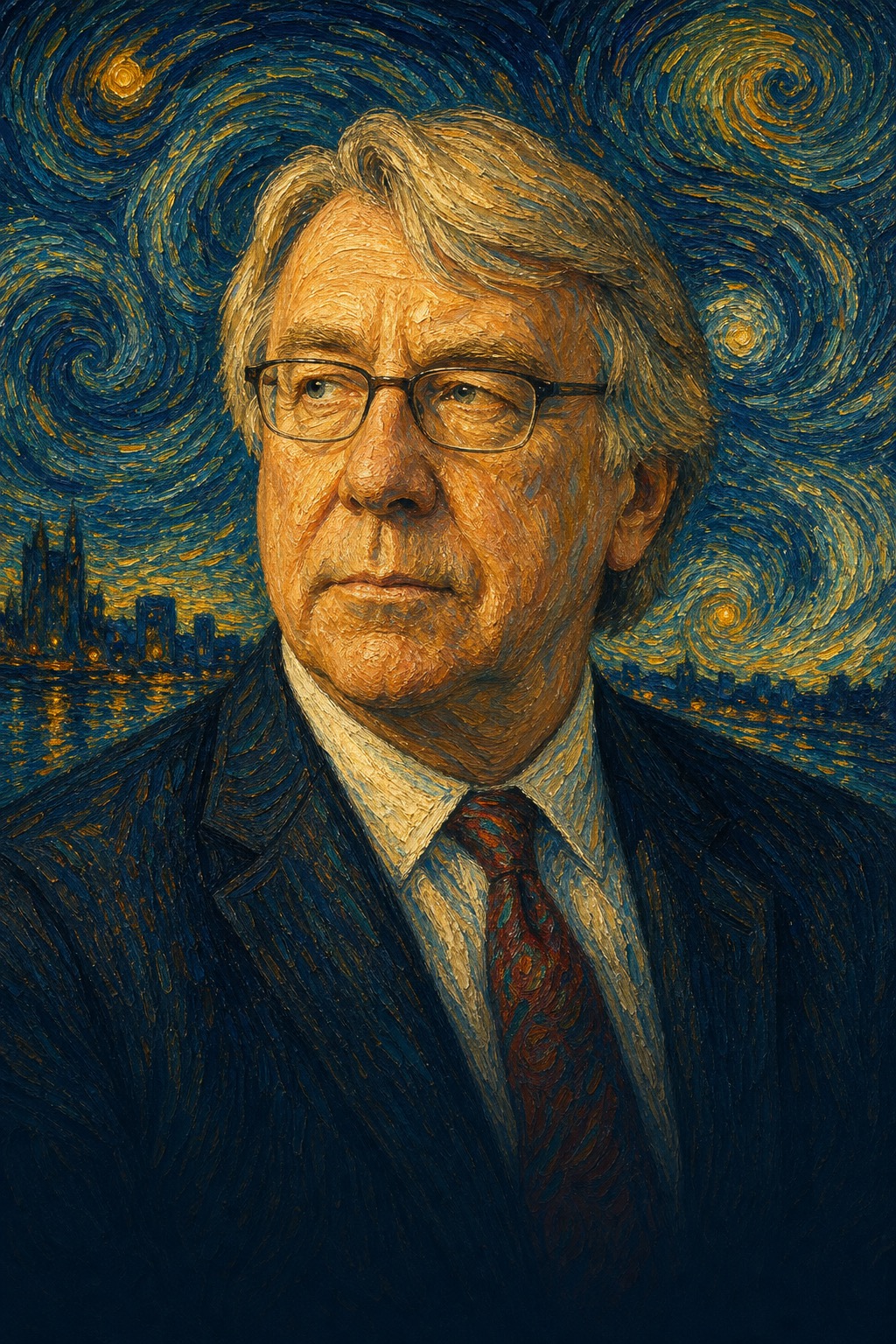
Jim Chanos
Institutionalized document-driven skepticism by shorting accounting and business-model contradictions, while showing that truth, timing, borrow, reflexivity, and client appetite are separate risks.
As of 2026-07-01, Jim Chanos is a living investor and public market commentator. His old short-only hedge-fund complex has been transformed after the 2023 decision to return outside capital from the main hedge funds, but he remains active through Chanos & Company-style research, personal capital, client advice, and public commentary, including a June 2026 Global Alts appearance (iConnections, 2026).
Snapshot
| Field | Detail |
|---|---|
| Born / died | Born 1957, raised in Milwaukee, Wisconsin; exact birth date not primary-verified in sources opened for this task. Living as of 2026-07-01 (Yale SOM, current profile; iConnections, 2026). |
| Nationality | American; Greek-American family background reported in secondary profiles (New York Magazine, 2008). |
| Education | BA in economics and political science from Yale University in 1980 (Yale SOM, current profile). |
| Main vehicles | Kynikos Associates, founded in 1985; later Chanos & Company L.P. / Kynikos-related domestic and offshore funds, private funds, and separately managed accounts (SEC Roundtable Comments, 2003; Form ADV, 2023). |
| Years active | 1982/1983 analyst career start; 1985 Kynikos founding; traditional hedge-fund structure closed after 38 years in 2023; active as a research/advisory/public-market participant in 2026 (Yale SOM; Business Times/Bloomberg, 2023; iConnections, 2026). |
| Asset classes | Public equities, fundamental short books, hedged equity overlays, long/short funds, and short-biased research on accounting, credit, China, technology, and capital-cycle themes (FT Alphachatterbox transcript, 2016; Capitalisn't transcript, 2024). |
| Style tags | Fundamental short seller; forensic accounting; fraud detection; business-model skepticism; capital-cycle and credit-sensitivity analysis; public-file research. |
| Verified track record + period | No audited full-period Kynikos return series found in public sources during this run. Verified anchors: Kynikos managed over $1 billion in 2003; 2023 Form ADV reported $327.4 million in regulatory AUM across 13 discretionary accounts; secondary reporting says assets peaked around $7-$8 billion in 2008 and fell below $200 million by the 2023 hedge-fund wind-down (SEC, 2003; Form ADV, 2023; New York Magazine, 2008; Business Times/Bloomberg, 2023). |
| Peak AUM | Not primary-verified. Secondary reporting gives about $7 billion in late 2008 and about $8 billion in 2008 before a long decline; use "about $7-$8 billion" with caveat (New York Magazine, 2008; Business Times/Bloomberg, 2023). |
Life & Career Timeline
1957-1980 - Milwaukee to Yale. Chanos was born and raised in Milwaukee and later earned a Yale BA in economics and political science in 1980 (Yale SOM). New York Magazine's 2008 profile adds the family setting: his father ran dry cleaners and his mother worked as an office manager, details that fit the later Chanos image of an accounting-minded outsider rather than a clubby Wall Street optimist (New York Magazine, 2008).
Early 1980s - Sell-side skepticism and Baldwin-United. After Yale, Chanos worked as a research analyst at Gilford Securities and then Deutsche Bank, with Yale later summarizing his pre-Kynikos employers as Paine Webber, Gilford Securities, and Deutsche Bank (Yale SOM). The defining early episode was Baldwin-United: New York Magazine reports that Chanos questioned the insurer in 1982, Forbes published a critical story in December, and Baldwin later filed what the profile described as a $9 billion bankruptcy; treat the number as secondary, but the episode is repeatedly presented as the career launcher (New York Magazine, 2008).
1985 - Kynikos founding. Chanos founded Kynikos Associates in 1985 to implement short-selling strategies he had developed as an analyst (SEC Roundtable Comments, 2003; Yale SOM). New York Magazine reports a $16 million launch capital figure and says the name came after a Wall Street Journal article made it hard for him to remain a bearish sell-side analyst; that launch-capital figure remains secondary (New York Magazine, 2008).
1991-1994 - Short-seller near-death. The early 1990s were the key survival test. New York Magazine reports losses of 30% in 1991, 15% in 1992, and 40% in 1993, with assets falling below $150 million from a prior high of $600 million before Dirk Ziff provided support; those figures are not primary-audited but are important because they show how hard it is to run a pure short business through a bull market (New York Magazine, 2008).
2001-2002 - Enron and public reputation. Chanos became broadly known for questioning Enron before collapse. The Los Angeles Times wrote in January 2002 that he had publicly challenged analysts' assumptions about Enron's profitability and valuation, while a House hearing record placed him as a witness on lessons from Enron's collapse in February 2002 (Los Angeles Times, 2002; GovInfo Enron Hearing, 2002). The canonical point is not merely that Enron went to zero; it is that Chanos's method relied on public filings and accounting questions that many long investors and analysts chose not to prioritize.
2003-2009 - Public policy witness for short sellers and hedge funds. In 2003 SEC roundtable comments, Chanos described Kynikos as the world's largest organization of its type and said it managed over $1 billion with seven investment professionals (SEC Roundtable Comments, 2003). In 2009, he testified for the Coalition of Private Investment Companies on hedge-fund regulation, supporting SEC oversight while warning that retail-style investment-adviser rules did not fit private funds without tailoring (House Financial Services Testimony, 2009).
2008-2016 - Crisis peak and China/capital-cycle shorts. New York Magazine profiled him in December 2008 as a crisis beneficiary, saying Kynikos managed about $7 billion and that short positions had reportedly earned about 50% that year, while also describing housing, financials, construction, China, Dubai, and Sotheby's themes (New York Magazine, 2008). Later transcripts show the same framework generalized: do company-level forensic work inside a macro or capital-cycle theme rather than shorting "the economy" in the abstract (FT Alphachatterbox Transcript, 2016).
2013-present - Yale fraud teacher and public forensic brand. Yale School of Management lists Chanos as a lecturer and Becton Fellow teaching the history of financial fraud; Yale Alumni Magazine profiled the course and tied the classroom method to Enron, Tyco, and subprime work (Yale SOM; Yale Alumni Magazine, 2013).
2020-2023 - Harder short-selling regime and hedge-fund closure. By 2020, Chanos was describing fundamental short books as insurance-like hedges for clients rather than simple bearish funds (Masters in Business Transcript, 2020). In 2023, Bloomberg reporting carried by The Business Times said he would shut the main hedge funds after a 38-year run, with assets below $200 million versus about $8 billion in 2008; it also said he would keep running the firm with personal capital and some client managed accounts (Business Times/Bloomberg, 2023).
2024-2026 - Advisory model, legal dispute, and new fraud cycles. Chanos remained a public voice on short selling in 2024, arguing on Capitalisn't that bull markets and loose risk appetite create a "golden age of fraud" environment (Capitalisn't Transcript, 2024). A 2024 New York court decision and a 2025 order in Conlon Holdings litigation show a pending dispute over a loan receivable, partnership withdrawals, and arbitration; the court materials should not be read as a merits determination against Chanos (NY Courts, 2024; Justia, 2025). In June 2026, iConnections still presented him as active at Global Alts New York, focused on AI-infrastructure and data-center valuation risk (iConnections, 2026).
Vehicles & Structure
Kynikos was built as a specialist short-selling firm, not a general hedge-fund supermarket. In 2003, Chanos told the SEC that Kynikos specialized in short selling, managed a portfolio of securities believed to be overvalued, and focused on materially overstated earnings, flawed business plans, and fraud (SEC Roundtable Comments, 2003). The Yale profile describes Kynikos as an exclusive short-selling investment firm providing services for domestic and offshore clients (Yale SOM).
The public regulatory trail is complicated because the complex evolved across Kynikos Associates, Chanos & Company L.P., private funds, offshore vehicles, and separately managed accounts. The 2023 Form ADV for Chanos & Company reported $327,422,342 in discretionary regulatory assets under management across 13 accounts, including corporate/business clients and private-fund structures, and listed James Steven Chanos as president/founder and a control person (Form ADV, 2023). That same ADV is the best primary anchor for the pre-closure structure, but it is not a return record and it does not disclose the economics of individual shorts.
After the 2023 hedge-fund wind-down, the vehicle should be treated as a changed enterprise: not a directly comparable continuation of the 1985-2023 outside-capital short-only funds. Bloomberg reporting carried by The Business Times says Chanos would mostly invest personal capital while advising some client separately managed accounts (Business Times/Bloomberg, 2023). The IAPD page for Chanos & Company is dynamic and line extraction was limited, but the official search result surfaced during this run indicated an SEC registration status of "Terminated" effective 2024-03-29; future tasks should re-check this directly because it affects the current-vehicle description (IAPD firm summary, dynamic).
Track Record Detail With Caveats
Chanos's public record is better described as a sequence of high-impact short calls than as a fully audited return series. No public primary source found in this run provides annual Kynikos returns from 1985 through closure. That means any CAGR, alpha, or lifetime-return claim should remain off the profile unless a future task finds original investor letters, audited fund statements, or independently verifiable databases.
The strongest primary numbers are AUM snapshots. In 2003, Chanos told the SEC that Kynikos managed over $1 billion (SEC Roundtable Comments, 2003). The 2023 Form ADV reported $327.4 million in regulatory AUM across 13 discretionary accounts (Form ADV, 2023). Secondary sources fill in the arc between those points: New York Magazine said Kynikos managed about $7 billion in December 2008 and reported a roughly 50% gain on short positions during the crisis year, while The Business Times/Bloomberg said assets later shrank from about $8 billion in 2008 to below $200 million by the 2023 hedge-fund closure (New York Magazine, 2008; Business Times/Bloomberg, 2023). These should be treated as secondary AUM/performance anchors, not audited return proof.
The trade record is clearer directionally. Baldwin-United put Chanos on the map in the early 1980s, Enron made him famous, and later public work included Tyco, subprime/housing, China-linked capital spending, Valeant, Tesla, Wirecard, Hertz, private credit, AI data centers, and commodity-like infrastructure themes (New York Magazine, 2008; Los Angeles Times, 2002; FT Alphachatterbox Transcript, 2016; iConnections, 2026). The problem is attribution and sizing: public sources often tell us Chanos was right or wrong, but not how much capital was deployed, what borrow costs were paid, when the position was covered, or how much clients actually made after fees.
The downside history is as important as the wins. New York Magazine's report of severe early-1990s losses shows the structural asymmetry of a short-only franchise in a rising market (New York Magazine, 2008). The 2023 closure shows that even a famous forensic edge can become economically difficult when fees, passive flows, zero/low rates, meme-stock dynamics, and long bull markets reduce demand for dedicated short exposure (Business Times/Bloomberg, 2023; Capitalisn't Transcript, 2024).
Why They Matter
Chanos belongs in the Canon because he represents the rare institutionalization of fundamental short selling. Most investors in this repository are paid to identify durable winners, buy them, and endure volatility. Chanos built a career doing the opposite: finding companies where the financial statements, management story, capital needs, or business model could not support the valuation.
His first lesson is methodological. The Enron case is remembered as a dramatic short, but the repeatable part was dull: read filings, compare cash flow to earnings, question related-party transactions, and ask whether reported returns on capital make economic sense. The Los Angeles Times and the House Enron record both show that the warning flags were not supernatural; they were visible enough that a skeptical analyst could find them and a market still could ignore them (Los Angeles Times, 2002; GovInfo Enron Hearing, 2002).
His second lesson is institutional. Chanos's own testimony framed short sellers as part of market plumbing: not saints, but motivated skeptics who pressure inflated claims and expose weak reporting (SEC Roundtable Comments, 2003; House Financial Services Testimony, 2009). The profile must hold both sides. Short sellers can improve price discovery, but public short campaigns can also create incentives to use media, selective disclosure, and pressure tactics. New York Magazine is useful precisely because it documents both the forensic discipline and the media-savvy controversy around Chanos's work (New York Magazine, 2008).
His third lesson is business-model fragility. A correct short thesis can still be a bad business if it is early, crowded, costly to borrow, run through a vehicle clients dislike, or overwhelmed by market beta. Chanos's survival through the early 1990s, success in 2001-2008, and hedge-fund closure in 2023 make him a clean case study in edge versus vehicle fit (New York Magazine, 2008; Business Times/Bloomberg, 2023).
Open Questions For Later Tasks
- Reconstruct annual Kynikos/Kynikos Associates/Chanos & Company returns from 1985-2023, if investor letters, audited statements, databases, or credible secondary datasets can be found.
- Separate "short alpha" from client returns: what did the dedicated short funds earn net of fees, and how did separately managed accounts differ?
- Build trade-level ledgers for Baldwin-United, Enron, Tyco, subprime/housing, China/Caterpillar, Valeant, Wirecard, Tesla, Hertz, and AI-data-center shorts: position size, borrow cost, entry, catalyst, cover date, and realized P&L.
- Verify the exact 2024-2026 regulatory status of Chanos & Company after the apparent IAPD SEC termination and identify which entities remain active.
- Track the Conlon Holdings arbitration/litigation beyond the 2025 court order; do not characterize the claims as proven unless an award, settlement, or final merits decision is found.
- Page-check book/interview claims in later tasks, especially when secondary profiles recycle the same Baldwin, Enron, and early-1990s loss figures.
- Compare Chanos's "fraud-cycle" thesis with later AI/private-credit comments: is the process still tradeable without the old outside-capital short-fund vehicle?
As of 2026-06-30, this file treats Jim Chanos as a living investor and Chanos & Company/Kynikos as a transformed adviser rather than an active traditional short-only hedge-fund complex. The profile task for this investor was freshly claimed by another run when this philosophy task began, so this document is built directly from primary speeches, testimony, interviews, Form ADV material, court records, and strong secondary profiles.
Core Worldview
Chanos's worldview starts with a structural imbalance: markets have a permanent bullish bias, but individual companies fail often. In his 2003 SEC roundtable comments, he described Kynikos as a short-selling organization that seeks "fundamentally overvalued securities" and focuses on overstated earnings, flawed business plans, and outright fraud (SEC Roundtable Comments, 2003). In later interviews, he framed short alpha not as a market-timing product but as a portfolio construction service: clients can own more of the broad equity risk they want if a short portfolio offsets downside and contributes independent alpha (FT Alphachatterbox Transcript, 2016).
That makes his philosophy less bearish than it appears. He assumes broad equity markets tend to rise over time; the opportunity is that some companies are priced as if they will compound forever while their actual economics are already deteriorating. In 2020, he told Barry Ritholtz that Kynikos tries to remove systematic market exposure and harvest idiosyncratic short alpha, because "the failure rate among individual corporations is quite high" (Masters in Business Transcript, 2020). The short seller is therefore a specialist in negative selection: find businesses where reported numbers, management claims, capital needs, or end-market assumptions cannot all be true at once.
Chanos also treats fraud as cyclical. Bull markets train investors to suspend disbelief, relax accounting discipline, and accept promotional metrics. In 2024 he told Capitalisn't that skepticism erodes when "everything is making you money," and that speculative waves in frauds and hype have cycles of their own (Capitalisn't Transcript, 2024). This is the center of his canon: bad facts are usually visible before collapse, but investors do not care until a credible third party, cash crisis, auditor event, regulator, or earnings miss forces recognition.
The Edge - What Markets Misprice And Why
Chanos believes markets systematically underprice three kinds of negative information.
First, they underprice accounting signals. His Enron work began with public reporting and SEC filings, not inside information. In congressional testimony, he said Kynikos grew suspicious after news reports about aggressive accounting and a review of Enron filings; he later told the House that analysts conceded Enron was a "trust me" story while continuing to recommend the stock (GovInfo Enron Hearing, 2002). The lesson is that footnotes, related-party transactions, unexplained capital needs, cash-flow gaps, and pro-forma earnings can be enough when the market prefers a story.
Second, he thinks markets misprice institutional incentives. Management prepares the financial statements; auditors, bankers, sell-side analysts, and boards often arrive late or are conflicted. The Yale Alumni Magazine profile of his financial-fraud class captures this teaching: Chanos looks for repeated patterns of bad behavior, not a proprietary quant signal, and spends disproportionate energy on phone calls, legwork, and disclosure footnotes (Yale Alumni Magazine, 2013). In his 2016 FT interview, he emphasized that investors have trouble accepting that the person across the table may be misleading them (FT Alphachatterbox Transcript, 2016).
Third, he targets business models where the unit economics are masked by cheap capital, acquisition accounting, or a reflexive stock price. Valeant was a clean example in his telling: the company was buying drug portfolios, cutting R&D, and asking investors to add back amortization that Chanos considered economically similar to maintenance R&D (FT Alphachatterbox Transcript, 2016; Capitalisn't Transcript, 2024). Tesla became a different kind of test: he argued the stock could feed the company's real financing capacity, making reflexivity a risk to the short thesis even if the operating critique remained (Masters in Business Transcript, 2018; Capitalisn't Transcript, 2024).
The mispricing persists because every major market constituency benefits more from optimism than skepticism. Companies sell stock and debt; bankers earn fees; analysts preserve access; long-only investors can ignore problems as long as price momentum continues; and regulators usually arrive after damage is visible. Chanos argued to the SEC that short sellers are a market "bulwark" against hype, irrational exuberance, and fraud (SEC Roundtable Comments, 2003). That claim is self-interested, but it is also consistent with outside evidence summarized in congressional testimony and later academic reporting that firms attacking short sellers often underperform subsequently (House Financial Services Testimony, 2009; New Yorker, 2015).
Process: Idea Sourcing To Sell Discipline
Idea Sourcing
The Chanos process is deliberately broad. He has looked across frauds, flawed roll-ups, commodity cycles, China-linked capital spending, consumer fads, technology narratives, and financial intermediaries. In the FT transcript, he described a global book of roughly 80 positions, with a domestic portfolio usually around 40 to 60 names, because that was the number he and the senior team could still understand closely (FT Alphachatterbox Transcript, 2016). This is not a screen-only system. Ideas come from financial statements, industry discrepancies, reporters, other skeptics, conference presentations, legal/regulatory documents, and macro anomalies that can be translated into company-level shorts.
The first filter is usually a question: what is the market assuming that the financial statements or incentives do not support? In China, for example, a macro concern about construction and energy use led him toward miners, engineering companies, property-linked cyclicals, and capital-goods firms rather than a pure country short (New York Magazine, 2008; FT Alphachatterbox Transcript, 2016). In Enron, a newspaper item about mark-to-market accounting led to filings, related-party disclosures, analyst calls, and questions about return on capital (Yale Alumni Magazine, 2013; GovInfo Enron Hearing, 2002).
Research
The research discipline is forensic and adversarial. Chanos wants to know whether reported economics reconcile with cash flow, balance-sheet quality, capital intensity, management incentives, industry capacity, and observable customer or supplier behavior. Public documents matter because they reduce legal and ethical risk: Kynikos's Enron case, according to congressional testimony and later profiles, relied on public filings, disclosed transactions, and ordinary analyst questions rather than hidden information (GovInfo Enron Hearing, 2002; Los Angeles Times, 2002).
He also distinguishes "information" from "certification." In 2024 he argued that the truth is often available but buried in a sea of misinformation, so the edge is patient interpretation and waiting for the market to accept the signal (Capitalisn't Transcript, 2024). This explains the role of journalists, regulators, auditors, lenders, and cash crunches in his process. They are not the source of the thesis; they are possible catalysts that turn ignored facts into price discovery.
Valuation And Entry
Chanos does not short simply because a company is expensive. The target must combine valuation risk with a reason the economics are wrong or unsustainable. He has explicitly rejected chart-driven shorting, saying he has no edge in technical analysis (Masters in Business Transcript, 2018). The preferred entry is before the market recognizes earnings or balance-sheet problems, which means he is often early. In the FT transcript, he explained that footnote and balance-sheet signals often appear well before the P&L finally shows damage (FT Alphachatterbox Transcript, 2016).
Entry also depends on borrow availability, rebate economics, and position cost. A great short can become uneconomic if the borrow is too expensive or crowded. Chanos used Sears as an example: once the short case became obvious, negative rebates reportedly made the trade uneconomic for him (FT Alphachatterbox Transcript, 2016). This is a practical difference between his philosophy and a simple "bad company" list: the trade structure must survive the waiting period.
Sizing And Portfolio Construction
The portfolio is diversified because single-name short risk is asymmetric. A long can go to zero; a short can rise many times over. Chanos has said diversification is a primary risk-management tool and that the book usually contained dozens of names (FT Alphachatterbox Transcript, 2016). In 2020 he added that Kynikos could tailor managed accounts to client restrictions and dial short exposure according to client needs (Masters in Business Transcript, 2020).
There is also balance-sheet risk at the fund level. Chanos worries about prime-broker exposure and wants client assets held in government securities where possible, rather than becoming unsecured broker IOUs during a crisis (FT Alphachatterbox Transcript, 2016). The firm's 2023 Form ADV reported discretionary regulatory assets under management of $327.4 million across 13 accounts, with both pooled vehicles and business/institutional clients, showing a smaller and more customized adviser than the multi-billion-dollar Kynikos of the post-Enron/2008 era (Chanos & Company Form ADV, 2023).
Sell Discipline
The sell discipline is really a cover discipline. Chanos covers or trims when the expected return collapses, borrow cost overwhelms the remaining downside, another short has a better risk/reward, or the thesis changes. The Herbalife example in the FT transcript is instructive: Kynikos covered after a sharp decline and redeployed capital into what it considered better shorts, even though a regulator could still have acted against the company later (FT Alphachatterbox Transcript, 2016). This is opportunistic and portfolio-relative, not moralistic. A company can remain unattractive while the short no longer offers enough return.
Risk Management
Chanos's risk management has four layers.
First, he tries to neutralize broad-market direction. The ideal client use case is not "the market will crash"; it is "this short portfolio can underperform the market or fall independently, letting the investor own more of the broad equity premium" (FT Alphachatterbox Transcript, 2016; Masters in Business Transcript, 2020).
Second, he diversifies single-name risk because being right can still be painful before recognition. Valeant doubled after Kynikos began shorting it, before eventually collapsing; Chanos used that case to emphasize that short sellers can be fundamentally right and temporarily wrong (Masters in Business Transcript, 2018). Tesla became the more damaging version of that problem, as the stock's rise changed the company's financing capacity and imposed years of mark-to-market pressure.
Third, he monitors borrow, rebate, collateral, and prime-broker risk. These plumbing details are not administrative trivia in a dedicated short book; they determine whether the trade can be held long enough for the thesis to matter (FT Alphachatterbox Transcript, 2016).
Fourth, he manages legal and reputational risk by favoring documented claims and by understanding that companies can retaliate. He testified that short sellers often uncover corporate misconduct, but he also acknowledged that illegal short-selling behavior can exist and should be prosecuted (House Financial Services Testimony, 2009). The 2024-2025 Conlon litigation over alleged loans and partnership disputes is not an investment-thesis case, but it is a current governance/reputation caveat: a New York court denied summary judgment against Chanos and stayed the action pending arbitration, while leaving the underlying dispute unresolved (FindLaw, 2024; Justia, 2025).
Temperament And Psychology
The psychological requirement is unusual. A Chanos-style short seller must be skeptical without becoming conspiratorial, patient without becoming stubborn, and public enough to help facts be certified without drifting into stock promotion in reverse. The work is socially unpleasant because the short seller is paid when other people lose money, and politically vulnerable because managers and investors blame the messenger in downturns (New York Magazine, 2008; Los Angeles Times, 2002).
Chanos's temperament is investigative and adversarial. The Yale profile describes him as a financial detective with an appetite for obscure disclosures and repeated fraud patterns (Yale Alumni Magazine, 2013). But he is not simply looking for villainy. Many shorts are flawed business models, bad capital allocation, or mathematically unsustainable narratives. His better calls share a discipline: isolate the economic contradiction, then wait for the market to care.
Evolution Over Career
The early Kynikos model benefited from high short rebates, limited information flow, and fewer specialist competitors. Chanos said that in 1985 short-sale proceeds could earn high-single-digit cash returns before the stock moved; by the zero-rate era, that tailwind had disappeared (Masters in Business Transcript, 2020). The information edge also changed. In the 1980s, getting a fresh 10-Q could matter for days; by 2020, everyone had the documents, so the edge moved to analysis, filtering, and judgment (Masters in Business Transcript, 2020).
The business model also changed. Kynikos was reportedly managing around $7 billion in late 2008 after a strong crisis year (New York Magazine, 2008). By the 2023 Form ADV, Chanos & Company reported $327.4 million in regulatory AUM, and later reporting said Chanos was closing the main hedge funds and returning outside capital as dedicated short demand faded (Chanos & Company Form ADV, 2023; Capitalisn't Transcript, 2024). The philosophy survived, but the client packaging moved toward advice, managed accounts, and family-office-like flexibility.
What He Explicitly Rejects
Chanos rejects market-direction calls as the core purpose of a short fund. He does not want clients allocating to him merely because they think the market is about to fall; that protection can be bought more directly elsewhere (FT Alphachatterbox Transcript, 2016).
He rejects technical chart-reading as an edge. He has said he cannot make money from charts and prefers fundamental research (Masters in Business Transcript, 2018).
He rejects pro-forma metrics when they obscure economic reality. Valeant's adjusted earnings, acquisition amortization add-backs, and low reported R&D were, in his view, a warning that the market had accepted management-defined economics over GAAP and business maintenance costs (FT Alphachatterbox Transcript, 2016; Capitalisn't Transcript, 2024).
He also rejects the idea that auditor sign-off or blue-chip institutional ownership settles the question. His Yale teaching emphasizes that management prepares the statements and that major frauds have often had reputable auditors (FT Alphachatterbox Transcript, 2016; Yale Alumni Magazine, 2013).
Regimes Where It Thrives Vs. Struggles
The philosophy thrives when capital becomes scarce, lenders tighten, regulators or auditors regain force, and investors reprice cash flow over narrative. It worked especially well in Enron and the 2000-2002 fraud unwind, and again in the 2008 crisis when crowded credit, housing, financial, and infrastructure assumptions broke (Los Angeles Times, 2002; New York Magazine, 2008). It also works when a company cannot fund losses indefinitely and must confront customers, creditors, regulators, or auditors.
It struggles in long liquidity booms, zero-rate periods, meme-stock episodes, and markets where price itself improves corporate fundamentals through cheap equity issuance. Chanos has been explicit that low rates reduced short rebate income and that broad bull markets compress short alpha (Masters in Business Transcript, 2020; Capitalisn't Transcript, 2024). Tesla exposed the hardest version of the problem: a stock can remain expensive long enough for the company to raise capital, recruit believers, and partially change the path the short seller expected.
The model also struggles when negative information lacks a trusted validator. Chanos's 2024 discussion of Wirecard and misinformation stressed that the problem is no longer obtaining facts; it is getting true facts recognized amid noise (Capitalisn't Transcript, 2024). That makes the strategy increasingly dependent on institutions - journalism, courts, auditors, regulators, creditors - that may themselves be slower, weaker, or less trusted.
Tensions Between Stated Philosophy And Actual Behavior
The first tension is that Chanos frames short selling as a portfolio hedge and market-integrity function, but it is still a high-fee, capacity-limited business that performed best when other investors were suffering. The "insurance" framing is analytically useful, but insurance that cannot attract capital after a long bull market may be hard to sustain as a standalone product (FT Alphachatterbox Transcript, 2016; Capitalisn't Transcript, 2024).
The second tension is timing. The philosophy says public facts are enough, but the trade requires a catalyst. Being early is not a footnote; it is the core economic risk. Valeant eventually worked after a painful mark-to-market path; Tesla did not validate the short thesis within an acceptable business horizon. This means Chanos's edge is not just forensic accounting; it is forensic accounting plus survivable trade structure.
The third tension is public communication. Chanos argues that short sellers provide the opposing view in a market dominated by promoters, and serious journalism benefits from hearing that view (Masters in Business Transcript, 2018). But short sellers also profit when negative narratives spread. The ethical boundary depends on documentation, disclosure, and not trading around selective leaks. Chanos has generally positioned himself on the traditional, research-first side of that line, but the broader activist-short ecosystem faces ongoing regulatory and legal scrutiny.
The fourth tension is governance. Chanos's philosophy is built around skepticism toward management self-dealing and opaque accounting. The Conlon dispute, while not yet resolved on the merits in the public court documents reviewed here, creates an unavoidable irony: a short seller famous for attacking opacity has faced allegations from former partners about loans, partnership accounting, and distributions. The January 2025 court order did not decide the underlying arbitration, but it is a live caveat for any non-hagiographic assessment of his operating model (Justia, 2025).
Bottom Line
Chanos's philosophy is best summarized as forensic short alpha. He looks for companies whose reported economics, incentives, and narratives cannot survive contact with cash flow, accounting reality, competition, or tighter capital. The method is not magic: read filings, reconcile claims to economics, understand incentives, size modestly, respect borrow and liquidity, and wait for certification. Its genius is that it monetizes skepticism in markets built to reward optimism. Its weakness is that skepticism can be right for years before it is profitable, and sometimes reflexive markets make the underlying business better before the short seller's truth arrives.
As of 2026-07-01, Jim Chanos is a living investor, and this document treats Kynikos/Chanos & Company trade data as mostly private unless a public source identifies a position, date, price path, or P&L. Chanos's own testimony and long-form interviews make the trade chronology unusually clear, but not the fund ledgers: position size, borrow cost, exact cover dates, and client-level P&L are usually undisclosed. The ranking below therefore separates three things: documented investment insight, public price outcome, and sourced P&L.
Ranking And Caveats
The single best Chanos trade is Enron: it was not the cleanest disclosed P&L, but it defined the franchise, came from public-file forensic work, and became the template for his later fraud shorts. The largest sourced single-trade profit found in this run is Wirecard, at almost $100 million, but that figure is [single-source] through Financial Times reporting summarized by Business Insider (Business Insider / FT, 2020). The biggest portfolio-level win was probably the 2006-2008 housing, financials, real-estate, and Sotheby's short book, but the public record gives position categories and examples rather than audited P&L. Every trade below should be read with that private-ledger caveat.
1. Enron - The Franchise-Defining Short
Context and dates. Chanos began working on Enron after an October 2000 prompt from a friend about aggressive mark-to-market accounting, then analyzed Enron's 1999 Form 10-K and related quarterly filings (GovInfo Enron Hearing, 2002). In congressional testimony, he said Kynikos began shorting Enron common stock in November 2000 after concluding that Enron's economics did not match its reported profitability (GovInfo Enron Hearing, 2002).
Thesis and how he found it. The thesis was not simply that Enron was promotional. Chanos's testimony says the first major signal was a 7% pre-tax return on capital despite Enron's aggressive gain-on-sale model; if Enron's cost of capital was closer to 9%, the company was not earning economic profits even while reporting accounting profits (GovInfo Enron Hearing, 2002). He also flagged cryptic related-party transactions, an Enron executive running entities that traded with Enron, heavy insider selling, and broadband claims that looked disconnected from the telecom glut already hurting Kynikos's other shorts (GovInfo Enron Hearing, 2002).
Size and structure. Public sources identify a short position in Enron common stock, not the percentage of Kynikos capital. Chanos later used Enron as an example of how a short book can make more than 100% on capital if profits are recycled into maintaining exposure as a stock falls (FT Alphachatterbox Transcript, 2016). That explains the mechanics but does not prove Kynikos used that exact sizing path in Enron.
Entry, path, drawdown, exit, and P&L. Chanos told Barry Ritholtz that Kynikos started shorting Enron in the 60s, watched it run into the 80s in January 2001, and then saw it go from about 80 to zero over the next nine months, with gut-wrenching rallies along the way (Masters in Business Transcript, 2018). Exact cover dates and dollar P&L were not found. The common-stock outcome was effectively a near-100% gross win before borrow, financing, and trading effects; Kynikos fund-level P&L remains undisclosed.
What it teaches. Enron shows the full Chanos model: public filings first, accounting economics over reported earnings, related-party skepticism, patience through adverse price action, and the value of a third-party certification mechanism. In this case, journalists, congressional scrutiny, credit pressure, and eventual bankruptcy forced the facts into price.
2. Baldwin-United - The Career-Making First Short
Context and dates. Baldwin-United was Chanos's first famous short idea as a young analyst at Gilford Securities. In a Graham and Doddsville interview, he said his first research report came in August 1982, when he recommended shorting Baldwin-United at $24 (Graham and Doddsville, 2012).
Thesis and how he found it. Baldwin had become a piano company turned insurance/financial-services roll-up. Chanos found that its annuity business was using gain-on-sale accounting, booking non-cash earnings based on optimistic future spreads while paying high rates on annuities and plugging insurance-subsidiary holes with overvalued affiliated assets (Graham and Doddsville, 2012). He also obtained public insurance-department files showing regulator concern about affiliated asset valuations inside the insurance companies (Graham and Doddsville, 2012).
Size and structure. This was a sell/short recommendation, not yet a Kynikos fund trade. Chanos was an analyst and the size of his own or client exposure is not disclosed. Yale's official profile treats Baldwin-United as one of the well-known disasters Chanos identified and sold short during his career (Yale SOM Profile).
Entry, path, drawdown, exit, and P&L. Chanos said the stock promptly doubled after his $24 short recommendation; he reiterated the thesis around $50 in December 1982; then state insurance regulators seized Baldwin-United's insurance subsidiaries, and the company filed for bankruptcy shortly afterward (Graham and Doddsville, 2012). Exact P&L is unavailable. The trade was a lesson in being fundamentally right and temporarily very wrong.
What it teaches. Baldwin-United is the prototype for Chanos's later work: look for non-cash earnings, regulatory pressure, uneconomic financing, and a market that loves reported growth more than balance-sheet reality. It also taught the core short-selling hazard: a stock can double before the thesis is recognized.
3. The 2006-2008 Crisis Book - Homebuilders, Financials, Real Estate, And Sotheby's
Context and dates. Chanos was early to the U.S. housing and credit crack-up. New York Magazine reported that, starting in 2006, he built sizable short positions in residential homebuilders such as KB Home and WCI, then profited as the crisis widened from subprime mortgage stress into a financial and real-estate meltdown (New York Magazine, 2008).
Thesis and how he found it. The crisis book translated a macro credit thesis into vulnerable equities. Homebuilders depended on overheated land and mortgage credit; banks and real-estate stocks depended on asset values and leverage; construction and engineering names depended on global investment staying hot; Sotheby's depended on the same wealth effect that fed hedge-fund art collecting (New York Magazine, 2008). Chanos's process remained company-level, but the common factor was excessive credit creating earnings that would not survive tighter financing.
Size and structure. New York Magazine reported that Chanos cashed out a portfolio's 30% stake in financial-sector and real-estate shorts in summer 2008 after bank shares fell following Bear Stearns (New York Magazine, 2008). The article does not provide a full Kynikos exposure table or fund return. Capitalisn't later summarized Wall Street Journal reporting that Chanos's firm was down to less than $200 million in 2023 from $6 billion in 2008, which confirms how large the platform was near the crisis peak but not the trade P&L (Capitalisn't Transcript, 2024).
Entry, path, drawdown, exit, and P&L. The clearest named exit is Sotheby's: Chanos closed a short after the stock fell from nearly $60 to $8, according to New York Magazine (New York Magazine, 2008). For homebuilders and financials, the public record supports a profitable portfolio-level call but not exact entry prices, exits, or dollar P&L. This is therefore [portfolio-level, trade-level P&L undisclosed].
What it teaches. The 2008 book shows Chanos at his best when accounting skepticism, credit-cycle analysis, and equity selection lined up. It also shows why his greatest trades are hard to reduce to a single ticker: the edge was a basket of linked failures, monetized through individual shorts.
4. Valeant Pharmaceuticals - The Roll-Up Accounting Short
Context and dates. Chanos began shorting Valeant before the public blow-up. In 2018 he said Kynikos started shorting at about $130, watched the stock double to about $260, and then watched the problems surface in 2015 as the stock fell sharply (Masters in Business Transcript, 2018).
Thesis and how he found it. Valeant fit several Chanos patterns at once: roll-up economics, aggressive adjusted earnings, acquisition amortization add-backs, low reported R&D, and a business model that seemed to substitute financial engineering and drug-price action for durable innovation. In the 2016 FT Alphachatterbox interview, he said Valeant reminded the shop of Tyco, Enron, and WorldCom at the same time, which he treated as a strong short-seller signal (FT Alphachatterbox Transcript, 2016).
Size and structure. Public sources identify a Kynikos short in Valeant common stock, but not the percentage of fund capital. This was a classic single-name fundamental short rather than a disclosed option or credit structure.
Entry, path, drawdown, exit, and P&L. The stock doubling from $130 to $260 was the documented adverse path; the later collapse created the profit opportunity (Masters in Business Transcript, 2018). Exact cover dates and P&L were not found. The trade should be treated as a major qualitative win with undisclosed fund economics.
What it teaches. Valeant teaches survivability. The thesis can be right years before it is profitable; the trade only works if the short seller sizes it small enough, keeps borrow and financing manageable, and keeps updating the evidence rather than capitulating at the worst mark-to-market point.
5. Wirecard - The Largest Sourced Single-Trade Profit
Context and dates. Wirecard became a concentrated Kynikos short before the German payments company's 2020 collapse. Reuters-syndicated reporting on a June 2020 Bloomberg Invest appearance said Wirecard was the largest position in Kynikos's global short accounts and global hedged accounts; Chanos said the evidence was almost irrefutable by late 2019 (Reuters via WIFC, 2020).
Thesis and how he found it. The thesis was classic Chanos: buzzwords, numbers that did not make sense, a business model that did not make sense, auditor dependence, and later a KPMG forensic-audit failure. Business Insider, summarizing Financial Times reporting, said he increased his short after the FT's investigation exposed balance-sheet problems and the missing $2.2 billion issue (Business Insider / FT, 2020).
Size and structure. Public reporting says the trade ran through several Kynikos-managed funds and was the largest position in specified global short accounts by June 2020, but does not give percent of fund capital (Business Insider / FT, 2020; Reuters via WIFC, 2020).
Entry, path, drawdown, exit, and P&L. Business Insider reported that Chanos started building the short in 2019 and made almost $100 million, citing the Financial Times (Business Insider / FT, 2020). That P&L is [single-source]. Wirecard later said EUR1.9 billion likely did not exist, and the position was public enough that Chanos discussed it contemporaneously (Reuters via WIFC, 2020).
What it teaches. Wirecard was a late-career validation that the Chanos method still worked when an outside investigative process certified the facts. It also shows a modern dependency: the short seller often needs journalists, auditors, or regulators to make market participants believe facts that were already visible.
6. Hertz - Correct Bankruptcy Thesis, Imperfect Exit Optionality
Context and dates. Chanos had a long-held short in Hertz and covered it shortly before Hertz filed for bankruptcy in May 2020, according to Reuters-syndicated reporting from his June 2020 Bloomberg Invest comments (Reuters via WIFC, 2020).
Thesis and how he found it. The thesis was balance-sheet and cycle risk: Chanos had publicly said he did not think Hertz would survive the next recession, and the COVID shock turned that recession scenario into an immediate funding crisis (Reuters via WIFC, 2020). This is less an accounting-fraud case than a capital-structure fragility case.
Size and structure. Public reporting identifies a Kynikos short in Hertz common stock, but not the size. The firm had $932 million of assets as of March 30, 2020, according to the same Reuters-syndicated article, which provides scale context but not position size (Reuters via WIFC, 2020).
Entry, path, drawdown, exit, and P&L. Hertz shares were down more than 80% for the year when the company filed for bankruptcy, and Kynikos covered before the filing (Reuters via WIFC, 2020). P&L was not disclosed. Covering before bankruptcy reduced event risk and locked in much of the decline, but it also means the trade should not be overstated as a perfect terminal-short capture.
What it teaches. Hertz shows that a short seller can be right on fundamental solvency and still need to make a portfolio decision before the legal endpoint. In distressed equities, bankruptcy can create squeezes, borrow constraints, and strange retail dynamics; covering before the final headline may be prudent even if it leaves money on the table.
7. China / Caterpillar - A Trade Complex With Mixed, Not Clean, Attribution
Context and dates. Chanos began warning about China around 2009-2010, framing the economy as debt- and property-investment driven. By 2013, he highlighted Caterpillar as a short idea tied to the end of the commodity and China construction supercycle; Business Insider reported that shorting Caterpillar was his best investment idea at CNBC's Delivering Alpha conference in July 2013 (Business Insider, 2013).
Thesis and how he found it. The Caterpillar expression was not that Caterpillar was a bad company. It was that a good company was levered to the wrong products at the wrong point in the cycle: construction and mining machinery after a China-led infrastructure and commodity boom (Market Folly, 2013). In 2018, Chanos argued that China's debt-driven investment model had changed less than bulls expected, while the China ETF he referenced had barely risen over eight years even as other markets had doubled or tripled (Masters in Business Transcript, 2018).
Size and structure. Position sizes are not disclosed. Public sources identify Caterpillar and broader China-linked shorts, but do not provide a clean basket, entry set, exit set, or fund contribution.
Entry, path, drawdown, exit, and P&L. This is the least clean member of the greatest-trades list. The thesis anticipated genuine cyclicality and later China stress, but the exact Caterpillar P&L is unavailable and the long-term China call had periods of both validation and frustration. Treat it as a documented trade complex, not a verified single-trade home run.
What it teaches. China/Caterpillar shows the difference between being right about an economic model and making money on a specific equity path. Chanos's best work translated macro into company-level shorts; this case also warns that macro timing, policy support, and index composition can dilute an otherwise sound forensic thesis.
Cross-Trade Lessons
- The best Chanos trades begin in public documents, not private tips. Enron and Baldwin-United both came from filings, regulator files, and accounting mechanics.
- The first adverse move is often severe. Baldwin doubled after the short recommendation; Valeant doubled after Kynikos started shorting; Enron rallied before collapsing.
- Short P&L is path-dependent. A stock's eventual zero is not the same as the fund's realized profit after sizing, borrow, collateral, covers, and re-shorts.
- Certification matters. Journalists, auditors, regulators, courts, bankruptcy, and creditor pressure often determine when a correct short thesis becomes monetizable.
- Kynikos's private ledgers are the central limitation. Public sources document Chanos's insight better than his exact realized economics.
Source Notes
This run used more than 15 search queries and relied on 13 distinct sources for the final document. The strongest sources are Chanos's SEC and congressional testimony, long-form interview transcripts, Yale institutional/profile materials, and contemporaneous crisis reporting. Trade-level P&L remains unavailable for every case except Wirecard, where the almost-$100 million figure is explicitly marked [single-source].
As of 2026-07-01, Jim Chanos is alive, remains publicly active as a short-selling commentator, and no opened primary source in this run showed a final merits judgment against him in the Conlon dispute. This file treats losses in three buckets: investment losses where public sources identify an adverse position or vehicle outcome; near-death operating moments where Chanos or serious profiles describe Kynikos as stressed; and legal/governance controversies that are not investment errors but matter to a non-hagiographic record.
Major Losses, Errors Of Omission, And Near-Death Moments
1. The original short-selling business almost failed twice
Chanos's first lesson in error was not a final loss, but a path lesson. His first famous recommendation, Baldwin-United, was fundamentally correct and career-making, yet the stock "promptly doubled" after he recommended shorting it at $24 in August 1982; he reiterated the thesis around $50 before regulators seized insurance subsidiaries and the company later filed for bankruptcy (Graham and Doddsville, 2012). In a mistakes file, Baldwin matters because the correct thesis still imposed a 100% mark-to-market move against the short before certification arrived.
The deeper near-death moment came after Kynikos was founded. Yale Alumni Magazine reports that in the first year, the stocks Kynikos shorted rose, Chanos's partner sold him his share for $1, and only later did the 1987 crash help the business. The same profile says Kynikos then "went on ... to lose almost everything" as markets recovered in the first half of the 1990s; clients left, the firm neared collapse, and Chanos paid staff from his own pocket (Yale Alumni Magazine, 2013). That is the cleanest documented near-death episode: not a bad single-name thesis, but a structurally hard strategy meeting the wrong market regime.
2. A long-running timing and vehicle problem in China-linked shorts
Chanos's China bearishness was intellectually coherent: property overbuilding, debt, commodity demand, and capital spending were visible macro risks. The mistake was partly timing and partly expression. The 2008 New York Magazine profile already showed him translating China concerns into financials, real estate, materials, and cyclical shorts while also reporting that Kynikos managed about $7 billion and had a reported 50% return in the crisis year (New York Magazine, 2008). But later reporting described years of losses before partial vindication in 2015; the Wall Street Journal framed him as a China bear roaring "after years of losses" when Chinese markets finally shook (WSJ, 2015).
The process mistake is not that China risk was imaginary. It is that a macro thesis can be too broad, too early, and too hard to monetize through public-equity shorts. The later Caterpillar expression, for example, required China construction weakness to flow through commodity and equipment-cycle channels at a pace faster than policy support and global equity beta could offset. The greatest-trades file already treats China/Caterpillar as a "trade complex" rather than a verified single win; the mistake version is that a correct macro observation was not always a clean trade.
3. Tesla: the public, reflexive short that overpowered the thesis
Tesla is Chanos's most visible modern mistake. Public sources show the error was not one bad quarter; it was a yearslong failure to adapt quickly enough to reflexivity, index inclusion, cheap capital, retail enthusiasm, and Elon Musk's ability to keep the story alive. In 2017, Reuters-syndicated coverage reported Chanos was adding to the Tesla short, expected Musk to step down as CEO by 2020, and argued Tesla would eventually go bankrupt, without a stated timetable (Investing.com / Reuters, 2017). That prediction failed on both timing and event path.
By late 2020 the mistake was obvious in the price. Fox Business, summarizing Bloomberg comments, reported that Chanos had trimmed Tesla exposure, acknowledged the short had "been painful," and noted Tesla's market value had risen sharply after five consecutive profitable quarters and ahead of S&P 500 inclusion. The article also reported that Tesla shares were up 1,178% since Chanos first publicly declared he was short, and that his "maximum short" meant no more than 5% of capital under firm rules (Fox Business, 2020). Institutional Investor later tied 2020 short-seller pain directly to Tesla, saying the stock rose more than 700% in 2020 and that Chanos had to scramble; it reported Kynikos ended 2020 with about $405 million of regulatory AUM, down from about $932 million at the prior year-end (Institutional Investor, 2021).
The process change was visible by January 2021: Chanos told CNBC that Kynikos had transformed the stock short into put options, limiting downside to premium paid rather than open-ended stock-borrow exposure (Business Insider, 2021). That is a real change, but late. He remained intellectually bearish in 2023, emphasizing China margin pressure and competition (Business Insider, 2023). The lesson is that a short thesis can be directionally persuasive and still wrong as an investment when the stock price itself funds the company's survival.
4. AOL and the cost of being right about business quality but wrong on path
The public record opened in this run is thinner on AOL than Tesla, so this file flags the AOL claim as [single-source]. The Wall Street Journal's 2023 closure story says Chanos's career included yearslong, money-losing campaigns against Tesla and AOL (WSJ, 2023). That is enough to include AOL as a documented adverse campaign, but not enough to reconstruct entry dates, sizing, borrow cost, exit discipline, or exact P&L. The absence of public trade detail is itself a limitation: Chanos's public canon is rich in theses and sparse in client-level ledgers.
5. Valeant and Baldwin: wins that still expose the core hazard
Valeant belongs in both greatest-trades and mistakes because Chanos had to survive the wrong-way mark. In the 2018 Masters in Business transcript, he said Kynikos began shorting around $130, saw the stock go to about $260, and then saw the 2015 problems emerge (Masters in Business, 2018). Baldwin doubled before collapsing (Graham and Doddsville, 2012). These were not final losses, but they are the purest examples of the short seller's behavioral burden: the trade can look catastrophically wrong before it becomes right.
6. 2023 fund wind-down: an institutional loss, not merely a drawdown
The 2023 closure of Chanos's main hedge funds is the largest business-model loss. The Wall Street Journal reported that Chanos & Co. managed less than $200 million, down from $6 billion in 2008, and that Chanos was shutting down the hedge funds after nearly four decades; it also identified Tesla and AOL as money-losing campaigns (WSJ, 2023). Alternative Fund Insight, summarizing the same transition and an interview, quoted his diagnosis that "the marketplace for what I do has changed" and noted he would continue advising clients rather than managing capital in the old format (Alternative Fund Insight, 2023).
The regulatory record confirms the platform had already shrunk materially before the final wind-down. Chanos & Company reported $327,422,342 of discretionary regulatory assets under management across 13 accounts in its April 2023 Form ADV amendment (Form ADV, 2023). The SEC IAPD firm page is the correct current-status page, but its dynamic page did not provide line-level extractability in this run (IAPD, accessed 2026). Those are not fund returns, but they triangulate the business-model story: a formerly large pure short-selling platform could no longer attract or retain enough outside capital for the old hedge-fund wrapper.
What Chanos Said About Them
Chanos has been unusually candid about the strategic pain. Asked in 2018 what he wished he knew when he launched Kynikos, he joked, "Not to do it," then added that "timing is not a forte" and that the market teaches risk lessons individually (Masters in Business, 2018). The joke lands because it contains the real wound: he launched a short-selling firm into a multi-decade bull market.
On Tesla, the language was more direct. He admitted the short had "been painful" after the stock's massive 2020 advance (Fox Business, 2020). On the business closure, the line was not that fraud disappeared; it was that the client market and tool kit changed. In the 2024 Capitalisn't transcript, Chanos said clients increasingly could do parts of Kynikos's work through their own back offices and risk protocols, while investor exhaustion had set in around whether fundamentals would ever matter on the short side (Chicago Booth Review / Capitalisn't, 2024).
He also described the modern information problem as a new source of frustration. In the same Capitalisn't discussion, Chanos argued that the problem is no longer finding truthful information; it is extracting signal from "a sea of nonsense and disinformation" and waiting for certification (Chicago Booth Review / Capitalisn't, 2024). That comment helps explain why the method that worked so well on Enron and Wirecard could still be a hard product in 2020-2023.
Behavioral Root Causes
The first root cause is thesis pride. Chanos's edge is forensic conviction, and conviction is necessary when a position moves against him. But the same trait makes it hard to separate "early but right" from "wrong because the system changed." Tesla is the clearest case: his accounting, competition, and valuation concerns may have been coherent, but the stock's reflexive financing power changed the company's real-world trajectory. In 2024, he acknowledged reflexivity directly in a discussion of GameStop and Tesla: when high prices let companies raise capital, the stock can alter business fundamentals (Chicago Booth Review / Capitalisn't, 2024).
The second root cause is structural asymmetry. Short sellers can be right on end-state and still lose money on path, borrow, financing, client patience, and interim squeezes. Chanos has repeatedly defended short sellers as market skeptics who expose fraud and hype (SEC Roundtable Comments, 2003), but his own history shows that social utility and client returns are different things. A public warning can help markets and still produce a poor realized trade.
The third root cause is vehicle mismatch. Chanos built a specialized product in a world where clients later had more internal hedging tools, passive indexes dominated flows, and zero-rate capital gave unprofitable companies more time. His insight remained useful, but the fee-bearing short fund became harder to sell. The 2023 closure therefore looks like a product-market-fit failure more than an intellectual retirement (Alternative Fund Insight, 2023; Chicago Booth Review / Capitalisn't, 2024).
Process Changes Made After
After the early-1990s near-collapse, Chanos reorganized the firm and changed compensation so performance fees depended on beating the market rather than just generating absolute gains in a favorable short-selling tape (Yale Alumni Magazine, 2013). That is the most important early process change: align incentives to short alpha, not market beta.
Portfolio construction also became the main defense. Institutional Investor reported that Kynikos was heavily diversified and that short positions rarely exceeded 5% of the total portfolio (Institutional Investor, 2021). The Tesla change from common-stock short to puts was another risk-control adaptation, even if it came after painful losses (Business Insider, 2021).
The final process change was organizational: close the main hedge funds, return outside capital, and continue as an adviser/research source rather than force an old wrapper on a changed market. That may be Chanos's most rational response to the biggest mistake of all: believing that a scarce short-selling skill necessarily deserves a permanent dedicated hedge-fund vehicle.
Legal And Governance Caveat: Conlon Holdings
The Conlon dispute is not evidence of an investment mistake by itself, and this file does not treat the allegations as proven. It is relevant because Chanos's canon is built on skepticism about accounting, related-party dealings, and governance. The 2024 New York court decision describes a dispute over a 2018 loan agreement, art and real-estate collateral, a $16 million wire in 2021, alleged unpaid balances, a 2023 wind-down notice, and a 2024 request to restrain proceeds from a Miami residence sale; the court denied preliminary injunctive relief and noted the arbitration panel would determine the breach and partnership issues (NY Courts, 2024). A January 2025 decision denied Conlon's summary-judgment motion and granted Chanos's cross-motion in part by compelling arbitration and staying the court action (Justia, 2025).
Secondary Bloomberg-syndicated coverage captured both sides: Conlon alleged misuse of funds; Chanos called the lawsuit "puzzling and baseless" and said the internal loan was paid off in 2021 (Financial Advisor / Bloomberg, 2024). This run did not open a later final award, settlement order, or merits decision. Until one is sourced, the right process note is: unresolved in the opened court record, allegations disputed, no merits finding cited here.
Bottom Line
Chanos's mistakes are not the usual long-only errors of overpaying for quality or refusing to sell a compounder. They are short-seller errors: being right too early, underestimating reflexivity, carrying public fights longer than client capital will tolerate, and building a vehicle whose value proposition weakened as clients built their own tools. The durable lesson is almost paradoxical: Chanos's research method can be excellent while the trade, timing, and business model fail. For investors borrowing from him, the takeaway is not "short harder." It is to demand a catalyst, cap the tail loss, know who will finance the waiting period, and separate truth-seeking from portfolio survival.
As of: 2026-07-01T03:32:55Z
Task: T0256 | 032-jim-chanos | E-own-words
Attribution Notes
This file privileges source-visible Chanos language from prepared testimony, congressional records, full interview transcripts, conference reports, and regulator or institutional pages. I avoided quote aggregators. Some current AI-market comments are available through conference or interview carriers rather than official Chanos transcripts; those are labeled as carriers and should be rechecked against video or audio before publication use.
The snippets below are intentionally short. They are not a substitute for the surrounding source text. Their job is to map Chanos's repeated vocabulary: skepticism, accounting quality, short selling as market sanitation, portfolio asymmetry, and the changing economics of the short-selling business.
Quotes By Theme
Short Selling As Market Function
- "overstated earnings" (SEC roundtable statement, 2003).
- "flawed business plan" (SEC roundtable statement, 2003).
- "outright fraud" (SEC roundtable statement, 2003).
- "professional skeptics" (SEC roundtable statement, 2003).
- "look past the hype" (SEC roundtable statement, 2003).
- "smart regulation" (House Financial Services testimony, 2009).
- "unnecessary burdens" (House Financial Services testimony, 2009).
- "gaping hole" (House Financial Services testimony, 2009).
Reading note: The SEC and House materials are Chanos at his most institutional. He is not merely defending the right to short; he is defining short selling as independent research with a public-good function, while still arguing for tailored regulation and custody controls.
Enron, Accounting, And Forensic Triggers
- "trust me" story (GovInfo Enron hearing transcript, 2002).
- "black box" (GovInfo Enron hearing transcript, 2002).
- "no louder alarm bell" (SEC roundtable statement, 2003).
- "cornerstone for our bearish view" (SEC roundtable statement, 2003).
- "every big fraud" (Yale Alumni Magazine, 2013).
- "after the damage has been done" (Yale Alumni Magazine, 2013).
Reading note: The recurring pattern is not "short because bad news exists." It is: reported profits fail a capital-return test; disclosure is hard to decode; related-party transactions obscure economics; and consensus analysts substitute story for analysis.
Portfolio Construction And Risk
- "insurance business" (FT Alphachatterbox transcript, 2016).
- "stocks go to zero than infinity" (FT Alphachatterbox transcript, 2016).
- "risk reward had changed dramatically" (FT Alphachatterbox transcript, 2016).
- "top heavy research model" (FT Alphachatterbox transcript, 2016).
- "gut wrenching rallies" (Masters in Business transcript, 2018).
- "timing is not a forte" (Masters in Business transcript, 2018).
Reading note: Chanos's own language treats short alpha as a portfolio component rather than a heroic bearish forecast. The negative side is that the portfolio can be right on facts and still have a brutal path, because the wrong-way move grows the position and tests client patience.
Process, Edge, And The Information Environment
- "first recommendation was a short sale" (Masters in Business transcript, 2018).
- "I don't think I have any edge" (Masters in Business transcript, 2018).
- "comes at you at a fire hose" (Masters in Business transcript, 2020).
- "not publish long reports" (Masters in Business transcript, 2020).
- "managements don't like" (Masters in Business transcript, 2020).
- "sea of nonsense and disinformation" (Capitalisn't transcript, 2024).
Reading note: The edge moved from access to documents toward interpretation under overload. Chanos repeatedly frames the hard part as filtering, waiting for certification, and deciding when public disclosure helps or hurts the trade.
Fraud Cycles, Speculation, And Reflexivity
- "alpha has a beta" (Capitalisn't transcript, 2024).
- "cycle all their own" (Capitalisn't transcript, 2024).
- "nobody cared until they cared" (Capitalisn't transcript, 2024).
- "casino society" (Institute for New Economic Thinking interview, 2025).
- "Bitcoin is a human construct" (Institute for New Economic Thinking interview, 2025).
- "Fear and greed" (Institute for New Economic Thinking interview, 2025).
- "fraud cycle always follows" (Institute for New Economic Thinking interview, 2025).
Reading note: The modern Chanos vocabulary is less about single frauds and more about cycles of credulity. He connects crypto, meme stocks, AI infrastructure, and older fraud waves through the same behavioral loop: easy money lowers skepticism, and later evidence has to fight narrative inertia.
Current Applications: Wirecard, Hertz, AI, And Issuance
- "didn't think they were going to survive" (Reuters carrier via WIFC, 2020).
- "evidence was almost irrefutable" (Reuters carrier via WIFC, 2020).
- "something was very wrong here" (Reuters carrier via WIFC, 2020).
- "hopes and dreams IPO" (iConnections conference report, 2026).
- "TAM for space is infinite" (iConnections conference report, 2026).
- "premium on promises" (iConnections conference report, 2026).
- "what's special versus what's a commodity" (iConnections conference report, 2026).
Reading note: The current materials show continuity rather than reinvention. Hertz, Wirecard, AI data centers, alternative energy, and SpaceX are all framed through the old Chanos questions: what is real cash return, what is accounting treatment, what is merely a story, and who needs the capital market to keep believing?
Annotated Primary And Near-Primary Materials Index
- SEC roundtable statement, 2003 - Best primary statement of the Kynikos mandate, short-seller public-good argument, Enron research process, and regulatory view.
- GovInfo Enron hearing transcript, 2002 - Primary congressional record for Chanos's Enron chronology, return-on-capital work, related-party concerns, and analyst-conflict critique.
- House Financial Services testimony, 2009 - Primary policy testimony on hedge-fund regulation after the crisis; useful for custody, due diligence, and smart-regulation language.
- FT Alphachatterbox transcript, 2016 - Full transcript and strongest single source for portfolio mechanics, position sizing, borrow/rebate constraints, risk-reward reallocation, and the insurance metaphor.
- Masters in Business transcript, 2018 - Full transcript covering origin story, Baldwin-United, Kynikos formation, Enron and Valeant path risk, and career advice.
- Masters in Business transcript, 2020 - Full transcript for the modern information environment, activist-short distinction, public-disclosure habits, and the difficulty of short-side attribution.
- Capitalisn't transcript, 2024 - Current post-hedge-fund-closure transcript; best source for the changed business model, meme-stock reflexivity, and "alpha has a beta" framing.
- Yale Alumni Magazine profile, 2013 - Strong profile of the Yale fraud-history course and Chanos's teaching language; use as near-primary where it quotes classroom remarks.
- Reuters carrier via WIFC, 2020 - Source-visible Reuters report from Bloomberg Invest on Hertz, Wirecard, Tesla, and Macau risk.
- Institute for New Economic Thinking interview, 2025 - Current long-form interview on crypto, AI, human nature, fraud cycles, and speculative culture.
- iConnections conference report, 2026 - Current conference carrier for SpaceX, data centers, AI infrastructure, alternative energy, issuance, and valuation language.
- Acquirer's Multiple / RiskReversal carrier, 2026 - Useful secondary carrier for RiskReversal remarks on AI infrastructure and balance-sheet engineering; recheck against original audio/video before exact publication quotes.
- New Yorker short-selling context, 2015 - Not an own-words source, but valuable secondary context for the activist-short role and why Chanos's Enron case became canonical.
How To Use This Quote Map
The cleanest way to read Chanos is as a forensic operator rather than a general bear. His best documents do not begin with "the market is too high"; they begin with a specific company whose accounting, financing, disclosure, capital returns, or business model fails to reconcile. That distinction matters for later synthesis work. Chanos's public persona can sound permanently pessimistic, but his own portfolio language repeatedly describes short exposure as a service to a larger long portfolio, a way to finance or hedge risk, and an information product whose value rises when other investors stop asking hard questions.
The second recurring pattern is his discomfort with story stocks that need future capital market belief to justify current valuation. Enron, Tesla, Wirecard, data centers, SpaceX, alternative energy, crypto treasury vehicles, and older fraud-history examples are not the same trade. But Chanos tends to ask the same portable questions: what is the return on actual capital employed; what is the accounting treatment doing; what would this look like without cheap financing; who benefits from opaque disclosure; and what happens if new issuance stops being welcomed by the market?
The third pattern is humility about timing paired with stubbornness about evidence. Chanos does not present the short side as a clean binary where truth is quickly rewarded. His own examples include Baldwin-United doubling, Valeant doubling, Enron rallying, AOL rising many-fold, and Tesla overwhelming a plausible short thesis through reflexive financing and investor enthusiasm. Later mental-model work should therefore separate the research checklist from the trade checklist. The research checklist asks whether reported reality is false or fragile. The trade checklist asks whether the position can survive borrow cost, squeeze risk, client impatience, and a long certification gap.
Finally, the quote corpus shows that Chanos's language evolved with the information environment. In the 1980s and 1990s, a public filing or obscure state document could be an edge for days. By the 2020s, the facts may be public and still ignored because they are buried inside noise, promotional narratives, social-media momentum, or passive flows. That is the bridge from Enron to AI infrastructure: the work is less about access to documents and more about refusing to let narrative outrank arithmetic.
Attribution Watchlist
- Avoid generic quote pages. They often detach Chanos lines from date, venue, and context.
- Treat conference reports and podcast recaps as carriers. They are useful source-visible evidence, but exact wording should be checked against audio or video where available.
- Do not turn Chanos's thesis language into proven outcomes. His words are evidence of method and belief, not proof that every named company was fraudulent or every short thesis was correct.
- The Senate Banking 2006 Chanos download page was discovered in the source map, but static extraction returned a generic download shell in this run. It remains a recheck target, not a quoted source here.
- The iConnections 2026 page blends Chanos remarks with event marketing copy and other conference summaries. This file quotes only source-visible Chanos-attributed snippets and labels the page as a conference carrier.
As of: 2026-07-01T04:34:41Z
Task: T0257 | 032-jim-chanos | F-key-writings
Corpus Note
Jim Chanos does not have the Buffett-style primary corpus of annual letters, investor memos, or an authored investing book. His best "works by him" are therefore public testimony, regulator comments, Wall Street Journal op-eds, full interview transcripts, and course-adjacent public materials. That makes provenance unusually important: prepared testimony and authored op-eds should outrank podcast recaps, conference writeups, and quote carriers.
The clean reading sequence is: 2002 Enron testimony for method, 2003 SEC statement for the short-selling philosophy, 2006-2009 op-eds/testimony for policy and accounting, 2016-2024 transcripts for portfolio mechanics and business-model change, and 2025-2026 interviews for current AI/crypto/private-credit applications.
Works By Chanos
1. House Energy and Commerce Enron testimony, 2002
Central thesis: Enron was analyzable from public information; the failure was not that facts were hidden absolutely, but that investors, analysts, executives, and gatekeepers tolerated opacity because the story was still working (GovInfo, 2002).
Key ideas:
- Chanos described Kynikos as a specialist short-selling firm founded in 1985, with public-file research rather than inside access as the base of the Enron work (GovInfo, 2002).
- The Enron trigger was not a single smoking gun. It was a stack: gain-on-sale accounting, low return on capital, broadband claims, analyst deference, related-party complexity, insider selling, and Jeff Skilling's abrupt resignation (GovInfo, 2002).
- The testimony is the best primary source for his "trust me" and "black box" critique of sell-side behavior because it appears inside the congressional record, not as a later anecdote (GovInfo, 2002).
- It shows the sequence of confirmation: initial article, 10-K work, analyst calls, 10-Q disclosures, executive departures, then larger short exposure. Later files should use that chronology instead of a simplified "called Enron" legend.
- The testimony also clarifies what Chanos was not claiming: he was not an accountant, lawyer, or insider; the lesson is disciplined skepticism, not supernatural fraud detection.
Best sections: Chanos's opening prepared statement; the Enron chronology; the discussion of low return on capital, related parties, and analyst incentives.
2. SEC Roundtable prepared statement on hedge funds and short selling, 2003
Central thesis: Short sellers are not just downside speculators; in Chanos's framing, professional shorts provide independent research against hyperbole, irrational optimism, and corporate fraud (SEC, 2003).
Key ideas:
- Kynikos's target set is stated crisply: overvalued securities with overstated earnings, flawed business plans, or fraud (SEC, 2003).
- The document separates different short sellers: market makers, arbitrageurs, and investors expressing a negative fundamental view. Chanos is concerned with the third group (SEC, 2003).
- It is the best source for the economic costs of shorting: collateral, rebate, dividend reimbursement, margin, taxation, and loan recall.
- It turns Enron into a case study of research-based short selling, connecting accounting analysis with portfolio action.
- It also shows his regulatory position: prosecute manipulation, but do not assume criticism by a short seller is manipulation.
Best sections: "An Example of Research Based Short Selling: Enron"; "Regulatory Requirements and Economic Costs of Short Selling"; "Is There a Need for Regulatory Change?"
3. "Short-Lived Lessons From an Enron Short," Wall Street Journal, 2006
Central thesis: Enron's lessons were already being forgotten by 2006 because the system preferred rules-based compliance, narrow legalism, and auditor comfort over economic truth (Wall Street Journal, 2006).
Key ideas:
- The op-ed is Chanos's most compact authored statement on post-Enron accounting culture.
- He argues for standards-based accounting judgment over box-checking rules, because complex rules can allow uneconomic deals to be made GAAP-compliant (Wall Street Journal, 2006).
- It links the Enron case to a broader pattern: audited statements can still coexist with major fraud.
- It is useful for later mental-model work because it asks investors to focus on economic substance rather than compliance form.
- The source is paywall-limited in places, but the accessible WSJ page confirms authorship, title, date context, and the first lesson. Use it as a primary authored source, with quote-length caution.
Best sections: The opening Enron-lessons setup and the first accounting-standard lesson.
4. Senate Banking testimony on hedge-fund regulation, 2006
Central thesis: Hedge-fund oversight should fit private-fund structures and risks rather than import retail-investor rules mechanically (Senate Banking Committee, 2006).
Key ideas:
- The static page is difficult to extract, so this source should be treated primarily as a document pointer unless a future run obtains the PDF text.
- The 2009 House testimony quotes or paraphrases the 2006 position that the Advisers Act was an awkward tool for broader private-fund policy questions (House Financial Services, 2009).
- Read it with the 2003 SEC statement and 2009 testimony: Chanos is not anti-regulation in the abstract; he argues for investor qualification, custody, disclosure, and anti-fraud enforcement calibrated to private funds.
- It belongs in the reading map because it shows his CPIC role, not just his Kynikos role.
Best sections: Recheck full PDF text in a later run; for now, use the Senate URL as a primary-source lead and rely on the 2009 testimony for extractable substance.
5. "Short Sellers Keep the Market Honest," Wall Street Journal, 2008
Central thesis: The 2008 emergency short-selling bans blamed the messenger and harmed price discovery instead of confronting credit, leverage, and solvency problems (Wall Street Journal, 2008).
Key ideas:
- This is the best authored Chanos source on the policy panic around the 2008 crisis.
- He frames crises as recurring after easy credit and weak regulation, then argues that politicians and losing investors need scapegoats (Wall Street Journal, 2008).
- The piece should be paired with the 2009 House testimony, which provides a more footnoted, institutional version of the same argument.
- It is less a trade memo than a defense of market structure: bad news has to be tradable for prices to become honest.
- For later synthesis, this is the Chanos bridge between investor method and public-policy argument.
Best sections: Opening argument against the SEC ban; policy critique around unsupported emergency rulemaking.
6. House Financial Services testimony for CPIC, 2009
Central thesis: Private-fund oversight after the crisis should protect investors and markets without disabling hedging, short research, and price discovery (House Financial Services, 2009).
Key ideas:
- This is the densest policy source in the corpus, with a structured critique of the 2008 short-sale ban and discussion of hedge-fund resilience.
- Chanos argues that private funds use short selling for hedging, arbitrage, and identifying overpriced or fraudulent securities (House Financial Services, 2009).
- The testimony distinguishes systemic risk from ordinary fund failure. Hedge funds could liquidate without needing bank-style rescues, in his framing.
- It repeatedly returns to evidence: short-sale bans worsened liquidity, volatility, hedging, and price discovery rather than solving bank solvency.
- This source is essential for understanding Chanos as an industry spokesman, not just a bearish stock picker.
Best sections: Discussion of the 2008 short-sale ban; investor-protection and custody discussion; CPIC policy recommendations.
7. "We Need Honest Accounting," Wall Street Journal, 2009
Central thesis: Banks could be given capital relief if needed, but investors should not be asked to accept financial statements that hide asset impairment or management failure (Wall Street Journal, 2009).
Key ideas:
- This is the best Chanos-authored source on mark-to-market and crisis-era bank accounting.
- He separates regulatory forbearance from accounting truth: regulators can change capital treatment, but reported statements should still tell investors what assets are worth.
- The op-ed fits his broader pattern: narrative and lobbying pressure should not outrank economic reality.
- It is directly relevant to later AI/private-credit comments because the same question recurs: what happens when accounting presentation shields capital misallocation?
- Use with care because WSJ access is partial, but the visible page confirms title, subtitle, authorship, and core argument.
Best sections: Opening mark-to-market argument and bank-management accountability frame.
8. FT Alphachatterbox transcript, "Jim Chanos and the art of short-selling," 2016
Central thesis: Fundamental short selling is an insurance-like research product with different math from long investing: wins shrink, losses grow, borrow matters, and the portfolio must survive a long certification gap (Financial Times transcript, 2016).
Key ideas:
- This is the best single transcript for portfolio mechanics.
- Chanos explains the accidental origin of his short-selling career after Baldwin-United and the 1985 formation of Kynikos (Financial Times transcript, 2016).
- It covers asymmetry, diversification, borrow/rebate economics, position count, and why shorts are not merely inverse longs.
- The transcript is especially useful on Valeant, Herbalife, China, Sears, and the idea of covering when risk/reward changes even if the company remains flawed.
- It also contains a strong discussion of prime-broker/collateral risk, which many Chanos summaries omit.
Best sections: Career origin; short-book construction; insurance metaphor; Valeant/Herbalife discussion; borrow and collateral mechanics.
9. Masters in Business transcript, 2018
Central thesis: Chanos's edge is a habit of independent, forensic skepticism rather than chart reading, market timing, or generic bearishness (Ritholtz, 2018).
Key ideas:
- This transcript is the most accessible long-form life-and-method interview.
- It covers the Kynikos name, Baldwin-United, Enron, Valeant, Tyco, public communication, and why analysts can ignore visible trouble.
- It is a good source for temperament: Chanos emphasizes being early, enduring rallies, and accepting that timing is not the short seller's advantage.
- Read it after the 2002/2003 primary documents because it turns the older method into a career narrative.
- It is also useful for classifying Chanos as a practitioner-teacher; Yale's faculty page confirms his course on financial-market fraud (Yale SOM, current).
Best sections: Kynikos origin; first recommendation as a short; Enron/Valeant discussion; comments on edge and timing.
10. Masters in Business transcript, "Jim Chanos on Financial Fraud," 2020
Central thesis: The short-selling information edge changed from access to documents toward interpretation, filtering, and matching short portfolios to client needs (Ritholtz, 2020).
Key ideas:
- This is the best source for the late Kynikos business model before the 2023 hedge-fund closure.
- Chanos describes Kynikos as building fundamental short portfolios for investors who want hedges or more long exposure with offsetting shorts (Ritholtz, 2020).
- It explains the shift from high-rebate 1980s shorting to the low-rate/post-crisis world, where the economics of short exposure became less attractive.
- It gives useful process contrast: public facts are abundant, but the hard work is deciding which facts matter.
- Pair it with the Business Times/Bloomberg closure report to understand why the research passion survived while the old fund wrapper did not (Business Times/Bloomberg, 2023).
Best sections: Opening business-model explanation; information-overload discussion; client customization; modern fraud landscape.
11. Capitalisn't transcript, "Is Short Selling Dead?", 2024
Central thesis: Short selling still matters, but its alpha is regime-dependent; bull markets, meme-stock reflexivity, passive flows, and low investor demand can make the business model unattractive even when fraud risk is high (Capitalisn't, 2024).
Key ideas:
- This is the best post-closure transcript.
- It updates Chanos after the 2023 decision to return most outside capital from the main hedge funds.
- Chanos frames fraud as cyclical: investors stop looking closely when everything is working.
- The transcript is strong on modern information problems: true facts can be public but buried in noise or disinformation.
- It should be read before any G-task mental model because it distinguishes research truth from fund-business viability.
Best sections: Opening on bull-market belief; post-closure economics; meme-stock and disinformation discussion; short alpha/beta framing.
12. INET interview, "Jim Chanos on Crypto, AI, and Casino Capitalism," 2025
Central thesis: The same fraud-cycle lens applies to crypto, AI capex, stablecoins, and speculative culture because technology changes faster than human incentives (Institute for New Economic Thinking, 2025).
Key ideas:
- This is the best current long-form source for Chanos applying the old framework outside the classic single-stock short.
- He treats stablecoins as a trusted-party problem, crypto treasury companies as speculative wrappers, and AI capex as a possible accounting/earnings mirage.
- The interview is valuable because it connects dot-com, telecom, crypto, and AI through capital-cycle logic rather than through technology pessimism alone.
- It also shows his continued interest in history and critical thinking after the fund wind-down.
- Use it carefully: it is an interview edited by INET, not an investor letter or audited trade record.
Best sections: Stablecoin discussion; AI capex and accounting; historical speculation parallels; human-nature argument.
13. iConnections Global Alts New York report, 2026
Central thesis: Chanos's current AI-infrastructure thesis is that capital-intensive middlemen, data centers, alternative energy beneficiaries, and promise-heavy IPO narratives are being valued above their commodity-like economics (iConnections, 2026).
Key ideas:
- This is a current conference carrier, not a first-party transcript; treat it as source-visible reporting that should be rechecked against video if exact wording matters.
- It matters because it confirms Chanos remained publicly active in June 2026 and focused on the AI capex cycle.
- The framework is continuous with Enron and Valeant: separate the valuable core from capitalized promises, then ask who controls supply and who earns returns.
- It also updates the short-book opportunity set after the 2023 fund closure.
- The best use is thematic, not trade-verification; do not infer position size or P&L from this source.
Best sections: SpaceX valuation frame; data-center middleman economics; alternative energy valuation extension; issuance-wave discussion.
Best Works About Chanos, Ranked
Yale Alumni Magazine, "The fraud detective" (2013). Best human and pedagogical profile. It shows Chanos in the Yale fraud-history classroom, links his method to Enron/Tyco/subprime, and emphasizes the contrarian temperament needed to challenge consensus (Yale Alumni Magazine, 2013).
New York Magazine, "The Catastrophe Capitalist" (2008). Best long profile in the middle of a winning regime. It is vivid on crisis-year returns, AUM, China skepticism, media tactics, and the social discomfort of profiting from collapse, but some money figures are secondary and should remain caveated (New York Magazine, 2008).
Maneet Ahuja, The Alpha Masters (2012). Best book-length hedge-fund context that includes a dedicated Chanos chapter, "The Cynical Sleuth." Google Books confirms the chapter placement and the book's strategy-organized format (Google Books, 2012).
Richard Teitelbaum, The Most Dangerous Trade (2015). Best broader short-seller book context. Publisher and Google Books records confirm that Chanos is one of the profiled short sellers and that the book focuses on tactics, financing, publicity, and controversy (Google Books, 2015; Wiley, 2015).
Los Angeles Times, "'Short-Sellers' in Enron Finally Get Their Due" (2002). Best contemporaneous press source for how the Enron call looked immediately after collapse. It is useful because it predates later mythmaking and treats short sellers as newly vindicated skeptics (Los Angeles Times, 2002).
The New Yorker, "In Praise of Short Sellers" (2015). Best market-structure context around activist shorts. Chanos appears as the canonical Enron example inside a broader argument that short sellers counter investor overconfidence and corporate puffery (New Yorker, 2015).
Business Times/Bloomberg closure report (2023). Best accessible source on the end of the old Chanos hedge-fund wrapper. It quotes the client-letter rationale, reports assets below $200 million versus roughly $8 billion in 2008, and clarifies that Chanos expected to continue with personal capital and selected accounts (Business Times/Bloomberg, 2023).
Yale SOM faculty profile. Best institutional reference for education, course role, CPIC testimony role, and official biographical framing. It should not replace primary testimony for investment method, but it is the cleanest current institutional bio (Yale SOM, current).
Reading Order For Future Canon Tasks
Start with the 2002 Enron testimony and 2003 SEC statement to anchor method in primary documents. Then read the WSJ op-eds and 2009 House testimony to understand Chanos's policy and accounting framework. Next read the FT 2016 and Ritholtz 2018/2020 transcripts for portfolio construction, temperament, and business model. Finish with Capitalisn't 2024, INET 2025, and iConnections 2026 to understand how he applies the same process after the main hedge-fund closure.
For secondary context, read Yale Alumni first, New York Magazine second, then The Alpha Masters and The Most Dangerous Trade. The books are useful for narrative and comparative short-seller context, but they should not be used to verify trade-level P&L without primary or independently corroborating sources.
Provenance And Gaps
- No Chanos investor-letter archive, book by Chanos, audited Kynikos return series, or full Yale course packet was found in accessible primary form.
- Several authored WSJ pieces are partially visible but paywall-limited; cite visible title/authorship/core argument and avoid long quotation.
- The 2006 Senate Banking download page is a primary-source lead, but static extraction was weak in this run. Re-fetch the PDF before using it for exact wording.
- Conference reports, podcast pages, and video summaries are carriers. They are useful for current topic mapping but weaker than prepared testimony and full transcripts.
- Later tasks should page-check The Alpha Masters and The Most Dangerous Trade before relying on chapter-level detail beyond the public table of contents and publisher descriptions.
As of: 2026-07-01T05:46:00Z
Task: T0258 | 032-jim-chanos | G-mental-models
Named Heuristics & Frameworks
1. The professional skeptic
Chanos's central model is that markets are structurally long-biased: companies, bankers, sell-side analysts, business media, and most asset owners benefit more from optimism than from doubt. In his 2003 SEC roundtable statement, he described short sellers as "professional skeptics" who look through hype and force independent research into the market (SEC Roundtable Comments, 2003). The operative lesson is not to be reflexively bearish. It is to create a role in the investment process whose job is to ask what must be false for the bullish case to work.
In Chanos's hands, skepticism is evidence-led. It starts with reported economics, cash conversion, financing need, insider behavior, related-party arrangements, and whether the story requires a permanent capital-market subsidy. The same model runs from Baldwin-United to Enron, Valeant, Wirecard, Hertz, Tesla, AI data centers, and private credit: each case asks whether accounting presentation, investor narrative, and economic reality can coexist.
2. The "black box" test
Enron supplied the canonical Chanos test: when a company is too complicated to explain, and supporters answer basic economic questions with reputation or management trust, complexity itself becomes evidence. In congressional testimony, Chanos said Kynikos became suspicious after news reports about aggressive accounting and then reviewed Enron's filings, finding low return on capital, related-party complexity, insider selling, special-purpose entities, and business claims that did not reconcile with market reality (GovInfo Enron Hearing, 2002; House Financial Services Testimony, 2009).
Operationally, the black-box test is a refusal to accept opacity as sophistication. If the company cannot translate its economics into cash return on capital, recurring free cash flow, and understandable counterparty incentives, the burden of proof shifts to the bull. This is especially relevant in financial companies, roll-ups, commodity supercycles, private-credit structures, crypto wrappers, and AI-infrastructure financing chains.
3. Management prepares the financial statements
One of Chanos's simplest teaching models is that auditors do not create the accounts; management does. In the 2016 FT Alphachatterbox transcript, he said he asks Yale students who prepares a company's financial statements, then emphasizes that auditors review numbers generated by management and can be persuaded by plausible explanations (FT Alphachatterbox Transcript, 2016). This mental model explains why auditor quality, blue-chip ownership, index inclusion, or investment-bank sponsorship do not settle the research question.
The operating rule is to underwrite economic substance, not certification. An investor using Chanos's checklist should treat audited statements as a starting dataset, then rebuild the economics: cash earnings versus accrual earnings, maintenance capital needs, acquisition accounting, receivables quality, debt-like obligations, customer concentration, insider incentives, and disclosures that are legally present but economically evasive.
4. Narrative can outrun fundamentals until certification arrives
Chanos often distinguishes information availability from market acceptance. In 2024 he argued that truthful information can be public and still lost in "a sea of nonsense and disinformation" (Capitalisn't Transcript, 2024). Valeant, Wirecard, Tesla, and meme-stock episodes all show the same timing problem: facts do not become prices until a certifying event makes the facts hard to ignore.
The checklist therefore requires two separate theses. The research thesis asks what is wrong. The trade thesis asks who or what will force recognition, when, and at what cost. Possible certifiers include an earnings miss, cash squeeze, auditor qualification, lender refusal, regulator action, bankruptcy filing, journalist investigation, short report, covenant breach, rating downgrade, customer churn, or inability to issue new capital.
5. Short alpha has a beta
The short book is regime-dependent. Chanos's 2020 Ritholtz interview explains that the short-selling economics of the 1980s included a high single-digit rebate head start from short-sale proceeds invested in T-bills; zero-rate conditions removed that tailwind (Masters in Business Transcript, 2020). His 2024 Capitalisn't discussion updates the same idea: fraud and short alpha cycle with risk appetite, bull markets, meme dynamics, passive flows, and client demand (Capitalisn't Transcript, 2024).
This is the anti-hero model in the Chanos canon. A short seller can retain skill while the business wrapper fails. The 2023 wind-down of Chanos's main hedge funds, after reported assets had fallen below $200 million from multi-billion-dollar crisis-era levels, was not proof that forensic skepticism stopped working; it was proof that client appetite, fee tolerance, rebate economics, and path risk are part of the model (Business Times/Bloomberg, 2023; Form ADV, 2023).
6. Reflexivity can rescue the target
The harshest Chanos failure mode is reflexivity: the stock price can change the business. In 2024 he explicitly discussed how meme-stock and Tesla-like dynamics let companies issue capital, extend runway, and sometimes improve the fundamentals the short seller expected to break (Capitalisn't Transcript, 2024). Tesla made this model vivid. Chanos's accounting and competition concerns may have been coherent, but the stock became a financing asset, an index asset, a retail-belief asset, and a recruiting asset.
The practical rule is that "bad economics" is not enough if the market is willing to fund the bad economics. A short thesis must ask whether high valuation is merely wrong or whether it is a strategic resource for the company. When price itself attracts customers, employees, lenders, equity buyers, or merger currency, the short seller is fighting a reflexive loop rather than a static valuation error.
7. The asset side matters in a short book
Chanos is unusually explicit about back-office risk. In the 2016 FT interview, he explained that a short seller's balance sheet contains Treasury bills and cash on the asset side and short market value on the liability side; the danger is letting cash become an unsecured prime-broker IOU in a crisis (FT Alphachatterbox Transcript, 2016). This is not a footnote. It is the plumbing model that separates a trade idea from a survivable institutional portfolio.
The operating rule is to protect collateral before chasing return. Borrow terms, rebate, recall risk, dividend liability, prime-broker exposure, margin, hard-to-borrow squeezes, and custody mechanics determine whether the research can be held through the recognition gap.
Chanos's Decision Checklist, Reconstructed
Screens and idea sourcing
- Start with a contradiction. Look for companies where reported growth, margins, cash flow, capital intensity, customer economics, or management claims do not reconcile. The best candidates are not merely expensive; they are expensive plus structurally fragile.
- Favor public-file evidence. Enron was built from press prompts, SEC filings, analyst calls, related-party disclosures, and executive behavior rather than private information (GovInfo Enron Hearing, 2002).
- Search for repeat patterns. Baldwin-United and Enron both involved non-cash gains and accounting presentation; Valeant involved roll-up accounting and adjusted earnings; Wirecard depended on cash and auditor credibility; AI data centers raise depreciation, return-on-capital, and commodity-middleman questions (Graham and Doddsville, 2012; FT Alphachatterbox Transcript, 2016; Business Insider, 2026).
- Map the enabling capital cycle. Ask whether the business needs cheap equity, cheap debt, private credit, customer prepayments, vendor financing, or acquisitive accounting to survive. Chanos's 2025 private-credit comments after First Brands show the same model applied beyond listed equities: high yields on supposedly safe senior debt are a warning, not a free lunch (Bloomberg Law / FT, 2025).
- Run mandatory disconfirmation. Identify what evidence would make the short wrong: sustainable cash return, falling capital intensity, credible external funding without dilution, customer economics improving, leverage dropping, or a valuation reset that removes the short edge.
Research workflow
- Rebuild economic earnings. Start with GAAP, then adjust only to approximate economic reality. Treat management's adjusted earnings skeptically when adjustments recur or remove economic costs such as acquisition amortization, stock compensation, maintenance capex, credit losses, or customer-acquisition spend.
- Reconcile return on capital. Chanos's Enron work hinged partly on poor return on capital despite reported growth (House Financial Services Testimony, 2009). A company reporting high earnings but earning poor cash returns is a prime suspect.
- Read footnotes as the product. Related parties, securitizations, receivable sales, tax assets, revenue recognition, capitalized costs, supplier finance, guarantees, lease commitments, and non-GAAP bridges are not appendix material; they are the research core.
- Check incentives. Insider selling, executive departures, compensation targets, acquisition bonuses, related-party transactions, and repeated equity issuance can explain why the reported story persists.
- Triangulate outside the company. Use suppliers, customers, competitors, industry capacity, court records, regulator files, bankruptcy dockets, short reports, and credible journalism to test whether the company-level numbers fit the outside world. Yale's profile of Chanos's fraud course emphasizes case-pattern thinking rather than a single magic indicator (Yale Alumni Magazine, 2013).
Valuation and entry
- Require both misvaluation and breakability. Expensive quality is not enough. The short candidate should have a path to lower earnings, worse financing, accounting restatement, customer loss, regulatory pressure, or capital-market refusal.
- Separate "wrong" from "terminal." Hertz was a solvency thesis; Valeant was a roll-up/accounting thesis; Tesla became a reflexivity thesis. Each demands a different holding period, instrument, and cover discipline.
- Price the waiting period. Borrow costs, dividends, negative rebates, option premium, and client patience are real expenses. Chanos has cited Sears as an example where a known short case could become uneconomic because borrow/rebate terms were too punitive (FT Alphachatterbox Transcript, 2016).
- Avoid catalyst-free moral certainty. A bad company can remain a bad company while its stock rises for years. Entry should be tied to a narrowing certification path, not merely to indignation.
Sizing rules
- Diversify by name and by thesis type. Chanos has described dozens of positions in a global short book; public reporting on Kynikos also emphasizes that shorts rarely exceeded 5% of the total portfolio (FT Alphachatterbox Transcript, 2016; Institutional Investor, 2021).
- Assume the first move can be against you. Baldwin-United doubled after the initial recommendation; Valeant roughly doubled after Kynikos began shorting; Enron rallied before collapsing (Graham and Doddsville, 2012; Masters in Business Transcript, 2018).
- Use options when open-ended exposure overwhelms the thesis. After Tesla's 2020 squeeze, public reporting says Chanos changed the position into put options to cap loss at premium paid (Business Insider, 2021).
- Size to survive being early, not to maximize being right. The right question is not "how much can I make if this is a zero?" It is "what size can I hold through a double, a recall, a media squeeze, and a delayed catalyst?"
Cover and sell rules
- Cover when expected return collapses. The company can still be flawed, but if the remaining downside is small relative to borrow, squeeze risk, or better opportunities, the short is no longer attractive.
- Cover when the thesis changes, not merely when the price hurts. Adverse price alone is not disproof; reflexive financing, real margin improvement, credible strategic capital, or a new business model may be.
- Cover or restructure when trade plumbing changes. Borrow recall, negative rebate, dividend liability, index inclusion, corporate action, or options-market pricing can force action even if the fundamental thesis is intact.
- Respect certification risk at the endgame. Bankruptcy, regulatory action, or fraud exposure can create strange equity squeezes. The Hertz example shows that covering before the final bankruptcy headline can be rational if the risk/reward has shifted (Reuters via WIFC, 2020).
Risk limits
- Market beta is not the product. Chanos's preferred client use case is idiosyncratic short alpha that lets the client own broader equity exposure elsewhere, not a simple market crash bet (Masters in Business Transcript, 2020).
- Protect custody and collateral. Keep the asset side in high-quality government securities and avoid turning cash into broker credit exposure where possible (FT Alphachatterbox Transcript, 2016).
- Keep legal claims document-backed. Short sellers face retaliation. Chanos's public posture is strongest when it relies on filings, testimony, transcripts, and source-visible financial analysis, not rumor.
- Update current legal and vehicle status. As of this run, IAPD search results show Chanos & Company SEC registration as terminated effective 2024-03-29, while the 2023 ADV remains the last line-level regulatory source opened here (IAPD, accessed 2026-07-01; Form ADV, 2023). The Conlon Holdings court record through January 2025 shows disputed allegations and arbitration/stay posture, not a final merits finding (NY Courts, 2024; Justia, 2025).
Failure Modes Of The Model
Being right too early
This is the native failure mode of fundamental short selling. The Chanos record is full of examples where the research was directionally strong and the path was punishing. Baldwin-United and Valeant doubled before validation; Enron rallied into 2001; Tesla turned a plausible accounting and competition critique into a multi-year loss as price, index demand, retail enthusiasm, and capital access changed the company's runway (Graham and Doddsville, 2012; Masters in Business Transcript, 2018; Fox Business / Bloomberg, 2020).
Mistaking a macro truth for a trade
Chanos's China and Caterpillar work shows that a correct macro concern can become a messy equity expression. Property overbuilding, debt growth, commodity intensity, and industrial overcapacity may be real, but policy support, index composition, global beta, and timing can make the trade unclean. The model works best when macro fragility can be translated into a specific company whose accounting, funding, and competitive position will break within a survivable period.
Underestimating reflexive financing
Tesla is the durable warning. A high stock price can attract capital, customers, talent, index demand, and strategic patience. The same risk now matters in AI infrastructure and crypto-treasury vehicles: if market price keeps funding the business, the short seller must underwrite the capital market's willingness to believe, not just the company's economics (Capitalisn't Transcript, 2024; Business Insider, 2026).
Letting the public thesis become identity
Chanos's edge requires public skepticism, but public skepticism can harden into identity. The more famous the short, the harder it is psychologically to update. A private investor can quietly cover; a public short seller must manage reputation, media, client questions, legal pressure, and the risk that every update looks like capitulation.
Product-market fit can decay
The 2023 hedge-fund closure is central to any honest mental-model file. Chanos's research skill did not disappear, but the old dedicated short-fund wrapper lost appeal as client tools improved, bull-market patience wore thin, and low-rate/post-crisis conditions hurt short economics (Business Times/Bloomberg, 2023; Capitalisn't Transcript, 2024). A good model can be packaged badly for a changed regime.
Governance irony
The Conlon dispute does not prove wrongdoing by Chanos, and the opened 2024-2025 court records do not show a final merits finding. It still matters because Chanos's own framework attacks opacity, related-party arrangements, and governance weaknesses. Any operating model built on forensic skepticism must be prepared to apply the same scrutiny inward (NY Courts, 2024; Justia, 2025).
Transferability: What An Individual Investor Can And Cannot Replicate
Replicable
An individual investor can replicate Chanos's reading discipline. The most valuable transferable habit is to read filings with hostile curiosity: revenue recognition, cash conversion, working capital, debt maturity, capitalized costs, related parties, non-GAAP adjustments, insider behavior, and management turnover. This is useful even for long-only investors because avoiding frauds, roll-ups, and capital-cycle traps may matter more than shorting them.
An individual can also replicate the "two-thesis" discipline. For any negative view, write a research thesis and a trade thesis separately. The research thesis says what is wrong. The trade thesis says why the market will care, how long it may take, and how the position survives. This prevents the common amateur mistake of treating truth as a catalyst.
The third transferable habit is narrative subtraction. Ask what the business looks like without promotional language, cheap financing, aggressive adjustments, or capital-market belief. Chanos's 2026 AI-data-center comments are a current version of the same question: are investors buying technology economics, or a capital-intensive real-estate/commodity wrapper with tech language attached (iConnections, 2026; Business Insider, 2026).
Partly replicable
Shorting itself is only partly transferable. Professionals can negotiate borrow, monitor prime brokers, diversify across dozens of names, use custom managed accounts, and absorb public/legal blowback. Individuals face worse borrow terms, fewer tools, less information infrastructure, and more behavioral pressure. They can often express Chanos-style skepticism more safely by avoiding longs, reducing exposure, buying limited-risk puts, or using the checklist as a risk filter.
Activist-public shorting is also only partly transferable. Chanos's model benefits from reputation, media access, institutional credibility, and legal sophistication. A retail investor publishing accusations without document-backed proof assumes asymmetric legal and reputational risk.
Hard to replicate
The hardest-to-replicate parts are the institutional short book and the client wrapper. Chanos's platform historically combined analysts, legal review, prime-broker relationships, borrow management, multiple funds/accounts, and an audience that valued short exposure. Even that platform eventually struggled as the market changed. A solo investor should not mistake "I see the accounting problem" for "I can run a short-selling business."
The other non-replicable asset is path tolerance. Chanos survived Baldwin-United doubling, Valeant doubling, Enron rallies, early-1990s Kynikos stress, and Tesla pain because he had institutional structure and decades of scar tissue. Most investors do not. For them, the most valuable Chanos lesson may be defensive: use forensic skepticism to avoid owning fragile stories, and reserve direct shorts for small, capped-risk, catalyst-rich situations.
Bottom Line
Chanos's mental model is forensic skepticism plus trade survival. The forensic side asks whether reported reality is economically true. The trade-survival side asks whether the investor can endure the time between truth and recognition. The first part is broadly transferable and immensely useful. The second is specialized, expensive, and unforgiving.
The best Chanos-derived checklist is therefore not "find fraud and short it." It is: identify the contradiction, rebuild the economics, demand a certifier, size for being early, protect the collateral, and keep re-underwriting whether price itself is changing the business. Used that way, Chanos is less a permanent bear than a discipline for refusing to let narrative outrank arithmetic.
As of: 2026-07-01T07:40:31Z
Task: T0259 | 032-jim-chanos | H-synthesis
Executive Brief
Jim Chanos is the Canon's purest case study in institutional short-side skepticism. His durable edge was not a permanent bearish market call. It was the habit of finding public-company contradictions: accounting earnings that did not convert to cash, complex related-party structures, business models dependent on cheap capital, management stories that required trust instead of arithmetic, and investors willing to ignore all of it while price kept rising. Chanos described Kynikos to the SEC as a short-selling firm focused on overvalued securities with overstated earnings, flawed business plans, or fraud (SEC, 2003). Enron made that method canonical because his public testimony shows a process that started with press prompts and public filings, then followed low return on capital, related-party complexity, insider selling, broadband claims, and analyst deference into a short thesis before the collapse (GovInfo, 2002).
His greatness is easiest to see in cases, not audited returns. Public records do not provide a full Kynikos annual return series, and most trade-level position sizes, borrow costs, cover dates, and P&L remain private. The evidence instead supports a repeatable pattern: Baldwin-United, Enron, the 2006-2008 crisis book, Valeant, Wirecard, and Hertz all fit a public-file, capital-cycle, accounting-quality, or solvency checklist (Graham and Doddsville, 2012; New York Magazine, 2008; FT Alphachatterbox, 2016). Even Wirecard's nearly $100 million reported profit is [single-source] through FT reporting carried by Business Insider, so the correct claim is not "verified best lifetime short-side CAGR." It is "the investor who most clearly institutionalized forensic skepticism as an investment function" (Business Insider / FT, 2020).
The counterweight is just as important. Chanos proves that truth, timing, expression, and vehicle fit are different problems. Baldwin-United and Valeant doubled before validation; Tesla turned a plausible short thesis into a punishing reflexivity lesson as the stock price funded the company; and the dedicated short-fund wrapper shrank from crisis-era multi-billion-dollar scale to a 2023 wind-down. The 2023 Form ADV showed $327.4 million of regulatory AUM across 13 discretionary accounts, and accessible Bloomberg reporting said Chanos would return outside capital from the main hedge funds after assets had fallen below $200 million versus about $8 billion in 2008 (Form ADV, 2023; Business Times/Bloomberg, 2023). Chanos remains publicly active, including 2026 AI-data-center skepticism, but the old Kynikos wrapper is not the same vehicle (iConnections, 2026).
The portable lesson is therefore a checklist, not an instruction to short everything that looks promotional. Read footnotes. Rebuild cash economics. Ask who needs capital markets to keep believing. Demand a catalyst. Size for being early. Price borrow, collateral, and client patience. Use the short thesis as a risk filter even when the best decision is simply not to own the stock. Chanos is less a permanent bear than a disciplined refusal to let narrative outrank arithmetic.
10 Transferable Lessons, Ranked
Start with contradiction, not valuation alone. The best Chanos candidates are expensive and internally inconsistent: earnings without cash, growth without return on capital, accounting without economic substance, or a story that depends on permanent funding. Overvaluation is the invitation; contradiction is the edge.
Public filings can be enough if read adversarially. Enron was visible through 10-Ks, 10-Qs, related-party disclosures, analyst-call evasions, insider sales, and return-on-capital math before the collapse (GovInfo, 2002). The Chanos method begins by treating footnotes as the product, not as appendix material.
Separate the research thesis from the trade thesis. The research thesis asks what is wrong. The trade thesis asks who will force recognition, when, through which instrument, and at what carrying cost. Chanos's own 2024 discussion of noise, certification, and short alpha makes this distinction central in modern markets (Capitalisn't / Chicago Booth Review, 2024).
Size for the stock doubling before the thesis works. Baldwin-United and Valeant both moved violently against the short before validation, and Enron rallied before collapsing (Graham and Doddsville, 2012; Masters in Business, 2018). The right short size is the size that survives being early.
Reflexivity can rescue the target. Tesla is the permanent warning. If a stock price gives the company cheaper capital, customer confidence, employee currency, index demand, or time to improve, price is not just wrong; it is part of the business model. Chanos later discussed this reflexive risk directly in the meme-stock and Tesla context (Capitalisn't / Chicago Booth Review, 2024).
Borrow, rebate, and collateral are investment variables. The 2016 FT transcript is especially valuable because Chanos treats short-sale proceeds, borrow cost, negative rebate, dividend liability, prime-broker exposure, and Treasury collateral as part of expected return, not back-office trivia (FT Alphachatterbox, 2016).
Short alpha is regime dependent. Chanos's old model benefited from high rebates, active stock picking, and a market willing to pay for hedged short research. Zero rates, passive flows, meme stocks, easy financing, and client fatigue made the old wrapper harder even if fraud risk stayed alive (Masters in Business, 2020; Business Times/Bloomberg, 2023).
Use short research as long-side risk control. Most investors cannot run a dedicated short book. They can still use the checklist to avoid owning fragile stories: cash-flow gaps, acquisition accounting, related parties, repeat non-GAAP adjustments, insider selling, weak return on capital, and dependence on market access.
Public advocacy must stay document-backed. Chanos's strongest public role is the research-first skeptic who forces evidence into the debate. But public shorts create legal, reputational, and incentive risks. The defensible version relies on filings, testimony, court records, transcripts, and source-visible financial analysis rather than rumor.
Apply skepticism inward. The unresolved Conlon dispute is not a merits finding against Chanos, but it is a governance caveat for a career built on opacity detection. The opened 2024-2025 court record shows disputed allegations, arbitration, and a stay posture; future work should not treat claims as proven without a final source (NY Courts, 2024; Justia, 2025).
Style Taxonomy Tags
- Fundamental short selling
- Forensic accounting
- Fraud detection
- Business-model skepticism
- Public-file research
- Capital-cycle and credit-sensitivity analysis
- Short alpha / hedge-as-a-service
- Public thesis advocacy
- Reflexivity and path-risk case study
- Vehicle/product-market-fit risk
Regime Dependence
Chanos's model thrives when capital becomes scarce, lenders tighten, auditors and regulators regain force, equity issuance loses its magic, and investors start valuing cash economics over narrative. It also thrives after long speculative booms, because frauds and fragile business models often multiply when easy money suppresses skepticism. Enron, Valeant, Wirecard, Hertz, and the 2006-2008 crisis book all required some certifying event: bankruptcy, lender pressure, investigative journalism, auditor or regulator action, or an earnings/cash-flow break (Los Angeles Times, 2002; Reuters via WIFC, 2020).
It struggles in long liquidity booms, zero-rate periods, meme-stock squeezes, passive-flow markets, and sectors where price itself finances the company. It also struggles when the short thesis is broad macro truth rather than a company-level breakable mechanism. China and Caterpillar show that a sound macro concern can become an uneven public-equity trade if policy support, global beta, and timing overwhelm the expression (Business Insider, 2013; Market Folly, 2013). The post-2023 Chanos enterprise appears better understood as a research/advisory/public-commentary platform plus personal capital, not as a directly comparable continuation of the old outside-capital short-only funds.
Closest And Most-Opposite Investors In The Repo
Closest: David Einhorn is the closest completed peer: both are document-driven, public-facing long/short investors who use accounting skepticism to attack accepted narratives. Einhorn is more balanced across longs, shorts, macro, and public letters; Chanos is the purer short-side specialist. Michael Burry is close on primary-document contrarianism and short-side asymmetry, but Burry is more private, instrument-focused, and episodic, while Chanos built an institutional short-selling franchise. Edward O. Thorp is close on fraud detection, verification, and investment plumbing; Thorp is mathematical and hedged, while Chanos is forensic and narrative/accounting-led.
Most opposite: Jack Bogle is the philosophical opposite: broad low-cost beta, humility, and minimal prediction versus high-cost adversarial active disagreement. Peter Lynch is opposite in temperament and search pattern: consumer observation and growth stories versus forensic suspicion and negative selection. Jim Simons is opposite in method: systematic, statistical, secretive, and repeatable at scale versus public, narrative-specific, document-led skepticism.
Luck Vs. Skill
The skill is real. Chanos did not merely make one lucky short; his completed files show a repeated pattern across decades: public records, accounting quality, return on capital, capital-market dependence, management incentives, and certifying catalysts. Enron, Valeant, Wirecard, and Hertz are not identical, but the checklist is recognizably the same.
The limits are also real. Public evidence verifies insight better than realized client economics. Kynikos's audited annual returns, full trade ledgers, borrow costs, cover dates, and account-level outcomes remain private. Some wins required outside certification by journalists, courts, regulators, auditors, or creditors. Some losses were not analytical failures so much as path, vehicle, and reflexivity failures. The clean conclusion is that Chanos had a durable research edge, while the investable short-fund wrapper was much less durable.
Transferability Boundary
Individual investors can copy the reading discipline: rebuild cash earnings, read footnotes, question management adjustments, map financing needs, and ask what would happen if capital markets stopped believing. That is valuable even without a single short sale. The easiest and safest transfer is an avoid-list engine for long portfolios.
The harder transfer is the short book itself. Professionals have borrow access, diversified books, legal review, prime-broker management, institutional clients, research staff, and the psychological scar tissue to survive violent adverse marks. Most readers do not. For them, Chanos's most usable advice is capped-risk expression, small sizing, catalyst discipline, or simply declining to own the fragile story.
Unresolved Questions
- Reconstruct audited Kynikos/Kynikos Associates/Chanos & Company annual returns from 1985-2023, including net returns, fees, drawdowns, account classes, and capital-weighted client experience.
- Build trade-level ledgers for Baldwin-United, Enron, Tyco, the crisis book, China/Caterpillar, Valeant, Wirecard, Hertz, Tesla, and AI-data-center shorts: size, entry, borrow, path, cover, and realized P&L.
- Verify the exact post-2024 regulatory and operating status of Chanos & Company after the IAPD SEC-termination signal, and distinguish personal capital, advisory accounts, and any remaining entities (IAPD, accessed 2026-07-01).
- Track the Conlon Holdings arbitration/litigation to a final award, settlement, dismissal, or merits decision before revising the governance caveat.
- Replace paywalled WSJ/FT/Bloomberg snippets and carrier reports with full primary text where possible, especially for 2023 closure, private-credit comments, and current AI shorts.
- Determine how much of Chanos's public short advocacy affected price discovery versus simply reflecting positions already established.
- Compare the AI/data-center thesis with Enron, telecom, and China: is the modern claim an accounting/capital-cycle repeat, or a weaker analogy without a clear certification path?
Evidence Caveats
- No audited public Kynikos return series or complete investor-letter archive was found in the completed A-G work.
- Peak AUM and closure AUM figures rely on secondary reporting, except for the 2003 SEC over-$1 billion statement and the 2023 Form ADV $327.4 million RAUM figure.
- Wirecard P&L is marked [single-source] because the accessible nearly $100 million figure comes through FT reporting carried by Business Insider.
- IAPD is dynamic; the SEC-termination status should be rechecked directly in later runs.
- Conlon allegations remain disputed in the opened court record; this synthesis does not infer a final merits outcome.
Source map initialized by T0253 (B-philosophy) because the A-profile task was freshly claimed and no investor folder existed on main when this run began. Future tasks should preserve these entries and merge them with the eventual profile source map.
Tier 1 / Primary And Near-Primary
- SEC Roundtable Comments of James Chanos (2003) - Primary statement defining Kynikos's short-selling mandate: overvalued securities, overstated earnings, flawed business plans, fraud, and short sellers as a market check.
- House Financial Services testimony of James Chanos / CPIC (2009) - Primary policy defense of short selling after the crisis; useful for Chanos's view of manipulation claims, price discovery, and short sellers as fraud detectors.
- Senate Banking testimony of James Chanos (2006) - Primary congressional testimony on short-selling regulation; useful companion to the SEC and House testimony.
- GovInfo Enron hearing transcript (2002) - Primary congressional record for Chanos's Enron analysis, including public-filings research, analyst-conflict critique, and accounting-fraud framing.
- Chanos & Company Form ADV brochure (2023) - Regulatory source for adviser structure, clients, services, and reported regulatory AUM before the hedge-fund closure transition.
- IAPD firm summary for Chanos & Company - Current regulator-facing firm status page; search result and page indicated SEC-terminated/not filing reports as of 2024, but the dynamic page gave limited line-level extractability.
- FT Alphachatterbox transcript: "Jim Chanos and the art of short-selling" (2016) - Full interview transcript; best single source for process, portfolio sizing, collateral mechanics, borrow/rebate economics, Valeant, China, and fraud-cycle thinking.
- Masters in Business transcript: Jim Chanos, Kynikos Associates (2018) - Full interview transcript covering origin story, edge, short-research process, public communication, and major shorts.
- Masters in Business transcript: Jim Chanos on Financial Fraud (2020) - Full interview transcript covering the changed short-selling environment, low-rate effect on rebates, information overload, customized accounts, and market-neutral short alpha.
- Capitalisn't transcript: "Is Short Selling Dead? With Jim Chanos" (2024) - Current post-hedge-fund-closure transcript; useful for the short-selling business model, meme-stock era, information environment, fraud cycles, and Chanos's ongoing relevance.
Tier 2 / Strong Secondary
- Yale School of Management faculty profile - Institutional biography for career facts, Kynikos role, list of major historical shorts, and teaching role.
- Yale Alumni Magazine: "The fraud detective" (2013) - Best profile of Chanos's fraud-history class and detective method; especially useful for Enron process and skepticism toward auditors/regulators.
- New York Magazine: "The Catastrophe Capitalist" (2008) - Long profile during the financial crisis; useful for China, housing/financial shorts, public reputation, and the emotional/PR burden of short selling.
- Los Angeles Times: "'Short-Sellers' in Enron Finally Get Their Due" (2002) - Contemporaneous post-Enron article showing Chanos's early public critique, the "research-intensive" description, and why short sellers were ignored.
- New Yorker: "In Praise of Short Sellers" (2015) - Secondary market-structure source explaining the broader activist-short role, manipulation concerns, and academic evidence around short sellers.
Legal / Controversy Sources
- FindLaw: Conlon Holdings LLC v. Chanos & Company LP / Chanos (2024) - Court decision on preliminary injunction request in partnership/loan dispute; useful non-investment governance caveat.
- Justia: Conlon Holdings LLC v. Chanos (2025) - Court order denying summary judgment, granting stay/compel-arbitration in part, and leaving underlying dispute unresolved.
Leads For Later Tasks
- WSJ: Chanos to close hedge funds (2023) - Important for AUM decline and 2023 closure, but may be paywalled; use only with accessible snippets or corroboration.
- FT: Short seller Jim Chanos to close main hedge funds (2023) - Corroborates closure and annualized short alpha claims in search snippets; paywall limits full use.
- FT: First Brands/private credit Chanos interview (2025) - Current example of Chanos applying Enron-style opacity analysis to private credit; use with paywall caution.
- Business Insider: Chanos on AI/data-center boom (2026) - Current example of his capital-spending/accounting skepticism applied to AI infrastructure; useful for later "evolution" and "mental models" tasks.
- Hidden Forces episode page (2020) - Good public summary and bio; transcript locked, so do not cite for detailed claims unless accessible elsewhere.
Source Limitations
- No existing Jim Chanos
profile.mdor priorsources.mdwas present on main at the start of T0253 because T0252 was freshly claimed. - Several recent FT/WSJ/Bloomberg items were paywalled; only source-visible snippets were used as leads unless corroborated by accessible primary or transcript sources.
- The IAPD summary page is dynamic. The SEC ADV PDF is more reliable for line-level evidence, but later profile work should re-check firm status directly.
T0254 - C-greatest-trades Source Additions
- Graham and Doddsville / Jim Chanos: Rooting out Fraud (2012) - Chanos's account of the Baldwin-United short: $24 initial report, stock doubling, regulatory seizure, and bankruptcy.
- Business Insider: Jim Chanos Was Right About Caterpillar And China (2013) - Contemporaneous report that Chanos pitched Caterpillar as his best 2013 idea and tied it to China/construction-cycle exposure.
- Market Folly: Jim Chanos Short Caterpillar (2013) - Practitioner summary of the Delivering Alpha Caterpillar thesis: good company, wrong products, wrong point in the cycle.
- Business Insider / FT: Chanos reportedly made almost $100M on Wirecard (2020) - Best accessible source for Wirecard trade P&L; figure remains single-source via FT reporting.
- Reuters via WIFC: Kynikos covered Hertz short before bankruptcy (2020) - Contemporaneous Reuters-syndicated report on Hertz, Wirecard being largest global short position, and Kynikos AUM scale.
- SEC: Luckin Coffee accounting fraud settlement (2020) - Primary support for Luckin's fabricated-sales scandal; used as a comparator/lead but not included as a core ranked trade because Chanos position evidence was not accessible enough for task quality.
- Business Insider: Luckin Coffee stock tanks after fabricated sales (2020) - Secondary support for Luckin price reaction and Muddy Waters context; retained as a lead for later tasks.
T0254 Source Limitations
- Kynikos trade-level ledgers are private; position size, borrow cost, cover date, and realized P&L are unavailable for nearly all Chanos trades.
- Wirecard's almost-$100M P&L is explicitly single-source via FT reporting carried by Business Insider.
- China/Caterpillar is documented as a trade complex and public pitch, but it is not a verified single-ticker home run; future D/G tasks should treat it as mixed attribution.
T0252 - A-profile Source Map (Stale Retry)
- Yale School of Management faculty profile - Best compact institutional bio for education, career facts, Kynikos role, Yale teaching role, and major-short list.
- SEC Roundtable Comments of James Chanos (2003) - Primary source for Kynikos founding year, mandate, staffing, over-$1B AUM, and short-selling process language.
- Chanos & Company Form ADV brochure (2023) - Primary regulatory source for 2023 RAUM, client accounts, ownership/control persons, and private-fund/separately managed account structure.
- IAPD firm summary for Chanos & Company - Official status page; dynamic extraction was poor, but search-visible official data indicated SEC termination effective 2024-03-29 and should be re-checked in later tasks.
- Business Times/Bloomberg: Short seller Jim Chanos shuts hedge funds after 38-year run (2023) - Accessible secondary source for the 2023 wind-down, below-$200M assets, and about-$8B 2008 peak claim.
- New York Magazine: The Catastrophe Capitalist (2008) - Rich long-form profile covering family background, Baldwin, 1985 launch, early-1990s near-death, 2008 AUM/performance, media tactics, and housing/China shorts.
- Los Angeles Times: 'Short-Sellers' in Enron Finally Get Their Due (2002) - Contemporaneous support for Chanos's public Enron critique and the short-seller role in questioning analyst consensus.
- GovInfo Enron hearing transcript (2002) - Primary congressional record placing Chanos in the Enron postmortem and useful for later Enron trade reconstruction.
- House Financial Services testimony of James Chanos / CPIC (2009) - Primary source for Chanos's post-crisis regulatory stance and private-fund policy role.
- Yale Alumni Magazine: The fraud detective (2013) - Strong secondary support for the fraud-history course and Chanos's public-file, case-study method.
- FT Alphachatterbox transcript: Jim Chanos and the art of short-selling (2016) - Full transcript for process, portfolio breadth, collateral/borrow mechanics, and China/Valeant/Tesla context.
- Masters in Business transcript: Jim Chanos, Kynikos Associates (2018) - Full transcript for origin story, Kynikos name, Enron reputation, and durable short-selling edge.
- Masters in Business transcript: Jim Chanos on Financial Fraud (2020) - Full transcript for Kynikos's 35-year self-description, hedging service model, and managed-account structure.
- Capitalisn't transcript: Is Short Selling Dead? With Jim Chanos (2024) - Current post-closure transcript for fraud-cycle framing, meme/pod-fund era, and market-structure critique.
- NY Courts: Conlon Holdings LLC v Chanos & Co. LP (2024) - Primary court decision for the 2024 partnership/loan dispute, TRO context, and non-merits caveats.
- Justia: Conlon Holdings LLC v Chanos (2025) - 2025 court order showing arbitration/stay posture and unresolved nature of the Conlon claims.
- iConnections: Jim Chanos on the AI Trade (2026) - Current source confirming Chanos remained active publicly in June 2026 and applying the same forensic/capital-cycle lens to AI infrastructure.
T0252 Source Limitations
- No audited Kynikos return series, investor letter archive, or complete trade ledger was found. Profile return claims are therefore limited to primary AUM snapshots and caveated secondary reporting.
- Exact birth date was not primary-verified in opened sources; profile uses 1957 and Milwaukee/Yale details from institutional and secondary sources.
- IAPD current-status extraction was incomplete because the page is dynamic; future tasks should re-check directly for the post-2024 registration/entity status.
- The Conlon dispute is unresolved in the opened court materials. Treat allegations as allegations until a final merits decision, arbitration award, or settlement is sourced.
T0255 D-mistakes Source Append
- Institutional Investor: Assets Have Tanked at Two of the World's Biggest Short Sellers (2021) - Strong secondary source for Kynikos 2020 AUM decline, Tesla pain, Ursus size, diversification, and the post-2008 asset shrink.
- Wall Street Journal: Jim Chanos, Short Seller Who Took on Enron and Tesla, to Close Hedge Funds (2023) - Closure source for less-than-$200M AUM, down from $6B in 2008, plus the money-losing Tesla and AOL campaign framing; paywall limits full extraction.
- Chanos & Company Form ADV (2023) - Primary regulatory source for April 2023 adviser status, accounts, discretionary regulatory AUM, private funds, and firm structure before the main fund wind-down.
- IAPD firm summary for Chanos & Company - Regulator-facing current-status page; dynamic extraction was limited, so use this as a re-check target rather than line-level evidence.
- Fox Business: Tesla short-seller Jim Chanos changes his tune (2020) - Accessible Bloomberg-summarized source for Chanos trimming Tesla, calling the short painful, and Tesla's 2020 price/reflexivity context.
- Business Insider / Markets Insider: Chanos changed Tesla short to put options (2021) - Source for the risk-control change from direct Tesla short to put options after the 2020 squeeze.
- Business Insider / Markets Insider: Chanos still short Tesla as margin pressures build (2023) - Later source showing he remained bearish despite the earlier pain, emphasizing China, margin pressure, and competition.
- Investing.com / Reuters: Chanos adds to Tesla short (2017) - Reuters-syndicated source for adding to Tesla, Musk-step-down-by-2020 expectation, and bankruptcy-risk framing.
- Alternative Fund Insight: Short-seller Jim Chanos closes hedge funds (2023) - Secondary source for the post-closure business-model diagnosis, including Chanos's statement that the market for his work changed.
- Financial Advisor / Bloomberg: Short Seller Jim Chanos Sued By Partner Alleging Misuse Of Funds (2024) - Secondary legal source capturing Conlon's allegations and Chanos's denial; use alongside court decisions, not as a merits finding.
- Chicago Booth Review / Capitalisn't: Is Short Selling Dead? (2024) - Full transcript for Chanos's post-wind-down explanation of changed client demand, meme/reflexivity risk, information overload, and short-selling's role.
- Institute for New Economic Thinking: Jim Chanos on Crypto, AI, and Casino Capitalism (2025) - Current own-words source confirming continued public activity and his evolving bubble/fraud-cycle lens; useful for later E/F/G tasks.
T0255 Source Limitations
- Exact realized P&L for Tesla, AOL, China-linked shorts, and early-1990s Kynikos losses remains unavailable from opened primary sources; the D-task file flags those as undisclosed or single-source where appropriate.
- A search result suggested a later Conlon dismissal or settlement event, but this run did not open a primary order, settlement, final arbitration award, or merits decision after the January 2025 order. Future tasks should verify NYSCEF/Trellis/Court records before updating the legal-status language.
- WSJ, Bloomberg, and FT materials were partly paywalled or syndicated; the D-task cites only opened text and corroborates with accessible sources where possible.
T0256 E-own-words Source Append
- SEC Roundtable Comments of James Chanos (2003) - Primary own-words source for Kynikos's short-selling mandate, short sellers as professional skeptics, Enron research triggers, and the public-good argument for short selling.
- GovInfo Enron hearing transcript (2002) - Primary congressional record for Chanos's Enron chronology, analyst-conflict language, and "trust me" / "black box" framing.
- House Financial Services testimony of James Chanos / CPIC (2009) - Primary policy testimony for smart-regulation, custody, due-diligence, and regulatory-burden language used in the quote map.
- FT Alphachatterbox transcript: Jim Chanos and the art of short-selling (2016) - Full transcript used for portfolio mechanics, position sizing, borrow/rebate economics, the insurance metaphor, and risk-reward language.
- Masters in Business transcript: Jim Chanos, Kynikos Associates (2018) - Full transcript used for origin story, Baldwin-United, Enron, Valeant, timing humility, and career-process snippets.
- Masters in Business transcript: Jim Chanos on Financial Fraud (2020) - Full transcript used for information-overload, activist-short distinction, public-disclosure practice, and modern short-alpha language.
- Capitalisn't transcript: Is Short Selling Dead? With Jim Chanos (2024) - Current post-wind-down transcript used for changed short-selling economics, meme-stock reflexivity, fraud cycles, alpha/beta framing, and disinformation language.
- Yale Alumni Magazine: The fraud detective (2013) - Near-primary profile with source-visible classroom remarks and fraud-detection teaching context.
- Reuters via WIFC: Kynikos covered Hertz short before bankruptcy (2020) - Reuters-syndicated carrier for Bloomberg Invest remarks on Hertz, Wirecard, Tesla, and Macau risk.
- Institute for New Economic Thinking: Jim Chanos on Crypto, AI, and Casino Capitalism (2025) - Current long-form interview used for crypto, AI, human nature, fraud-cycle, and speculative-culture language.
- iConnections: Jim Chanos on the AI Trade (2026) - Current conference carrier for SpaceX, data centers, AI infrastructure, alternative energy, issuance, and valuation snippets.
- Acquirer's Multiple / RiskReversal carrier (2026) - Secondary carrier for RiskReversal remarks on AI infrastructure and balance-sheet engineering; recheck against original audio/video before exact publication quotes.
- New Yorker: In Praise of Short Sellers (2015) - Secondary context for the activist-short market function and why Chanos's Enron case became a canonical example.
T0256 Source Limitations
- The own-words file uses only short, source-visible snippets and labels conference, podcast, and syndicated-report pages as carriers where they are not official Chanos transcripts.
- The Senate Banking 2006 download page remains a recheck target; static extraction returned a generic shell, so it was not quoted in T0256.
- The iConnections 2026 page blends Chanos-attributed remarks with event marketing copy and broader conference summaries; T0256 quotes only source-visible Chanos-attributed snippets and labels the page as a conference carrier.
T0257 F-key-writings Source Append
- GovInfo: Lessons Learned From Enron's Collapse - James Chanos testimony (2002) - Primary congressional record for Chanos's Enron chronology, Kynikos description, public-file method, analyst-conflict critique, and accounting red flags.
- SEC: Comments of James Chanos for the Roundtable on Hedge Funds (2003) - Primary prepared statement defining Kynikos's mandate, short-selling mechanics, short sellers' market function, and Enron as research-based short selling.
- WSJ: "Short-Lived Lessons From an Enron Short" (2006) - Chanos-authored Enron/accounting op-ed; visible WSJ text confirms authorship, title, date context, and the rules-versus-standards accounting thesis.
- Senate Banking: Chanos testimony download page (2006) - Primary-source lead for CPIC/private-fund regulation testimony; static extraction remains weak, so use mainly as a re-fetch target unless full PDF text is obtained.
- WSJ: "Short Sellers Keep the Market Honest" (2008) - Chanos-authored response to the 2008 short-selling bans and crisis scapegoating.
- House Financial Services: CPIC testimony of James Chanos (2009) - Primary policy testimony on hedge-fund regulation, private-fund investor protection, and the evidence against emergency short-sale bans.
- WSJ: "We Need Honest Accounting" (2009) - Chanos-authored mark-to-market accounting op-ed; useful for the accounting-truth versus regulatory-capital-relief distinction.
- FT Alphachatterbox transcript: "Jim Chanos and the art of short-selling" (2016) - Full transcript and best source for portfolio mechanics, borrow/rebate economics, position count, and the insurance framing.
- Ritholtz / Masters in Business: Jim Chanos, Kynikos Associates (2018) - Full life-and-method transcript covering Kynikos origins, Baldwin-United, Enron, Valeant, edge, timing, and public communication.
- Ritholtz / Masters in Business: Jim Chanos on Financial Fraud (2020) - Full transcript for the late Kynikos business model, client hedging, information overload, and modern fraud work.
- Capitalisn't transcript: "Is Short Selling Dead? With Jim Chanos" (2024) - Best post-closure transcript on short-selling economics, meme/reflexivity risk, bull-market fraud cycles, and information-environment change.
- Institute for New Economic Thinking: Jim Chanos on Crypto, AI, and Casino Capitalism (2025) - Current long-form interview applying Chanos's fraud-cycle lens to crypto, AI capex, stablecoins, and speculative culture.
- iConnections: Jim Chanos on the AI Trade (2026) - Current conference carrier for SpaceX, AI data centers, alternative energy, issuance, and commodity-middleman framing; recheck video for exact quotes.
- Yale Alumni Magazine: "The fraud detective" (2013) - Best secondary profile of Chanos as teacher/practitioner and his forensic fraud-history method.
- New York Magazine: "The Catastrophe Capitalist" (2008) - Best crisis-era long profile, useful for AUM/return caveats, China skepticism, media tactics, and short-seller social context.
- Google Books: Maneet Ahuja, The Alpha Masters (2012) - Confirms the Chanos chapter "The Cynical Sleuth" and the book's strategy-organized hedge-fund context.
- Google Books: Richard Teitelbaum, The Most Dangerous Trade (2015) - Confirms Chanos as one of the profiled short sellers and the book's focus on tactics, financing, publicity, controversy, wins, and losses.
- Wiley: The Most Dangerous Trade (2015) - Publisher record for Teitelbaum's book; useful bibliographic support when Google Books preview is limited.
- Business Times/Bloomberg: Short seller Jim Chanos shuts hedge funds after 38-year run (2023) - Accessible source for the 2023 fund wind-down, client-letter rationale, AUM decline, and post-closure advisory/personal-capital model.
- Los Angeles Times: "'Short-Sellers' in Enron Finally Get Their Due" (2002) - Contemporaneous Enron-era press source useful before later mythmaking.
- New Yorker: "In Praise of Short Sellers" (2015) - Strong market-structure context that treats Chanos as the canonical Enron example and discusses why short sellers can improve price discovery.
T0257 Source Limitations
- Chanos has no known public investor-letter archive or authored investing book; "key writings" therefore maps public testimony, op-eds, full transcripts, and current interview carriers.
- WSJ pages were partly visible but paywall-limited; the key-writings file cites title/authorship/core visible argument and avoids long quotation.
- The 2006 Senate Banking source remains a primary lead, but future tasks should obtain the full PDF text before relying on exact wording.
- Google Books/Wiley records verify chapter/book context for The Alpha Masters and The Most Dangerous Trade, but page-level claims from those books still need physical or library access.
T0258 G-mental-models Source Append
- SEC Roundtable Comments of James Chanos (2003) - Primary statement for Chanos's "professional skeptic" framing, Kynikos mandate, Enron process, and short sellers as market-integrity research providers.
- GovInfo: Enron hearing transcript (2002) - Primary congressional source for Enron chronology, return-on-capital concerns, related-party analysis, insider-selling attention, and analyst-conflict critique.
- House Financial Services testimony of James Chanos / CPIC (2009) - Primary policy testimony for the post-Enron and post-crisis short-selling defense, with a concise list of Enron accounting red flags and custody/regulatory arguments.
- FT Alphachatterbox transcript: Jim Chanos and the art of short-selling (2016) - Core source for short-book mechanics, borrow/rebate economics, position-count discipline, collateral/prime-broker risk, auditor skepticism, Valeant, Herbalife, Sears, and China.
- Masters in Business transcript: Jim Chanos, Kynikos Associates (2018) - Source for career-origin mental models, Baldwin path risk, Enron/Valeant examples, edge versus technical analysis, and timing humility.
- Masters in Business transcript: Jim Chanos on Financial Fraud (2020) - Source for low-rate rebate headwind, modern information abundance, client-customized short exposure, and short alpha as a service to a broader portfolio.
- Capitalisn't / Chicago Booth Review: Is Short Selling Dead? With Jim Chanos (2024) - Post-closure transcript for short alpha cyclicality, fraud cycles, meme/reflexivity risk, and the "signal inside disinformation" problem.
- Chanos & Company Form ADV (2023) - Primary regulatory support for 2023 adviser structure, $327.4M regulatory AUM, 13 discretionary accounts, private funds, separately managed accounts, custody, and control persons.
- IAPD firm summary for Chanos & Company - Official current-status page; search-visible status showed SEC registration terminated effective 2024-03-29, but the page remains dynamic and should be rechecked in future tasks.
- Yale SOM faculty profile for James Chanos - Institutional biography for Kynikos founding, domestic/offshore client services, Yale teaching role, and list of major historical shorts.
- Yale Alumni Magazine: The fraud detective (2013) - Strong profile for Chanos's fraud-history teaching model, case-pattern approach, and public-file research discipline.
- Graham and Doddsville / Jim Chanos: Rooting out Fraud (2012) - Source for Baldwin-United first-report details, the stock doubling before validation, and early lessons on public regulator files.
- Reuters via WIFC: Kynikos covered Hertz short before bankruptcy (2020) - Source for Hertz cover discipline, Wirecard largest-position context, and late-stage event-risk handling.
- Institutional Investor: Assets Have Tanked at Two of the World's Biggest Short Sellers (2021) - Secondary source for Kynikos diversification, Tesla pain, AUM decline, and public short-book business-model stress.
- Business Times/Bloomberg: Short seller Jim Chanos shuts hedge funds after 38-year run (2023) - Accessible source for the hedge-fund wind-down, below-$200M outside capital, 2008 peak-AUM context, and advisory/personal-capital transition.
- NY Courts: Conlon Holdings LLC v Chanos & Co. LP (2024) - Primary court source for the Conlon injunction request, pending arbitration, loan/collateral dispute, and denial of preliminary relief.
- Justia: Conlon Holdings LLC v Chanos (2025) - Primary court source for summary-judgment denial, arbitration/stay posture, and unresolved merits as of the opened record.
- Business Insider: Chanos on AI models vs data centers (2026) - Current source for applying the Chanos checklist to AI data centers, GPU depreciation, REIT-like economics, and capital-spending return risk.
- iConnections: Jim Chanos on the AI Trade (2026) - Current conference carrier for AI infrastructure, data centers, alternative energy, SpaceX valuation framing, and 2026 issuance-risk themes.
- Bloomberg Law / FT: Jim Chanos sees more corporate collapses after First Brands (2025) - Accessible FT-summarizing source for current private-credit warnings, First Brands, off-balance-sheet opacity, and equity-like returns in supposedly senior debt.
T0258 Source Limitations
- No audited Kynikos return series, full investor-letter archive, or trade ledger was found; the mental-models file therefore avoids lifetime return or trade-level P&L claims.
- The IAPD page is dynamic and line extraction was limited; the termination-status statement is based on search-visible official page text and should be rechecked by future runs.
- The Conlon dispute remains unresolved in the public court records opened here. The file treats allegations as disputed and does not infer a merits finding.
- Several current Chanos applications, especially AI data-center and private-credit comments, are sourced through conference reports, press carriers, or FT/Bloomberg summaries rather than full first-party transcripts; exact wording should be checked against original video/audio where available.
T0259 H-synthesis Source Append
- SEC Roundtable Comments of James Chanos (2003) - Primary source for Kynikos's mandate, "professional skeptic" framing, short-selling costs, and Enron public-file method.
- GovInfo: Enron hearing transcript (2002) - Primary source for Enron chronology, return-on-capital concern, related-party complexity, analyst-conflict critique, and public-filings research.
- Chanos & Company Form ADV brochure (2023) - Primary regulatory source for $327.4M regulatory AUM, account count, adviser structure, private funds, separately managed accounts, and control persons.
- IAPD firm summary for Chanos & Company - Official dynamic status page; source-visible search result showed SEC registration terminated effective 2024-03-29 and remains a recheck target.
- Business Times/Bloomberg: Short seller Jim Chanos shuts hedge funds after 38-year run (2023) - Accessible source for the 2023 hedge-fund wind-down, below-$200M outside capital, about-$8B 2008 peak, and advisory/personal-capital transition.
- Capitalisn't / Chicago Booth Review: Is Short Selling Dead? With Jim Chanos (2024) - Post-closure transcript for short alpha cyclicality, fraud cycles, meme/reflexivity risk, and information-overload framing.
- FT Alphachatterbox transcript: Jim Chanos and the art of short-selling (2016) - Best source for portfolio mechanics, borrow/rebate economics, collateral risk, position-count discipline, and risk/reward reallocation.
- Masters in Business transcript: Jim Chanos, Kynikos Associates (2018) - Full source for origin story, Baldwin-United, Enron/Valeant path risk, timing humility, and no-chart-reading edge statement.
- Masters in Business transcript: Jim Chanos on Financial Fraud (2020) - Source for late Kynikos client-service model, low-rate rebate headwind, modern information abundance, and short alpha as portfolio service.
- Graham and Doddsville / Jim Chanos: Rooting out Fraud (2012) - Source for Baldwin-United initial short recommendation, stock doubling before validation, and early public regulator-file research.
- New York Magazine: The Catastrophe Capitalist (2008) - Crisis-era profile for early-1990s near-death, 2008 AUM/performance caveats, housing/financial shorts, China skepticism, and public-short social context.
- Business Insider / FT: Chanos reportedly made almost $100M on Wirecard (2020) - Accessible source for Wirecard P&L, marked single-source through FT reporting.
- Reuters via WIFC: Kynikos covered Hertz short before bankruptcy (2020) - Source for Hertz cover discipline, Wirecard position context, and late-stage event-risk handling.
- Business Insider: Jim Chanos Was Right About Caterpillar And China (2013) - Source for the public Caterpillar/China trade pitch and mixed macro-to-equity expression.
- Market Folly: Jim Chanos Short Caterpillar (2013) - Practitioner summary of the Caterpillar thesis: strong company exposed to wrong products and cycle timing.
- NY Courts: Conlon Holdings LLC v Chanos & Co. LP (2024) - Primary court source for the Conlon injunction request, pending arbitration, loan/collateral dispute, and no-final-merits caveat.
- Justia: Conlon Holdings LLC v Chanos (2025) - Primary court source for summary-judgment denial, arbitration/stay posture, and unresolved merits.
- iConnections: Jim Chanos on the AI Trade (2026) - Current conference carrier confirming continued public activity and 2026 AI/data-center capital-cycle thesis.
T0259 Source Limitations
- The synthesis inherits the A-G caveats: no audited public Kynikos return series, no complete investor-letter archive, and no full trade ledger.
- Wirecard's nearly $100M P&L remains single-source through FT reporting carried by Business Insider.
- IAPD is dynamic; the post-2024 SEC-registration status should be rechecked by future runs.
- The Conlon dispute remains unresolved in the opened 2024-2025 court record. Allegations are treated as disputed, not proven.
- Current AI/data-center and private-credit applications are sourced through conference reports, press carriers, or FT/Bloomberg summaries where no complete first-party transcript was available.