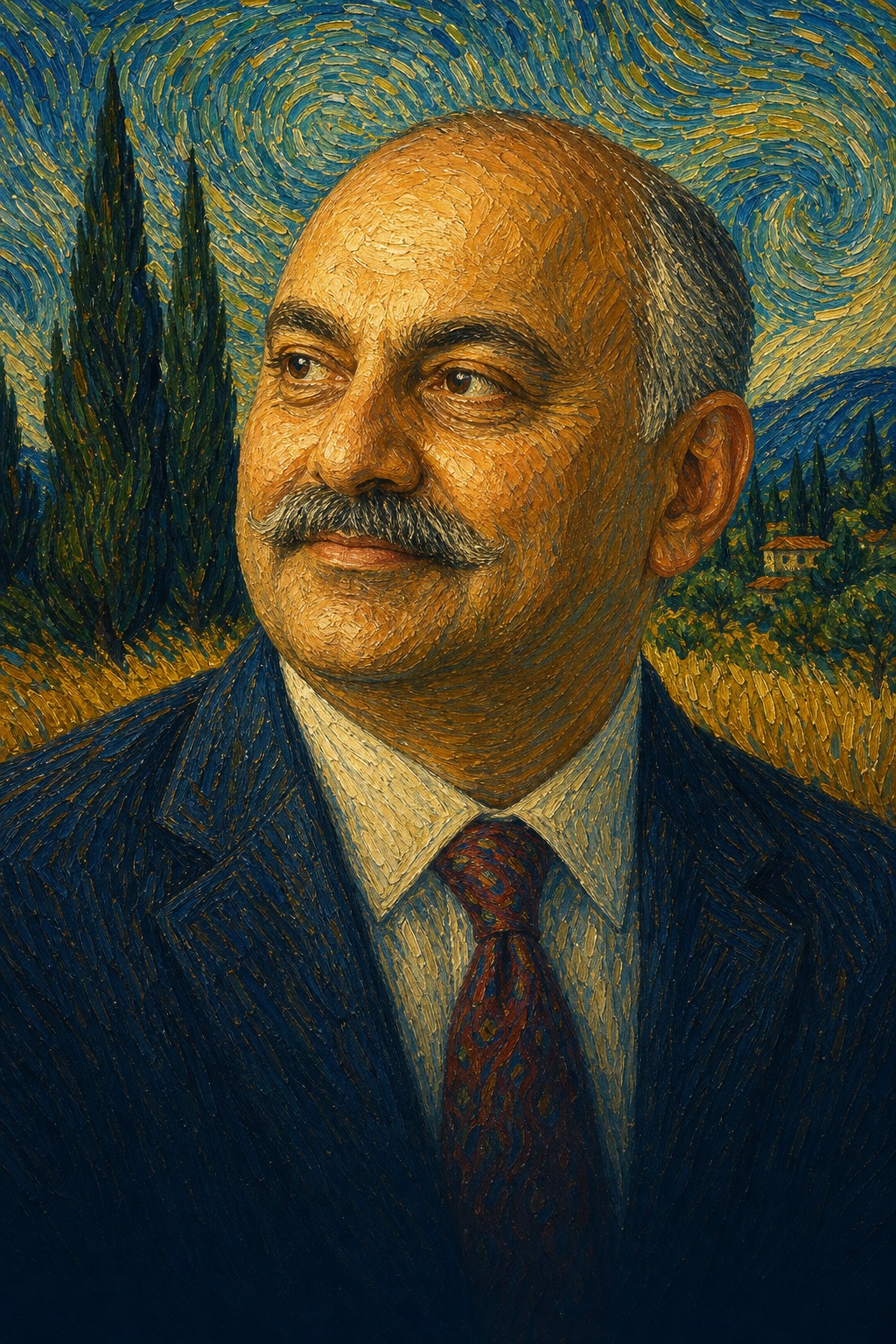
Mohnish Pabrai
Turned Buffett-Munger cloning and downside-first Dhandho underwriting into a concentrated global value process for neglected businesses, while showing how drawdowns, cyclicals, jurisdiction risk, and public copycatting limit transferability.
As of 2026-07-03T04:07:55Z.
Snapshot
| Field | Details |
|---|---|
| Born / died | Born June 12, 1964; living and active as of this profile's as-of date. The birth date is from the Pabrai Wagons Advisors Form ADV brochure supplement, and current activity is supported by 2026 adviser, IAPD, and ETF materials (Pabrai Wagons Advisors ADV, 2026; IAPD individual report, 2026). |
| Nationality / base | Indian-born, U.S.-based investor. Mumbai-born is supported by a 2007 Times of India interview; current regulatory addresses and official fund pages place his advisory operations in West Lake Hills/Austin, Texas (Times of India, 2007; IAPD individual report, 2026). Current citizenship was not reverified from a 2026 primary source. |
| Main vehicles | Pabrai Investment Funds / Dalal Street LLC private funds; Dhandho Funds LLC dba Pabrai Wagons Advisors; Pabrai Wagons ETF (WAGN), successor to the Pabrai Wagons Fund; Dhandho Holdings; Dakshana Foundation (Dhandho Funds bio, 2026; Pabrai Wagons Advisors ADV, 2026). |
| Years active | Entrepreneur from 1990 via TransTech; professional public-equity investor from Pabrai Funds' 1999 launch through present (Dhandho Funds bio, 2026; CFA UK event bio, 2024). |
| Asset classes | Concentrated global long-only public equities; private pooled investment funds; public ETF/predecessor mutual fund; occasional special situations, non-U.S. equities, emerging/frontier markets, ADRs, and cash. The ETF prospectus allows up to 100% foreign and emerging-market exposure and a focused, non-diversified portfolio (Pabrai Wagons ETF Summary Prospectus, 2026). |
| Style tags | Focused value, Buffett/Munger cloning, "Dhandho" low-risk/high-return asymmetry, owner-operator pattern recognition, global special situations, concentrated compounders, capital-cycle investing, long-only patience. |
| Verified track record + period | The private Pabrai Funds record is not available as an audited public series. The strongest public profile claims say $100,000 at Pabrai Funds' 1999 inception grew to $1.83 million after fees through December 2023, or 12.6% annualized versus 7.2% for the S&P 500 [single-source professional-event biography] (CFA UK event bio, 2024). Older Dakshana materials claimed $100,000 became $1.207 million through June 30, 2017, or 14.8% annualized versus 6.3% for the Dow [single-source foundation biography] (Dakshana leadership page, 2026). Public WAGN/predecessor returns are separate: 2025 return before taxes was 3.98% versus 17.88% for the S&P 500; through June 30, 2026 the fund presentation showed 28.43% one-year NAV return and 12.87% annualized since inception on September 29, 2023 (WAGN Summary Prospectus, 2026; WAGN Investor Presentation, 2026). |
| Peak AUM | Current official manager-level figure: about $1.2 billion in private partnership plus ETF assets as of March 31, 2026 (Dhandho Funds bio, 2026). This is not the same as Pabrai Wagons Advisors' ETF-only regulatory AUM of $104.0 million as of December 31, 2025, nor the latest 13F value of $422.9 million at March 31, 2026 (Pabrai Wagons Advisors ADV, 2026; Dalal Street 13F, 2026). |
Life & career timeline
- 1964-1980s - India, Dubai, and an entrepreneurial household. Pabrai was born June 12, 1964. A 2007 Times of India interview describes him as Mumbai-born and quotes him describing a family background shaped by a serial-entrepreneur father who operated in Mumbai and Dubai; the 2024 CFA Society UK transcript adds autobiographical context around his father's Dubai gold-jewelry venture and the family's exposure to business-model arbitrage (Pabrai Wagons Advisors ADV, 2026; Times of India, 2007; Chai/CFA Society UK transcript, 2024).
- 1986 - Clemson University. He graduated from Clemson with a B.S. in Computer Engineering in 1986, a fact repeated in the Form ADV brochure supplement and fund filings (Pabrai Wagons Advisors ADV, 2026).
- 1990/1991-2000 - TransTech. Pabrai founded TransTech, Inc., an IT consulting and systems-integration business, from home with $100,000 of his own capital and no outside investment. The company became an Inc. 500 company, grew to more than $20 million in annual revenue and more than 160 employees, and was sold in October 2000 (Pabrai Wagons Advisors ADV, 2026; Dhandho Funds bio, 2026).
- 1999 - Pabrai Investment Funds. Pabrai launched the Pabrai Investment Funds with $1 million from eight investors, explicitly modeling the structure and sensibility on Buffett's early partnerships (Dhandho Funds bio, 2026; CFA UK event bio, 2024).
- 2004-2007 - Public articulation of the framework. He published Mosaic: Perspectives on Investing in 2004 and The Dhandho Investor in 2007; his own Chai with Pabrai site describes him as author of both books, and the Chai articles archive preserves early essays from the same intellectual period (Chai with Pabrai, 2026; Chai articles archive, 2026).
- 2005-2007 - Dakshana and the Buffett lunch. Pabrai founded the Dakshana Foundation, a U.S. 501(c)(3) focused on intensive educational coaching for economically disadvantaged students in India. In 2007, Pabrai and Guy Spier won the Glide Foundation charity lunch with Warren Buffett for $650,100, an episode that became a public symbol of Pabrai's self-conscious Buffett apprenticeship (Dakshana leadership page, 2026; Times of India, 2007).
- 2008-2009 - Severe drawdown. Pabrai Funds suffered a major financial-crisis drawdown; a January 2009 letter says the funds were down about 60% in 2008, and a Q2 2020 letter later referred to a 67% drawdown across 2007-2009 [self-reported letters, not audited public statements] (Pabrai Funds letter mirror, 2009; Pabrai Funds Q2 2020 letter mirror).
- 2012-2023 - Cloning, concentration, and global expansion. Public 13F and transcript evidence shows the U.S.-listed portfolio moving through financials, Fiat Chrysler/Ferrari, Micron, Alibaba/Seritage, Brookfield, and then coal/offshore-energy exposures, while non-U.S. holdings such as India and Turkey generally sit outside the 13F view (SEC 13F information table, 2026; 13f.info Dalal Street history; HBS Q&A transcript, 2022).
- 2023-2026 - Pabrai Wagons public wrapper. The Pabrai Wagons Fund began operations on September 29, 2023 and converted into the Pabrai Wagons ETF on February 9, 2026, giving public investors access to a concentrated, long-only Pabrai-managed strategy with daily holdings transparency and a 0.90% unitary management fee (WAGN FAQ, 2026; SEC ETF reorganization supplement, 2025; WAGN Investor Presentation, 2026).
Vehicles & structure
Pabrai's platform has two main investment lanes. The older lane is the private partnership complex under Dalal Street LLC / Pabrai Investment Funds. Pabrai Wagons Advisors' 2026 ADV identifies Dalal Street LLC as an affiliated registered adviser to private funds, and lists Pabrai as CEO/owner of Dalal Street and general partner or manager to Pabrai Investment Fund II, Pabrai Investment Fund 3, Pabrai Investment Fund IV, Dhandho Holdings, and Dhandho Holdings Qualified Purchaser (Pabrai Wagons Advisors ADV, 2026). Recent Form D amendments show the continuing private-fund structure: Fund II is an Illinois limited partnership relying on Section 3(c)(1), first sold interests on October 1, 2000, and reported $140.4 million sold to 165 investors; Fund IV is a Delaware limited partnership relying on Section 3(c)(7), first sold interests on October 1, 2003, and reported $413.9 million sold to 410 investors (Pabrai Investment Fund 2 Form D/A, 2026; Pabrai Investment Fund IV Form D/A, 2026). Form D "amount sold" is offering history, not current NAV.
The newer lane is public. Dhandho Funds LLC dba Pabrai Wagons Advisors advises WAGN. The adviser had one ETF client and $104.0 million in client regulatory assets under management at December 31, 2025; the official firm biography separately says Pabrai manages about $1.2 billion across private partnership and ETF assets as of March 31, 2026 (Pabrai Wagons Advisors ADV, 2026; Dhandho Funds bio, 2026). The WAGN wrapper is actively managed, non-diversified, long-only in intent, and allowed to invest globally, including in emerging and frontier markets. Its prospectus states the strategy tries to hold a few high-quality businesses for long periods and "circle the wagons" around the highest-conviction names, while still permitting cash and broad geographic flexibility (WAGN Summary Prospectus, 2026).
There is also an important non-investment vehicle: Dakshana Foundation. Dakshana matters for the profile because it is part of Pabrai's self-description as a Buffett/Munger copier outside investing: the foundation adapted India's Super 30 tutoring model to a broader scholarship-and-coaching operation, with performance measured in exam acceptances and cost per student (Dakshana leadership page, 2026; Dakshana/MOI philanthropy transcript, 2018).
The public 13F trail is useful but incomplete. Dalal Street's March 31, 2026 13F reported three U.S.-listed positions with aggregate value of $422.9 million: Alpha Metallurgical Resources, Transocean, and Warrior Met Coal (Dalal Street 13F, 2026; SEC 13F information table, 2026). That number is not AUM. It excludes cash, most non-U.S. ordinary shares, short positions, private investments, and positions not meeting 13F-reportable criteria; the SEC itself cautions that it has not necessarily reviewed each filing for accuracy or completeness (SEC 13F FAQ).
Track record detail with caveats
Pabrai's reputation rests primarily on the private Pabrai Funds record from 1999 onward, but the full return ledger is not public in a consistently audited, fund-by-fund format. The cleanest public long-term claim is the CFA UK event biography: $100,000 invested at inception in 1999 had grown to $1.83 million after all fees and expenses by December 2023, equal to 12.6% annualized versus 7.2% for the S&P 500 (CFA UK event bio, 2024). Dakshana's older biography gives a different end date and benchmark: $100,000 became $1.207 million by June 30, 2017, or 14.8% annualized versus 6.3% for the Dow (Dakshana leadership page, 2026). Both are useful, but both should be treated as manager/profile claims until reconciled against original audited partnership letters and fee schedules.
Available letter mirrors add texture and caveats. A January 2009 Pabrai Funds letter says the funds were down about 60% in 2008 and that roughly 15% of assets were being redeemed, showing that the long-term compounding record includes severe interim impairment and investor-liquidity stress (Pabrai Funds letter mirror, 2009). A Q2 2020 letter mirror gives self-reported fund-level tables through 2019 and refers to a 67% drawdown during 2007-2009; it also acknowledges periods of lagging benchmarks [self-reported, third-party mirror] (Pabrai Funds Q2 2020 letter mirror). Later task work should verify those letters' provenance and reconcile PIF II, PIF III, PIF IV, Dhandho Holdings, and investor-level return series.
The public WAGN record is easier to cite but much shorter and structurally different. The predecessor mutual fund commenced September 29, 2023, converted to the ETF on February 9, 2026, and carries forward the predecessor performance history. The February 2026 summary prospectus shows 2024 total return of 10.91% and 2025 return before taxes of 3.98%, compared with 17.88% for the S&P 500 in 2025 and 24.74% annualized since the predecessor's inception through December 31, 2025 (WAGN Summary Prospectus, 2026). The June 30, 2026 investor presentation shows a rebound: 28.43% one-year NAV return and 12.87% annualized since September 29, 2023 (WAGN Investor Presentation, 2026). That record is public and current, but it is not the same product as the original private Pabrai Funds.
The portfolio evidence supports a highly concentrated, sometimes contrarian style. Historical 13F aggregators show waves of very large U.S.-listed exposures: Bank of America and Citigroup after the financial crisis, Fiat Chrysler and Ferrari in the mid-2010s, Micron and Seritage around 2019-2021, Alibaba/Prosus-related China exposure, and coal/offshore-energy names by 2023-2026 (13f.info Dalal Street history; HBS Q&A transcript, 2022; MOI Global transcript, 2025). The evidence is enough to describe the style; it is not enough to compute realized P&L without original cost basis, fund allocations, foreign holdings, and exits.
Legal/regulatory caveat: this run found no public SEC/IAPD disclosure event or adviser-disciplinary event for Pabrai in the reviewed sources. IAPD says no disclosed events for the individual report, and the March 31, 2026 ADV says disciplinary information is not applicable and no bankruptcy petition has occurred in the past ten years (IAPD individual report, 2026; Pabrai Wagons Advisors ADV, 2026). This is a public-source check, not a complete PACER/state-court audit.
Why they matter
Pabrai is one of the clearest modern examples of explicit "cloning" as an investment identity. He did not merely admire Buffett and Munger; he copied the partnership structure, fee logic, public reasoning style, reading habits, and philanthropic model, then made copying itself a teachable mental model. That makes him useful in the Canon because his edge is unusually legible: he looks for proven high-return patterns, removes reinvention pride from the process, and tries to concentrate when odds and downside appear asymmetric (Dhandho Funds bio, 2026; Chai with Pabrai, 2026).
He also matters because his career connects entrepreneurship and investing more directly than many pure money managers. TransTech gave him first-hand operating experience with small-company scaling, sales, customer gaps, cash constraints, and eventual exit value. His later writing and talks repeatedly return to the same pattern-recognition habit: identify a market gap, understand the business model, and demand an unusually favorable risk/reward before committing capital (Pabrai Wagons Advisors ADV, 2026; Chai/CFA Society UK transcript, 2024).
The cautionary side is equally important. Pabrai's own record includes a financial-crisis drawdown around 60%, a self-reported 67% peak-to-trough period, and public debates over whether cloning, concentration, and charismatic teaching can mask volatility and opportunity costs (Pabrai Funds letter mirror, 2009; Pabrai Funds Q2 2020 letter mirror). WAGN adds a live, transparent test of the strategy in public form: investors can now observe holdings, fees, taxes, concentration, liquidity, and benchmark-relative performance more directly than in the private-fund years (WAGN FAQ, 2026; WAGN Summary Prospectus, 2026).
For later Canon work, Pabrai is a bridge figure: Buffett/Munger value investing translated through an immigrant entrepreneur, a concentrated global investor, a public educator, and a philanthropy operator. His profile should be studied not as a clean morality tale but as a live case in how much of a great investor's edge can be copied, how much requires temperament, and how much is path-dependent luck, capital structure, and tolerance for large interim pain.
Open questions for later tasks
- Reconstruct the audited/private Pabrai Funds return history by vehicle (PIF II, PIF III, PIF IV, Dhandho Holdings) and by investor experience after fees, taxes, subscriptions, and redemptions.
- Verify the original partnership letters for 2008-2009, 2019-2020, and later periods rather than relying on mirrors; reconcile reported annualized returns against benchmarks and capital flows.
- Build a complete non-U.S. holdings file. The 13F misses India, Turkey, Naspers/Prosus/Tencent-style indirect exposure, cash, and most foreign ordinary shares.
- For the C-greatest-trades task, verify realized P&L and timing for Fiat Chrysler/Ferrari, Micron, Bank of America/Citigroup, Reysas/Turkey, Rain Industries, coal/metallurgical-coal names, and any private Dhandho Holdings investments.
- For the D-mistakes task, quantify the 2008 drawdown, Delta Financial loss, Seritage opportunity cost, Alibaba/China loss or tax-loss harvest, and any cases where cloning created crowding or thesis lag.
- For the E/F/G tasks, separate Pabrai's own words from host introductions, transcript edits, third-party summaries, and book metadata. Chai with Pabrai is the best index, but exact quotes should be checked against the underlying video/audio when possible.
- Verify current citizenship/nationality with a current primary source if later tasks need the exact field; this profile uses Indian-born/U.S.-based because those facts are well supported.
- Track WAGN after its February 9, 2026 ETF conversion, including ETF-specific spreads, premiums/discounts, tax distributions, cash creations/redemptions, and whether public transparency changes the strategy.
As of: 2026-07-03T05:34:40Z
Core worldview
Mohnish Pabrai's investing worldview is a compact triangle: business ownership, copied excellence, and asymmetric bets. He presents public equities not as symbols to trade but as fractional ownership in cash-generating businesses whose value can be estimated with enough roughness to act. In an early Mosaic essay hosted in his own archive, he reduces the exercise to current cash generation, likely future cash flows, competitive protection, price paid, and management quality, arguing that the hard part is discipline rather than mathematical sophistication (Chai/Mosaic, "Dhandho!", Aug. 1, 2002). His book-length framing, The Dhandho Investor, popularized the phrase "Heads, I win; tails, I don't lose much," a shorthand for situations where uncertainty is visible but permanent capital loss appears bounded (Google Books bibliographic page).
The worldview is entrepreneurial rather than academic. Pabrai's favorite origin story is the Patel motel model: immigrants took over distressed small motels, used family labor and frugal operations to become the lowest-cost operator, and accepted uncertainty without accepting conventional economic risk. In his 2019 discussion of The Dhandho Investor, the attractive feature was not bravery for its own sake; it was a structural cost advantage that let the buyer underprice competitors while still earning acceptable returns (MOI Global, 2019). That story also explains why Pabrai can admire both Graham-style bargain hunting and Munger-style business quality. The object is not cheapness alone; it is mispriced payoff asymmetry.
This leads to a practical definition of risk that differs from volatility. Pabrai repeatedly distinguishes risk from uncertainty. In his 2002 Mosaic essay "Risk vs. Uncertainty," he argues that markets often penalize cloudy situations as if cloudy automatically meant dangerous, while overpaying for apparent certainty (Chai/Mosaic, "Risk vs. Uncertainty," Feb. 1, 2002). His opportunity set therefore skews toward industries, geographies, or companies where the surface narrative is unpleasant but the downside can be underwritten.
The edge
Pabrai's edge is not a claim to original genius. It is the opposite: he has spent much of his public career making imitation respectable. He calls this "cloning," meaning that the first filter in idea generation can be the disclosed portfolios, public writings, and mistakes of investors he respects. In a Boston College talk, he described 13F filings as a way to compress a vast stock universe into a smaller list of ideas already vetted by capable investors, then subject those ideas to his own circle-of-competence, valuation, and checklist work (Boston College presentation transcript, 2013). In his "Ten Commandments" talk, he broadened the source list to include 13Fs, Value Investors Club, SumZero, GuruFocus, Manual of Ideas, the Corner of Berkshire & Fairfax, and local networks in markets such as India and Turkey (Chai transcript, "Ten Commandments," 2018).
The better description is "low-ego sourcing, independent underwriting." In a 2018 Manual of Ideas conversation with Guy Spier, Pabrai accepts the label of "shameless cloner," but the surrounding discussion makes clear that copying is the starting point, not the investment thesis. He asks why a strong investor might own an ugly or uncomfortable situation, then tries to build or reject the case himself (MOI Global, 2018).
The second part of the edge is temperament around discomfort. Spier contrasted his own revulsion toward some of Pabrai's distressed ideas with Pabrai's attraction to them; Pabrai's reply, in effect, was that widely admired companies at widely admired prices leave him less room for insight than messy situations where fear has overwhelmed arithmetic (MOI Global, 2018). In 2024, Pabrai told CFA UK that investors should look for anomalies where quoted prices "make no sense," because auction markets overshoot and undershoot business value (CFA UK session transcript, June 12, 2024).
Process: idea sourcing -> research -> valuation & entry -> sizing -> portfolio construction -> sell discipline
Idea sourcing. Pabrai begins with other people's filters and with places where the crowd is structurally absent. Public filings, value-investor idea sites, respected managers' holdings, local contacts, and market dislocation all feed the list. In the 2008 Graham & Doddsville interview, his older search process included 52-week lows, low P/E, low price-to-book, liquidation value, Value Line, 13Fs, and other value investors' holdings (Graham & Doddsville, Summer/Fall 2008). By the late 2010s and 2020s, the same habit had gone more global: India, Turkey, South Korea, Japan, coal, offshore drilling, and holding-company discounts recur because they are harder, stranger, or more reputationally awkward than U.S. large-cap compounders.
Research. The first research question is negative: can he reject it quickly? Pabrai has said he tries to get to "no" as fast as possible, first by checking whether the business falls inside his circle of competence and whether a rough valuation might be compelling (Boston College transcript, 2013). If the idea survives, research escalates through annual reports, filings, industry material, books, transcripts, and sometimes management meetings. This last point has evolved. Pabrai once leaned toward not meeting management, but in India he later changed the rule because promoter quality and governance can dominate the investment outcome. At FLAME University in 2023, he said meetings were used to understand how the business works and what makes it tick, not to outsource the thesis to executives (FLAME University Q&A, Dec. 25, 2023).
Valuation and entry. The valuation backbone is discounted future free cash flow, but Pabrai uses it with a blunt margin-of-safety hurdle rather than a false-precision model. In an early Mosaic essay, he defines intrinsic value through future cash flows and warns against buying above it (Chai/Mosaic, "Intrinsic Value," July 1, 2001). In the 2013 Boston College talk, he said an "absolute lowest" setup needed at least a 50% discount to intrinsic value; paying $13 for something worth $18 was not enough (Boston College transcript, 2013). In later talks, he softened the caricature of pure cheapness: the ideal is cheap and good, or cheap and great, rather than merely statistically cheap (MOI/Talks at Google transcript, 2017).
Sizing. Pabrai's sizing philosophy has changed materially. The Dhandho Investor introduced Kelly-style thinking, but he later cautioned students not to apply Kelly mechanically to one-off stock investments where odds are unknowable. In a 2020 Harvard/Francis Chou session, he said Kelly is much more appropriate for repeated bets with known odds than for individual stocks (Harvard/Francis Chou transcript, 2020). In practice, he has described an upper limit around 10% at cost for managed funds, with smaller positions for lower conviction and winners allowed to grow (Boston College lecture, Nov. 30, 2017).
Portfolio construction. The portfolio is intentionally focused. The public Pabrai Wagons ETF documents describe an active, long-only, global, non-diversified strategy with a focused portfolio, while also spelling out concentration, emerging-market, illiquidity, small-cap, turnover, and ETF-specific premium/discount risks (WAGN summary prospectus; Pabrai Wagons Form ADV Part 2A/2B, Mar. 31, 2026). As of the Q1 2026 Dalal Street 13F, the reported U.S.-listed portfolio was only three names: Warrior Met Coal, Transocean, and Alpha Metallurgical Resources, underscoring how concentrated and cycle-exposed the visible U.S. sleeve can become (SEC 13F information table, Q1 2026). The 13F is incomplete by design: it omits cash, most foreign ordinary shares, private funds' full books, shorts, derivatives, and cost basis (SEC Form 13F FAQ).
Sell discipline. Pabrai's classic rule is thesis-first selling. Before buying, he has described writing a one-paragraph thesis with value and sell conditions, then checking the thesis periodically. Around 90% of intrinsic value becomes a sale candidate; a position at 75-80 cents on the dollar may be sold if a better 40-cent dollar appears and cash is scarce (Boston College transcript, 2013). Yet his later case studies show a countervailing lesson: he has admitted that Pabrai Funds effectively owned more than 1% of Ferrari and sold because it looked optically expensive, a mistake that pushed him toward more respect for true compounding businesses when the original quality thesis remains intact (SumZero virtual investor summit transcript, Feb. 9, 2023).
Risk management
Pabrai's risk management is mostly qualitative and behavioral: avoid leverage, stay within the circle of competence, demand a large margin of safety, avoid fast-changing businesses when they cannot be underwritten, and use a checklist to slow the mind down. The checklist is important because he treats investor mistakes as reusable data. In his 2024 CFA UK session and earlier Google/MOI material, he presents checklists as a way to fight commitment bias: the longer an investor studies a business, the more the mind wants the answer to be "yes" (CFA UK transcript, 2024; MOI/Talks at Google transcript, 2017).
The stress test is actual history. Pabrai's January 2009 partner letter reported that the funds were down about 60% in 2008, versus roughly 30-40% declines for broad indices, and said he was disappointed with the performance (Pabrai Funds Jan. 16, 2009 letter mirror). That is not a footnote; it is a direct challenge to any simplistic "low risk" reading of Dhandho. The strategy can reduce estimated permanent-loss risk in individual securities while still producing severe mark-to-market and redemption pressure at the portfolio level. The same letter discusses investor redemptions after the drawdown and a move toward 2%/5%/10% sizing bands, evidence that risk controls changed after pain rather than emerging fully formed (Pabrai Funds Jan. 16, 2009 letter mirror).
Other case studies sharpen the point. Delta Financial shows how an apparently probabilistic, cheap, high-upside bet can become a near-total loss when balance-sheet fragility is underestimated; Delta's 2007 10-Q named funds managed by Pabrai among investors in August 2007 financings, and Delta entities filed for Chapter 11 later that year (Delta Financial 10-Q, 2007; Delta bankruptcy filing, Dec. 17, 2007). Seritage shows a different failure mode: cheap real estate assets were not enough when redevelopment complexity across many municipalities consumed the thesis; Pabrai later said he exited after recognizing that complexity (HBS Investment Conference Q&A, 2022).
Temperament & psychology
The psychological ideal is patience with sudden aggression. Pabrai often says that two or three good ideas per year are enough, and his Mosaic essay on the "successful fulltime portfolio manager" argues that the investor's job is often to do almost nothing until rare mispricing appears (Chai/Mosaic, "The Successful Fulltime Portfolio Manager," 2001). This makes inactivity a feature, not a bug. It also explains why Pabrai's operating structure matters: patient capital and low pressure are part of the strategy's machinery, not just background.
There is also a humility ritual in his public philosophy. Cloning Buffett, Munger, Li Lu, Einhorn, or anonymous value investors is a way of subordinating ego to evidence. The Buffett charity lunch is symbolically consistent with this; contemporaneous reporting described Pabrai's payment as "guru dakshina," and later accounts emphasize that he wanted life and philanthropy lessons as much as investment tips (Times of India, July 4, 2007; Moneycontrol, Oct. 24, 2018). The danger is that humility in sourcing can coexist with great conviction in sizing. Pabrai's best version is unemotional about where an idea came from and ruthless about killing it; the dangerous version can become attached after the work is done.
Evolution over career
Pabrai began as a Buffett-partnership clone with a strong Graham bargain-hunting vocabulary. The 2008 Graham & Doddsville interview is full of low P/E, low price-to-book, liquidation value, 52-week lows, and intrinsic-value discount language (Graham & Doddsville, 2008). The post-2008 period added a visible layer of checklist discipline and more explicit limits on sizing after drawdowns. The 2010s and 2020s added more global hunting and more owner-operator, capital-cycle, and quality-of-business learning.
The portfolio record visible through public filings and transcripts supports this evolution. Bank of America and Citigroup after the financial crisis fit "clone plus tangible downside floor," with Pabrai later saying he bought Bank of America after Buffett and saw the banks trading below tangible book value (Dalal Street 13F, Sept. 30, 2014; Barron's interview excerpt mirror). Fiat Chrysler/Ferrari was hidden-asset and management execution. Rain Industries and Reysas were underfollowed emerging-market value cases with large apparent asset or earnings gaps (Narsee Monjee lecture, 2022; Boston College Q&A, Oct. 12, 2023). The current coal/offshore emphasis is more capital-cycle oriented: in 2025 he framed metallurgical coal, shipping, real estate, and offshore drilling through supply starvation, replacement cost, balance-sheet durability, and long gestation periods (MOI Global interview transcript, Jan. 2025; SumZero session, June 10, 2025).
What they explicitly reject
Pabrai rejects activity for its own sake. The full-time portfolio-manager essay is an attack on the idea that constant work produces constant opportunity; most of the time, the investor should be reading, learning, and waiting (Chai/Mosaic, "The Successful Fulltime Portfolio Manager"). He rejects buying outside the circle of competence even when the missed opportunity later looks obvious; Apple and Amazon have been used as examples of ideas he could pass on rationally if he could not underwrite them at the time (Boston College transcript, 2013).
He also rejects simplistic buy-and-hold at any price. In "Ten Commandments," he used examples such as Coca-Cola and Mastercard to argue that even excellent businesses can become poor forward-return investments if the entry multiple is too high (Chai transcript, "Ten Commandments," 2018). At the same time, later Ferrari regret shows that he also rejects the opposite error: selling a rare compounding machine only because it has moved from optically cheap to optically expensive (SumZero virtual investor summit transcript, Feb. 9, 2023).
Finally, he rejects blindly transferring casino math to public equities. His later criticism of Kelly sizing in one-off stocks is a meaningful revision of the book-era framing; the practical philosophy became more conservative than the slogan "few bets, big bets" can sound in isolation (Harvard/Francis Chou transcript, 2020).
Regimes where it thrives vs. struggles
Pabrai's method thrives when there is forced selling, institutional neglect, career risk, foreign-market abandonment, regulatory fear, commodity-cycle disgust, or accounting/holding-company complexity. The 2001 post-September 11 Mosaic essay illustrates the broad pattern: when macro fear sells everything at once, individual business values may be unchanged or even improved (Chai/Mosaic, "When Mr. Market Gets Depressed," Nov. 1, 2001). Later examples include Turkey after foreign capital fled, Indian cyclicals with "future P/E of 1" characteristics, and metallurgical coal after climate and ESG pressure made the whole coal category difficult for many institutions to own (Boston College Q&A, 2023; Narsee Monjee lecture, 2022; SumZero transcript, 2025).
It struggles when markets are broadly loved, liquidity is abundant, and the best companies are well understood by deep pools of capital. Pabrai has said the U.S. is often harder because it is heavily picked over; the strategy's opportunity set improves when the investor is willing to cross geographies and industries that others avoid (Forbes/SumZero interview mirror, 2018; CFA UK transcript, 2024). It also struggles when the apparent downside floor depends on refinancing, politics, operational turnarounds, or multi-jurisdiction execution that is harder than the spreadsheet suggests. Delta and Seritage are the warning labels here.
Tensions between stated philosophy and actual behavior
The first tension is between "low risk" and realized volatility. Pabrai's philosophy is about permanent-loss probability and payoff asymmetry, but a concentrated portfolio of small, cyclical, or distressed equities can still fall more than the market and trigger redemptions. The 2008 drawdown is the cleanest evidence (Pabrai Funds Jan. 16, 2009 letter mirror).
The second tension is between cloning and accountability. Cloning can be a rational search tool for Pabrai, who knows his own sizing, taxes, liquidity, thesis, and exit plan. It can be dangerous for outside observers who see only a delayed public filing. The Delta Financial episode became a public cautionary tale precisely because piggybackers saw the holding but not the full probability tree, sizing discipline, or sell trigger (Motley Fool/Morgan Housel, 2016).
The third tension is between cheap assets and business complexity. Seritage and some commodity/cyclical work show that "asset value" may be real but not easily monetizable. Local regulation, financing windows, redevelopment complexity, and management execution can turn a cheap-looking balance sheet into a long, expensive problem (HBS Q&A transcript, 2022).
The fourth tension is between evolving quality awareness and historical sell rules. The old 90%-of-intrinsic-value sell discipline protected against round trips and opportunity cost. The Ferrari post-mortem argues that rare businesses can keep compounding through valuation discomfort (SumZero virtual investor summit transcript, Feb. 9, 2023). Pabrai's philosophy is therefore not static Dhandho dogma. It is a living synthesis: Graham's price discipline, Buffett's business ownership, Munger's quality filter, and a global willingness to look foolish while waiting for the payoff.
As of: 2026-07-03T07:28:49Z
Ranking Note
Pabrai's greatest trades are harder to rank than those of investors with public audited ledgers. The private Pabrai Funds do not publish a full position-level record; SEC 13F filings show only U.S.-listed long positions at quarter end; and several of his highest-impact ideas, especially Reysas and Rain Industries, sit outside the clean U.S. filing system. This file therefore ranks trades by the combined weight of: size in the relevant vehicle, source quality, return magnitude, impact on Pabrai's process, and how much of the outcome can be checked outside his own retelling.
On that basis, Fiat Chrysler/Ferrari is the single best-documented greatest trade. It has Pabrai's repeated own-words testimony, 13F corroboration of large U.S.-listed exposure, secondary corroboration, and a clear lesson that changed his sell discipline. Reysas may ultimately be the highest-return trade in one offshore fund, and Rain produced an extraordinary mark-to-market gain, but both require heavier caveats around local filings, currency effects, and realized exits. Current coal, offshore, and TAV positions are included as live candidates, not as completed greatest trades.
1. Fiat Chrysler / Ferrari - The Best-Supported Great Trade
Context and dates. Pabrai began buying Fiat Chrysler around 2012, when the auto group was still unloved after the financial crisis and before the U.S.-listed Fiat Chrysler Automobiles shares became a clean 13F object. By 2018 he was presenting the idea as a hidden-earnings case: bought below roughly $5 per share, with management later guiding to roughly $5 per share of earnings power (Ten Commandments transcript, 2018). Later first-party interviews put the Fiat Chrysler capital committed at roughly $50 million-$60 million, with look-through Ferrari exposure around $16 million-$20 million after the spin-off; treat those size figures as Pabrai self-reported, not audited fund ledgers (Capital Compounders interview, 2025; Boston College Q&A, 2023).
Thesis and how he found it. The idea combined classic Pabrai elements: cloning, hidden assets, ugly cyclicality, and a manager he regarded as unusually able. The thesis was not simply that autos were cheap. It was that Sergio Marchionne was rationalizing an inefficient collection of brands and that market participants were not crediting the separated pieces, especially Ferrari. Pabrai later framed the stock as a case where temporary industry pessimism hid normalized earnings and breakup value (Ten Commandments transcript, 2018; HBS Q&A, 2022).
Size and structure. This was a concentrated common-stock position across private funds, later visible through Dalal Street 13F filings once FCAU and Ferrari traded in U.S.-reportable form. Dalal Street's 13F showed Ferrari after the spin-off at 1.28 million shares worth $53.1 million in Q1 2016, then 398,138 shares worth $54.2 million in Q2 2018 before RACE disappeared from the Q3 2018 filing (Dalal Street 13F, Q1 2016; Dalal Street 13F, Q2 2018; Dalal Street 13F, Q3 2018). 13F mirrors also show FCAU as a very large share of the disclosed U.S. portfolio, but those percentages are not full-fund weights because foreign ordinaries, cash, and non-13F assets are excluded (Dataroma portfolio history; SEC 13F FAQ).
Entry and the path. The position required tolerating a low-multiple cyclical manufacturer and governance complexity. The U.S.-listed record also understates the full path because the initial Fiat exposure predated the clean FCAU 13F trail. This run did not reconstruct the maximum interim drawdown from private-fund records. The Ferrari spin-off created a second decision: whether to hold an exceptional brand after it had become visibly expensive versus ordinary auto companies.
Exit and P&L. Pabrai has repeatedly described Fiat Chrysler as a roughly 7x to 8x outcome over about six years; treat that as a self-reported mid-2018 result, not audited realized trade-level P&L (Ten Commandments transcript, 2018; SumZero/Forbes anthology, 2018). The Ferrari portion is the painful kicker: he said the embedded Ferrari cost was about $16 per share and that, at a later roughly $310 price, the Ferrari stake would have been worth about $400 million had he not sold (Boston College Q&A, 2023). Those are self-reported figures on different bases, but they are consistent with the public record that Ferrari became a far higher-quality compounder than the auto parent.
What it teaches. Fiat/Ferrari is Pabrai's best example of cloning plus independent underwriting, but its final lesson is sell discipline. A merely cheap cyclical can be sold into value recognition; an exceptional business separated from that cyclical may deserve a different rule.
2. Reysas Logistics / Reysas REIT - The Turkish Asset-Value Winner
Context and dates. Pabrai first described Reysas as a 2019 Turkey opportunity, discovered after macro fear and currency pressure had driven many investors away from Turkish equities. In his telling, Reysas had a roughly $20 million market capitalization against an estimated liquidation value hundreds of millions higher, built around logistics warehouses and related real-estate assets (HBS Q&A, 2022; William & Mary Q&A, 2022).
Thesis and how he found it. This is the purest modern Dhandho trade in the record: high uncertainty, allegedly low permanent-loss risk, and an obvious reason for institutional neglect. Pabrai's thesis was that the public market was valuing the operating company far below the real estate embedded in its REIT subsidiary and warehouse network. WAGN's later materials describe Reysas as owning 62% of Reysas REIT, which owns more than 12 million square feet of Grade A warehouses in Turkey, and as connected to rooftop solar and vehicle-inspection assets (WAGN investor presentation, 2026).
Size and structure. Pabrai has described the original Reysas purchase as roughly one-third of the company for about $7 million-$8 million; treat the cost and one-third language as self-reported because the exact vehicle-by-vehicle ledger is private (HBS Q&A, 2022; EO Gurgaon transcript, 2023; Microsoft guest lecture, 2024). Turkish KAP data corroborates ownership and structure, not Pabrai's cost basis, fund-level returns, or realized P&L: the current RYSAS page shows Pabrai Investment Fund 3 at 14.98% and Pabrai Investment Fund II at 10.4%, or 25.38% combined, while a separate National Financial Services line should not be attributed to Pabrai without proof (KAP RYSAS company information, 2026). Pabrai later said Reysas and TAV became about half of one offshore fund in 2023, and by 2025 Reysas alone was north of 60% of one offshore fund after appreciation; do not generalize those weights to all Pabrai-managed assets (University of Omaha Q&A, 2023; MOI Global interview, 2025).
Entry and the path. The drawdown risk was political, currency, governance, and liquidity risk, not just mark-to-market volatility. Pabrai had to underwrite Turkish lira economics, local disclosure, related assets, and the possibility that the asset gap would stay ignored for years. The position also became so large in one offshore fund that future returns became highly dependent on a single emerging-market complex.
Exit and P&L. There is no clean public exit. Pabrai said the position was about a 9x dollar return by late 2022, and later first-party materials reported higher mark-to-market snapshots, including roughly 30x market-cap growth and more than 18x on average on invested amount (William & Mary Q&A, 2022; SumZero transcript, 2024; Dhandho annual meeting transcript, 2025). Treat the exact P&L as [self-reported], mostly unrealized, and not independently audited unless later fund letters or exchange filings show sales.
What it teaches. Reysas shows Pabrai's willingness to leave the comfortable U.S. 13F universe when neglect is extreme. It also shows the transferability limit: individual investors can study the asset/value mismatch, but they may not have the same access, patience, local diligence, or tolerance for a position becoming fund-defining.
3. Rain Industries - The Future-Earnings 10-Bagger With a Sell-Discipline Scar
Context and dates. Pabrai built Rain Industries in 2015, when the Indian carbon, cement, and chemicals company was underfollowed, levered, cyclical, and difficult for many global investors to categorize. He later described the setup as roughly a $200 million market cap business with nearly $2 billion of revenue and a plausible earnings surge that could make the apparent future P/E close to one (Value School Q&A, 2021).
Thesis and how he found it. The thesis came from underfollowed Indian-market research and a write-up by Parry Pasricha, then required Pabrai to validate that the debt was structurally manageable and that earnings power would normalize upward. This was not a quality compounder thesis. It was a deep-cyclical earnings-power thesis: buy before the reported numbers reveal the normalized cash flow.
Size and structure. Rain's own annual report gives unusually strong ownership evidence for a non-U.S. Pabrai idea. At year-end 2015, Pabrai Investment Fund 3 held 16.25 million shares, or 4.83%, and Pabrai Investment Fund II held 12.76 million shares, or 3.79% (Rain Industries annual report, 2015). The 2016 report also showed Pabrai fund ownership, including Fund IV, according to the company annual-report disclosure (Rain Industries annual report, 2016).
Entry and the path. Rain rewarded the thesis quickly when earnings arrived and the market capitalized them. The hard part came later: cyclicals can become cheap again after the earnings peak, and a large non-U.S. position is harder to exit quietly than to admire in a case study.
Exit and P&L. Pabrai told Boston College students in 2017 that Rain had produced about $170 million of gains and counting, and he later said the market cap moved from roughly $200 million to near $2 billion within about three years (Boston College lecture, 2017; Boston College Q&A, 2023). Realized P&L remains [not public]. Secondary reporting later noted a severe share-price decline, so Rain belongs in both the greatest-trades file and the later mistakes/sell-discipline discussion (Economic Times, 2019).
What it teaches. Rain is the strongest warning against confusing a great entry with a great complete trade. The buy thesis worked; the harder question was how much of a cyclical re-rating to bank.
4. Micron - The Oligopoly Trade That Became a Respectable Double
Context and dates. Pabrai held Micron from roughly 2017 to 2023, making it one of his largest U.S. bets for several years. The public 13F trail first shows MU at 547,000 shares worth $17.4 million in Q4 2018, then 1.83 million shares worth $98.3 million in Q4 2019 and 1.82 million shares worth $136.9 million in Q4 2020 (Dalal Street 13F, Q4 2018; Dalal Street 13F, Q4 2019; Dalal Street 13F, Q4 2020).
Thesis and how he found it. The thesis was that DRAM and memory had changed from a self-destructive commodity market into a three-player oligopoly dominated by Samsung, SK Hynix, and Micron. Pabrai said Micron began as a 10% position and grew toward roughly 25% of one relevant portfolio as the thesis worked (William & Mary Q&A, 2022).
Size and structure. This was common stock in U.S.-listed Micron, making it easier to verify than Reysas or Rain. The caveat is that 13F rows give market value at quarter end, not original cost, private-fund weight, or intraperiod trading.
Entry and the path. Micron required enduring a semiconductor cycle and testing whether industry structure had truly changed. Pabrai later said he met with Korean memory-industry participants during the holding period, which suggests the thesis was actively re-underwritten rather than passively cloned (WAGN investor call, June 2026).
Exit and P&L. Pabrai said WAGN was out of Micron before launch and that the six-year U.S. bet roughly doubled, which he translated to about a 12% to 14% annualized return (WAGN investor call, June 2026). That is a good outcome, not a Fiat-scale home run. The exit rationale is the important evidence: he believed Samsung's behavior had changed enough to weaken the oligopoly thesis.
What it teaches. Micron shows Pabrai's willingness to abandon a thesis when industry conduct changes, even if the stock worked. It also demonstrates the difference between a statistically cheap cyclical and a structurally improved cyclical.
5. Post-Crisis U.S. Banks and the 2009 Rebound - Recovery After a Near-Death Year
Context and dates. This is best treated as a crisis-recovery cluster rather than a single neat trade. Pabrai Funds' mirrored January 2009 letter reported calendar-2008 losses near 60% across the main funds, with redemptions crystallizing losses for some investors (Pabrai Funds letter mirror, Jan. 2009). In a 2012 interview, Pabrai said he had been fully invested, sold Fairfax to fund new purchases, bought a basket of distressed commodity-type businesses, and that funds were up about 125% in 2009; later mirrored fund tables also show a self-reported 2009 rebound in PIF3 and PIF4 (Motley Fool interview, 2012; Pabrai Funds Q2 2020 letter mirror).
Thesis and how he found it. The thesis was that many economically sensitive or financial assets were priced for a depression that would not fully arrive. The U.S. bank component later visible in 13Fs fits that pattern: Bank of America and Citigroup were large, politically central institutions with impaired but recoverable earnings power.
Size and structure. The 13F record shows Bank of America at 7.05 million shares worth $43.2 million in Q3 2011, then later 7.40 million shares worth $115.2 million in Q4 2013; Citigroup appears at 1.56 million shares worth $81.3 million in Q4 2013 (Pabrai 13F-HR/A, Q3 2011; Dalal Street 13F, Q4 2013). By Q1 2015, Citigroup was nearly gone and Bank of America was absent, indicating the bank basket had largely been exited around that period (Dalal Street 13F, Q1 2015).
Entry and the path. The emotional drawdown was the point. Pabrai entered the rebound from a damaged capital base and public embarrassment after 2008. He did not have the dry powder he wished he had, so recovery required both staying solvent and reallocating from existing positions.
Exit and P&L. Trade-level P&L is [not public]. The 2009 rebound is [self-reported] at fund level from interview and mirrored-letter evidence, while the later BAC/Citi positions can be checked only as delayed quarter-end 13F market-value snapshots. The cluster still belongs because it marks a survival transition: Pabrai's later evolution in sizing, concentration, and sell discipline cannot be understood without the severe 2008 drawdown and 2009 rebound.
What it teaches. A great rebound does not erase a risk-control mistake. This cluster is both a win and a scar: it validated buying into panic, but also showed the cost of entering a crisis fully invested.
6. Metallurgical Coal - Alpha Metallurgical and Warrior as a Live Capital-Cycle Bet
Context and dates. Pabrai's current met-coal basket emerged after 2023 and is not a completed greatest trade. Dalal Street's Q1 2026 13F shows 579,738 shares of Alpha Metallurgical Resources worth $119.0 million and 1.81 million shares of Warrior Met Coal worth $168.7 million (Dalal Street 13F, Q1 2026). WAGN's June 2026 investor presentation also lists met coal as a major bucket and Warrior among the largest holdings (WAGN investor presentation, 2026).
Thesis and how he found it. The thesis is a capital-cycle argument. Metallurgical coal is hated, ESG-constrained, and hard to finance, but it remains tied to steel production. Pabrai's WAGN commentary framed Warrior and Alpha as low-cost producers that could generate large cash flow at mid-cycle or favorable met-coal prices (WAGN investor call, March 2026; WAGN investor call, June 2026).
Size and structure. The trade is held through at least Dalal Street 13F accounts and WAGN, but those products should not be blended. WAGN is a public ETF/predecessor vehicle, while Dalal Street filings likely reflect private-fund or managed-account holdings. The Wagons ADV explicitly warns of side-by-side-management conflicts and allocation procedures, so vehicle-level results must stay separate (Pabrai Wagons ADV, 2026).
Entry and the path. The path risk is obvious: commodity prices can fall, China/steel demand can disappoint, and terminal-value assumptions can collapse if the world accelerates away from metallurgical coal. The trade may look cheap for years because many institutions cannot or will not own it.
Exit and P&L. No exit. The Q1 2026 marks show large current market values, but no realized P&L. This is a live candidate for a future greatest-trades revision, not proof of a finished win.
What it teaches. Pabrai keeps returning to the same pattern: hated industry, capital withdrawal, low-cost survivors, and large free-cash-flow optionality. The difference from Fiat or Rain is that the exit has not yet tested the thesis.
7. Transocean and Offshore Drilling - Another Live Scarcity Trade
Context and dates. Transocean appeared in Dalal Street's 13F record in Q3 2025 and was still a major position in Q1 2026, when the filing showed 20.39 million shares worth $135.2 million (Dalal Street 13F, Q1 2026). WAGN's June 2026 presentation listed Transocean as one of its largest holdings and offshore oil services as a major portfolio bucket (WAGN investor presentation, 2026).
Thesis and how he found it. The offshore thesis is that years of underinvestment and bankruptcies left scarce, expensive-to-replace rigs in the hands of a few survivors. Pabrai's public WAGN calls frame Transocean as an asset-scarcity and replacement-cost idea with contract-cycle upside, not as a conventional quality compounder (WAGN investor call, Dec. 2025; WAGN investor call, June 2026).
Size and structure. This is a large common-stock position in both public and private-facing Pabrai materials, but exact cross-vehicle sizing is not public. The 13F gives only U.S.-listed shares at quarter end.
Entry and the path. The drawdown risk is leverage, energy-price cyclicality, rig day-rate timing, and the possibility that offshore supply tightens later than expected. Like met coal, it also carries institutional ownership constraints because many investors dislike hydrocarbon exposure.
Exit and P&L. No exit. The position had appreciated materially between Q3 2025 and Q1 2026 on the 13F marks, but realized P&L is [not public] and the share count fell between Q4 2025 and Q1 2026, so any inference from public snapshots is incomplete (Dalal Street 13F, Q1 2026).
What it teaches. Transocean is a high-uncertainty, high-operating-leverage expression of the same playbook Pabrai used in autos and coal. It may become a great trade, but only if the cycle turns before balance-sheet and industry risks eat the upside.
8. TAV Airports / Almaty - The Underfollowed Infrastructure Candidate
Context and dates. TAV Airports is a current non-U.S. candidate rather than a completed trade. Pabrai highlighted it after TAV bought control of Almaty Airport during the COVID-era disruption, when travel assets were difficult to underwrite. His public discussion emphasized that Almaty was not merely a short-term concession but an unusually durable airport asset within a broader emerging-market airport operator (SumZero Virtual Investor Summit transcript, 2024).
Thesis and how he found it. The thesis is infrastructure mispricing: a complicated Turkey/Kazakhstan airport operator with hard-to-replicate assets, recovery leverage, and less sell-side attention than similar Western infrastructure companies. WAGN's June 2026 presentation says TAV operates 15 airports in 8 countries and that TAV invested $120 million of equity in Almaty in 2021 while TAV's share of Almaty EBITDA was $112 million in 2025; TAV's own 2024 annual report lists TAV's Almaty ownership at 85% (WAGN investor presentation, 2026; TAV Airports annual report, 2024).
Size and structure. Public Pabrai materials disclose TAV as part of the Wagons opportunity set, but this run did not find a clean original cost basis or vehicle-by-vehicle ownership table. Pabrai's market-cap entry and Almaty value comments are first-party valuation claims, so treat sizing and upside as [self-reported] / [single-source] rather than independently appraised.
Entry and the path. TAV required underwriting travel normalization, concession and ownership details, Turkish macro risk, Kazakhstan political risk, and the difference between EBITDA growth and distributable free cash flow. The path can be lumpy because airport assets are sensitive to traffic, regulation, currency, capex, and geopolitics.
Exit and P&L. No exit and no trade-level P&L found. It belongs here only as an emerging live candidate because the Almaty economics, if sustained, fit Pabrai's repeated pattern: buy a hard-to-understand asset when fear compresses the multiple.
What it teaches. Pabrai's later edge increasingly depends on reading foreign-company disclosures and accepting jurisdictional complexity. TAV may be less transferable than U.S. 13F ideas, because the underwriting edge is in local structure and asset-level details.
Cross-Trade Lessons
- The best Pabrai trades start with abandonment. Fiat after the auto crisis, Reysas after Turkey fear, Rain in an ignored Indian cyclical, and coal/offshore in capital-starved industries all fit the same pattern.
- His edge is often idea selection plus cloning, not pure originality. Pabrai frequently starts from another investor, write-up, or neglected geography, then does his own underwriting.
- The sell decision is the recurring weak point. Ferrari and Rain show that recognizing value is only half the trade. The harder judgment is whether the asset has become a compounder, a cyclical peak, or merely less mispriced.
- Disclosure quality varies sharply by geography and vehicle. Micron, BAC, Citi, Alpha, Warrior, and Transocean can be checked through 13Fs. Reysas, Rain, TAV, and older Fiat exposure require local filings and Pabrai's own commentary.
- Luck and structure both matter. Pabrai's best trades benefited from regime shifts and management execution he did not control. The skill was buying with enough margin of safety and staying engaged long enough for the luck to matter.
- The 2008 drawdown is the shadow behind the wins. Great trades after 2008 should not be separated from the lesson that Pabrai entered that crisis too fully invested and suffered roughly 60% fund losses.
Open Questions for Later Tasks
- Reconstruct Fiat/Ferrari from original Fiat ordinary-share exposure, FCAU 13Fs, Ferrari spin-off basis, and later exits to estimate actual fund-level realized P&L.
- Pull Turkish exchange filings and local-price history for Reysas to separate lira returns, USD returns, realized sales, and current ownership by Pabrai vehicles.
- Reconcile Rain Industries ownership by year against Indian annual reports and any later reductions to separate peak mark-to-market gains from realized results.
- Build a full 13F ledger for Micron, Bank of America, Citigroup, Alpha, Warrior, and Transocean using quarter-end holdings plus price/dividend history.
- Verify early Pabrai trades such as IPSCO, Frontline, and Embraer from primary or page-checked book sources before ranking them against the better-documented cases above.
As of: 2026-07-03T08:02:25Z
Scope and Evidence Standard
Mohnish Pabrai's mistake record is unusually candid but unevenly public. The private Pabrai Investment Funds do not publish an audited trade ledger, complete position history, redemption history, or fund-level monthly returns. Public evidence comes from three uneven buckets: Pabrai-hosted transcripts and mirrored investor letters, SEC and foreign-market filings that show positions but not full profit and loss, and secondary interviews or articles quoting letters that are not always publicly archived. Form 13F data is especially limited: the SEC explains that 13F reports only Section 13(f) securities at quarter-end and can be filed up to 45 days after the quarter, so it misses cash, most non-U.S. ordinary shares, shorts, many derivatives, intra-quarter trades, and private-fund economics SEC Form 13F FAQ.
The clean reading is that Pabrai's largest documented mistakes were not a single stock-picker's embarrassment in isolation. They were linked process failures: too much confidence in leveraged financials before 2008, too little cash when bargains arrived, position sizing that magnified individual errors, overreliance on Dhandho/Kelly-style sizing language before acknowledging its limits in public equities, and a sell discipline that worked for cigar-butt value but prematurely sold exceptional compounders. Some later positions, especially Reysas/Turkey, TAV/Almaty, met coal, and Transocean, are live concentration and jurisdiction-risk cases, not yet closed mistakes.
Major Losses, Errors of Omission, and Near-Death Moments
1. The 2008 drawdown and redemption test
The most important Pabrai loss was the 2008-2009 near-death experience. A mirrored January 16, 2009 Pabrai Funds letter reported 2008 net returns of about -59.1% for PIF2, -60.9% for PIF3, and -60.0% for PIF4, along with $37.1 million of annual redemptions, roughly 15% of assets across the funds Pabrai Funds January 2009 letter mirror. Later Pabrai materials described the peak-to-trough crisis drawdown as roughly 65%-67% from June 2007 to March 2009 Pabrai Funds Q2 2020 letter mirror, Motley Fool interview.
The loss was not just mark-to-market pain. It exposed a portfolio design error. In a 2012 interview, Pabrai said he was fully invested and had no dry powder when the best late-2008 opportunities appeared; he had to sell Fairfax, one of the few holdings that had risen, to fund new crisis purchases Motley Fool interview. That admission is central because the Dhandho narrative had emphasized low-risk, high-uncertainty bets. The crisis showed that apparently low permanent-loss ideas can still create intolerable interim volatility when position sizes, liquidity, and redemptions collide.
The behavioral root causes were confidence, concentration, and an underestimation of system-level liquidity risk. Pabrai's later process changes were specific: less mechanical 10-by-10 sizing, more 2%, 5%, and rare 10% positions, a checklist, a stronger aversion to leveraged financial institutions, and a permanent awareness that cash can be a strategic asset rather than idle drag Pabrai Funds January 2009 letter mirror, Boston College transcript, Ten Commandments transcript.
2. Delta Financial: the cleanest named zero from the mortgage cycle
Delta Financial is the clearest public case where the pre-crisis process failed. SEC filings confirm that Pabrai-related entities became major Delta owners in 2007. A Form 4 shows Pabrai was a 10% owner and that Pabrai Investment Fund II, PIF3, PIF IV, Dalal Street, and Dakshana-related accounts acquired or converted Delta common at $5 through convertible notes purchased in August 2007 Delta Financial Form 4. A December 2007 Schedule 13D/A identifies the Pabrai entities and Mohnish Pabrai as reporting persons for Delta Delta Schedule 13D/A. Delta Funding and related debtors then filed Chapter 11 in December 2007 Delta bankruptcy filing.
Public filings prove ownership and bankruptcy, not the exact realized fund loss. Pabrai and later commentators have described Delta as roughly a $60 million, about 10% position that went to zero, but that size should be treated as self-reported unless matched to fund-level statements Motley Fool/Morgan Housel, Morningstar India. The underwriting error is still visible. Delta was a subprime mortgage lender at the wrong point in the credit cycle, and the Dhandho frame missed the way leverage, funding markets, securitization, and forced liquidity can destroy equity before nominal asset value has time to matter.
The root cause was not only picking a bad lender. It was treating a leveraged financial as if it were a normal operating business with a calculable downside. The process change was a durable aversion to leveraged businesses and financial institutions, plus the position-sizing reset described after 2008 Motley Fool interview.
3. Horsehead: Dhandho plus filing/liquidity constraints
Horsehead Holding is a later bankruptcy scar and a useful warning about visible 13F cloning. Dalal Street's Q4 2015 13F still showed 6.33 million Horsehead shares shortly before Horsehead filed Chapter 11 in February 2016 Dalal Street Q4 2015 13F. A Delaware federal securities-litigation opinion summarized the operational stress around Horsehead's Mooresboro plant, missed debt payment, idled operations, and Chapter 11 filing Horsehead litigation opinion.
The best public postmortem is indirect. GuruFocus quoted a Pabrai letter saying the original bet may not have been wrong, but that owning more than 4.9% became a process mistake because it triggered filing and liquidity limits that made tax-loss selling or adjustment harder GuruFocus. Treat that as secondary quotation of a private letter, not a primary public letter. Even with that caveat, the lesson is clear: the economics of a distressed industrial company cannot be separated from trading liquidity, disclosure thresholds, tax mechanics, and the ability to change one's mind.
Horsehead also shows a shadow risk in Pabrai's cloning philosophy. Pabrai can study a copied idea independently, but outside investors who clone Pabrai from a stale 13F see only a delayed public snapshot, not his thesis, sizing, exit constraints, or private-fund context. That gap is not Pabrai's legal fault, but it is a transferability limit of the public Pabrai method SEC Form 13F FAQ.
4. Rain Industries: thesis persistence versus sell discipline
Rain Industries was both a major winner and a later sell-discipline scar. Pabrai discussed Rain as a hidden-earnings-power case in public talks, and Rain's own reports and disclosures verify meaningful Pabrai fund ownership over time Rain Industries disclosure page. The mistake came after the stock ran. Economic Times, quoting Pabrai's January 2019 letter, reported that Rain had moved from about $0.60 in 2015 to above $7 in January 2018, then fell roughly 65% during 2018; it also reported 2018 declines of 41.9% for PIF3, 35.3% for PIF2, and 22.8% for PIF4, with damage concentrated in Rain and Fiat Chrysler Economic Times.
Because the January 2019 letter is not fully public in this run, those figures remain strong secondary evidence rather than primary archival evidence. The process issue, however, matches Pabrai's own later regret pattern. A cheap cyclical can become a large unrealized gain, then a capital trap, if the investor keeps anchoring to normalized earnings while the market reprices governance, leverage, cycle, or environmental risk. Rain did not become the same kind of wipeout as Delta or Horsehead, but it illustrates a different Dhandho failure mode: the entry can be brilliant while the exit discipline is too slow.
5. Ferrari: selling an exceptional compounder too early
Fiat Chrysler was one of Pabrai's best investments, but Ferrari became one of his clearest opportunity-cost mistakes. In 2023, Pabrai said he had look-through ownership of more than 1% of Ferrari through Fiat, sold because Ferrari looked optically expensive, and later concluded that keeping Ferrari would have been roughly three times better SumZero 2023 transcript. At FLAME University, he said he had put about $70 million into Fiat and collected more than $350 million, but had not understood Ferrari's brand power well enough at the IPO/spin valuation FLAME University transcript.
SEC 13F data corroborates the existence and timing of the public Ferrari holding, although it does not establish the complete economics. Dalal Street reported Ferrari in 2016 and again in Q2 2018, and Ferrari was absent by Q3 2018 Dalal Street Q1 2016 13F, Dalal Street Q2 2018 13F, Dalal Street Q3 2018 13F.
The root cause was a sell rule better suited to cheap assets than rare compounding brands. Pabrai's later process shifted toward holding exceptional businesses unless they are in secular decline, the thesis breaks, or valuation becomes truly egregious MOI Global Dhandho interview, Boston College 2023 transcript.
6. Seritage: cheap real estate meets execution complexity
Seritage Growth Properties is a concentration and complexity mistake rather than a fully public quantified loss. SEC filings show that Pabrai/Dalal Street reported 4.84 million Seritage Class A shares, or 12.52% beneficial ownership, in May 2020; by year-end 2020 the reported position was 5.02 million shares, or 12.99% Seritage Schedule 13G, 2020, Seritage Schedule 13G, 2021. The Q1 2021 13F reported 4.73 million SRG shares with value of $86.9 million, while Q1 2023 showed only 3,375 shares and Q2 2023 showed no SRG position Dalal Street Q1 2021 13F, Dalal Street Q1 2023 13F, Dalal Street Q2 2023 13F.
Pabrai discussed Seritage as a case where the assets looked attractive but the operating path was difficult, especially during COVID and in a redevelopment-heavy real estate vehicle HBS 2022 transcript. The behavioral root cause was familiar in value investing: cheap asset value can mask execution risk, financing risk, time-to-realization risk, and dependence on management's ability to convert paper value into cash.
7. Alibaba and China: copying quality into jurisdiction risk
Dalal Street's 13F record shows Alibaba ADR exposure in 2021. Q1 2021 reported 168,843 BABA ADS with value of $38.3 million; Q3 2021 reported 57,347 ADS with value of $8.5 million; Q4 2021 showed no BABA position Dalal Street Q1 2021 13F, Dalal Street Q3 2021 13F, Dalal Street Q4 2021 13F. Public records do not prove Pabrai's cost basis, taxes, or total China exposure, especially because non-U.S. ordinary holdings and non-13F instruments would not appear in the 13F record.
The likely lesson is not that Alibaba was analytically foolish on business quality. It is that cloning a great investor into a high-quality China internet business still leaves legal-structure, party-state, audit, capital-control, and geopolitical variables that may sit outside ordinary business-owner analysis. Pabrai's 2026 public ETF prospectus keeps these risks explicit: WAGN may invest heavily in foreign, emerging, and frontier markets, and it flags China-related and non-diversification risks WAGN Summary Prospectus.
8. Reysas/Turkey, TAV, met coal, and Transocean: live concentration risks, not closed losses
Pabrai's current public posture still accepts sharp concentration. The Q1 2026 Dalal Street 13F showed only three U.S.-listed holdings - Alpha Metallurgical Resources, Transocean, and Warrior Met Coal - with total 13F value of $422.9 million Dalal Street Q1 2026 13F cover, Dalal Street Q1 2026 13F table. WAGN's public materials similarly describe a non-diversified active ETF with foreign, emerging-market, key-person, ETF-trading, and sector-concentration risks WAGN fund summary, WAGN Summary Prospectus.
Reysas is the clearest live example. Pabrai has described buying Turkish logistics and real estate exposure at abandoned prices and not hedging the lira, arguing that rents and asset values offered inflation protection SumZero 2023 transcript. Turkish market filings corroborate significant ownership thresholds, including Dalal Street crossing 15% of Reysas Tasimacilik in 2020 and Pabrai funds crossing 5% of Reysas GYO in 2025 KAP Reysas disclosure, KAP Reysas GYO disclosure. These are not completed mistakes. They are reminders that Pabrai did not abandon concentration after 2008; he changed how he tries to underwrite it.
Behavioral Root Causes
The repeated root causes are not mysterious. First, Pabrai can be attracted to situations where the upside is obvious and the downside appears numerically bounded, even when the hidden risk is financing, liquidity, or jurisdictional. Delta, Seritage, and Alibaba each fit that pattern in different ways. Second, cloning can improve sourcing but cannot transfer another investor's balance sheet, timing, cost basis, tax context, or pain tolerance. Third, the same temperament that allows extreme patience can shade into thesis attachment after large research effort or large unrealized gains. Pabrai has explicitly warned about commitment and consistency bias and the need to reject ideas quickly before emotional attachment forms MOI Global Talks at Google transcript.
Fourth, the original Dhandho/Kelly rhetoric was too neat for public-equity reality. Pabrai later said the Kelly discussion in The Dhandho Investor was a mistake for equity investing because Kelly assumes many repeated bets with knowable odds, unlike a small number of idiosyncratic stock decisions MOI Global Dhandho interview. That self-correction matters: it is one of the few places where Pabrai publicly revises a core published framework.
Process Changes After the Pain
The most important process changes are visible across letters, talks, and regulatory materials. Pabrai moved away from simple equal 10% bets toward smaller normal position sizes and rare large bets; built a pre-investment checklist from his own and others' mistakes; developed greater suspicion of leverage and financial institutions; kept more attention on liquidity and redemption pressure; and became more willing to let exceptional companies run rather than automatically sell at a value estimate Pabrai Funds January 2009 letter mirror, Jason Zweig checklist discussion, MOI Global Dhandho interview.
The checklist change is the most durable. Pabrai has described studying failures by Buffett, Munger, himself, and others, then asking whether the error was visible before investment Jason Zweig checklist discussion. That is the right response to a mistake pattern that often begins before the purchase: leverage, financing dependency, management incentives, hidden cyclicality, environmental liabilities, valuation, and personal bias.
Legal, Regulatory, and Criticism Checks
No public SEC enforcement action or direct investor lawsuit against Pabrai, Dalal Street, Pabrai Investment Funds, Pabrai Wagons Advisors, or WAGN was found in this run's checked sources. The IAPD individual report for Mohnish Pabrai says there are no disclosed representative events IAPD individual report. Pabrai Wagons Advisors' March 31, 2026 Form ADV Part 2A/2B lists disciplinary information for Pabrai as not applicable and identifies side-by-side management, conflicts, and investment risks Pabrai Wagons ADV. A 2026 N-CEN filing for the registered fund complex checked no material legal proceedings but did disclose an NAV-error-related reprocessing item for Pabrai Wagons Fund N-CEN filing. That item appears operational rather than a thesis mistake, but it belongs in the risk file for completeness.
The strongest criticism is not legal misconduct. It is luck-versus-skill and transferability. Pabrai's best public stories often involve self-reported private returns, mirrored letters, or partial 13F evidence. His method can look simpler than it is: clone great investors, buy cheap, wait. The actual record shows why that slogan is dangerous. The losses came when a copied or cheap idea also carried leverage, forced liquidity, jurisdictional control, filing constraints, or a sell rule mismatch. The mature Pabrai process is more demanding than the popular version: clone only for leads, do independent underwriting, size for what can go wrong, and know whether the business is a cheap melting ice cube or a rare compounder worth holding through discomfort.
Open Questions for Later Tasks
- Obtain original, official-host investor letters for 2008, 2016 Horsehead, 2018 Rain, and 2020 COVID-era commentary if available; current public support is partly mirror or secondary quotation.
- Reconstruct Delta, Horsehead, Rain, Seritage, and Alibaba trade economics from original fund letters if accessible; SEC filings prove positions, not complete P&L.
- Verify Rain's 2023-2024 selling trail directly through BSE/SAST and Rain filings rather than relying on secondary summaries.
- Keep current WAGN, Reysas/Turkey, met coal, Transocean, and TAV exposures classified as live risk cases unless and until realized outcomes or Pabrai postmortems justify moving them into completed mistakes.
As of: 2026-07-03T12:32:29Z
Task: T0296 | 037-mohnish-pabrai | E-own-words
Scope: Short quote index and annotated primary-material map for Pabrai's own public writings, talks, interviews, and current public-fund communications.
Provenance note
This file treats Chai with Pabrai's article and transcript archives as the main first-party/near-first-party corpus, then cross-checks current public-fund and regulatory context against WAGN, SEC, ADV, and IAPD material. The short quote snippets below are deliberately brief, each no more than 25 words, and each is tied to a specific venue and year. Quote-card sites, Goodreads/AZQuotes/BrainyQuote-style pages, and unsourced social-media reposts are not used as evidence. Where a source is an edited transcript, a mirrored private letter, a marketing deck, or a regulatory disclosure rather than a verbatim recording, that limitation is called out.
Pabrai is a living investor and public fund manager, so current-status claims are live as of the timestamp above. No public SEC/IAPD disciplinary disclosure was found in the IAPD report, the Pabrai Wagons ADV, and targeted SEC checks reviewed for this task; this is not a full global docket search.
Short quote index by theme
Business, value, and moats
| Theme | Short quote | Source and year | Why it matters |
|---|---|---|---|
| Intrinsic value | "no business should be purchased above its intrinsic value." | Chai/Mosaic, "Intrinsic Value," 2001 | The early Mosaic essays put valuation discipline ahead of story, price action, or macro narrative. |
| Moats | "durable competitive advantage is usually the result of unpredictable and rare random events" | Chai/Mosaic, "Entrepreneurs Aren't Risk Takers," 2001 | Pabrai's moat language is less about forecasting brilliance than about recognizing unusual, hard-to-recreate economics. |
| Market pessimism | great businesses on "clearance sale" | Chai/Mosaic, "When Mr. Market Gets Depressed," 2001 | The metaphor captures his crisis-opportunity frame: panic can create price/value gaps. |
| Simplicity | "Investing is not rocket-science. It is pretty simple." | Chai/Mosaic, "Dhandho!," 2002 | His preferred edge is not mathematical complexity; it is simple business logic, patience, and asymmetric odds. |
| Probabilistic judgment | "Investing is not a discipline based on absolutes or precise mathematics." | Chai/Mosaic, "The Yellowstone Factor," 2004 | A useful corrective to formulas: his process is rough probability and business judgment. |
| Compounders | "the best place to invest is a great growing business." | Wall Street Lab interview transcript, 2022 | By 2022, his own language had moved strongly toward exceptional businesses, not only statistically cheap stocks. |
| Anomalies | "we look for anomalies." | Narsee Monjee lecture transcript, 2022 | This is the compact version of his hunt: unusual gaps between business reality and market perception. |
| Business models | "I can crack business models really fast in a lot of industries." | CFA Society UK transcript, 2024 | He presents speed of business-model recognition as an accumulated pattern-recognition edge. |
| Mental models | "Understanding that mental model can give you a big edge." | MOI Global interview transcript, 2025 | The 2025 interviews tie current coal, shipping, real-estate, and offshore work to capital-cycle pattern recognition. |
| Current valuation | "replacement value is not where we fixate" | WAGN investor call transcript, 2025 | The public ETF calls show how he explains live holdings, but they are also marketing communications. |
Risk, uncertainty, and downside protection
| Theme | Short quote | Source and year | Why it matters |
|---|---|---|---|
| Uncertainty | "Low Risk, High Uncertainty and High Return Possibilities." | Chai/Mosaic, "Risk vs. Uncertainty," 2002 | This is the backbone of Pabrai's low-risk/high-uncertainty bargain hunting. |
| Long-only bias | "Shorting stocks is simply a sucker's bet." | Chai/Mosaic, "Steer Clear of the Short Side," 2003 | He rejects shorts not just as hard, but as structurally unattractive. |
| Shorting math | "I think that the math on shorting is very bad." | Graham & Doddsville interview, 2008 | This institutional interview reinforces the same long-only risk posture before the crisis lessons became public. |
| Downside first | "the first thing they look at is downside protection." | MOI Global, "The Dhandho Investor," 2019 | Pabrai frames the Patel/Dhandho archetype around what can go wrong before what can go right. |
| Position sizing | "I don't put more than 10% of the fund into anything." | Harvard/Francis Chou Q&A transcript, 2020 | This later own-words source is important because he revised away from overly mechanical Kelly sizing in equities. |
| Entrepreneurship risk | "People think entrepreneurs take risks. Entrepreneurs do not take risks." | My First Million interview transcript, 2024 | He extends the investing idea into business building: asymmetry, not bravado, is the goal. |
| Guarantees | "There are no guarantees." | WAGN investor call transcript, 2026 | Useful current-product caveat: long-term confidence is not a promise of outcome. |
Cloning, filtering, and research process
| Theme | Short quote | Source and year | Why it matters |
|---|---|---|---|
| Learning sources | "These great books are the real teachers at St. John's." | Chai/Mosaic, "Latticework - I," 2002 | Pabrai's Munger-style worldview prizes reusable models learned from other minds. |
| Fast rejection | "get to a 'No' as quickly as possible." | Boston College presentation/Q&A transcript, 2013 | His process is not endless research; it is fast disqualification until a rare obvious opportunity remains. |
| Holding lesson | "smart enough to buy them but not smart enough to hold them?" | Peking University lecture transcript, 2016 | This marks the sell-discipline shift from cigar-butt exits toward holding exceptional compounders. |
| Cloning | "Cloning is very good for your health." | Ten Commandments transcript, 2018 | The phrase is canonical Pabrai, but it should not be stripped of the required independent underwriting. |
| Value definition | "All intelligent investing is value investing." | NUS Business School masterclass transcript, 2022 | He rejects a false value-versus-growth divide and puts all investing under discounted-value logic. |
| Self-description | "I am what you might call a shameless cloner" | HBS Investment Conference Q&A transcript, 2022 | A direct own-words anchor for cloning, safer than quote-card paraphrases. |
| Selective attention | "I don't need to have an opinion on 98% of what goes on." | SumZero Virtual Investor Summit transcript, 2023 | This captures his no-action default and narrow-circle-of-competence posture. |
| Hated industries | "We look at things that are hated and unloved or being discarded." | SumZero session transcript, 2025 | The 2025 met-coal discussion shows the old Dhandho instinct applied to capital-cycle industries. |
Mistakes, selling, and evolution
| Theme | Short quote | Source and year | Why it matters |
|---|---|---|---|
| Crisis drawdown | "dropped between 65 and 70%" | Ten Commandments transcript, 2018 | Pabrai's own crisis account is essential context for any clean summary of his risk doctrine. |
| Ferrari regret | "I look at Ferrari with more than an occasional tear in my eye." | Boston College lecture transcript, 2019 | This is one of the cleanest own-words admissions behind his later reluctance to sell exceptional businesses. |
| Seritage | "I had made a mistake in one part of the Seritage thesis." | HBS Investment Conference Q&A transcript, 2022 | The mistake was not just price; it was redevelopment complexity across many municipalities. |
| Horsehead | "a company that went to zero." | FLAME University transcript, Dec. 25, 2023 (posted 2024) | Use this over secondhand summaries when referring to Horsehead in his own language. |
| India headwinds | "gave us plenty of headwinds" | FLAME University transcript, Dec. 25, 2023 (posted 2024) | A concise own-words pointer to the pain in India/Rain-period positioning, though private ledgers remain opaque. |
| Letting winners run | "We hope to keep our winners. We are not going to trim them." | WAGN investor call transcript, 2026 | The current public-fund voice echoes the Ferrari lesson: trimming winners is no longer the default. |
Philanthropy, business purpose, and public-product voice
| Theme | Short quote | Source and year | Why it matters |
|---|---|---|---|
| Business purpose | "The purpose of business is not to make money." | Diary of a CEO transcript, 2025 | Broader than investing, this summarizes his view that money is an output of serving a need. |
| Scam warning | "These are totally fake." | Chai with Pabrai scam warning, 2024 | Important current caveat: false solicitations using his name should not be confused with official Pabrai vehicles. |
| WAGN branding | "Take the road less traveled." | Pabrai Wagons ETF homepage, 2026 | This is product language, not a personal investing maxim; keep it in the public-fund bucket. |
Annotated index of primary and near-primary materials
Official archive and books
- Chai with Pabrai transcript archive - Best single hub for lectures, university Q&As, podcast transcripts, and recent public appearances. Treat transcripts as edited and verify against audio/video for any high-stakes wording.
- Chai with Pabrai article archive - Best index for the Mosaic-era essays, including Dhandho, risk/uncertainty, intrinsic value, shorting, Mr. Market, and latticework material.
- The Dhandho Investor, Amazon listing with Wiley metadata - Bibliographic anchor for the 2007 book that formalized the Dhandho framework; use the book itself for page-level quotation.
- The Dhandho Investor, Google Books - Useful metadata and table-of-contents check; not a substitute for page verification.
- Mosaic, Amazon listing - Bibliographic anchor for the scarce 2004 essay collection; retail/catalog metadata varies by edition and page count, so the Chai PDFs are the practical article-level source map.
Partner/fund letters and public-fund calls by year
- Pabrai Funds January 2009 letter mirror - Rare mirrored private-fund letter for the 2008 drawdown, redemptions, and post-crisis sizing changes; original-host provenance still needs verification.
- Pabrai Funds Q2 2020 letter mirror - Rare mirrored private-fund update with self-reported return tables and 2007-2009 drawdown discussion; use with mirror/audit caveats.
- WAGN December 3, 2025 investor call transcript - Public-fund communication on current holdings and process; official but marketing-adjacent.
- WAGN March 11, 2026 investor call transcript - Public-fund communication with current-position and no-guarantee caveats.
- WAGN June 10, 2026 investor call transcript - Latest accessible WAGN call found for sell discipline, Micron exit, TAV/Kaspi/met-coal/offshore comments.
No complete official Pabrai Funds annual/partner-letter archive was found in this task. Mirrored private letters are useful leads but should remain caveated until original provenance is verified.
Mosaic-era essays
- Intrinsic Value, 2001 - Early statement of discounted future free cash flow, margin of safety, and buying below business value.
- Entrepreneurs Aren't Risk Takers, 2001 - Pabrai's operating-company lens: the best founders seek asymmetry, not reckless risk.
- When Mr. Market Gets Depressed, 2001 - Crisis-buying essay; useful for how he turns broad fear into individual-business appraisal.
- Risk vs. Uncertainty, 2002 - Core conceptual essay distinguishing true loss risk from market-disliked uncertainty.
- Latticework - I, 2002 - Learning-method source; shows the Munger/St. John's/great-books influence.
- Dhandho!, 2002 - Early article version of Dhandho logic: simple businesses, moats, cash flow, and payoff asymmetry.
- Steer Clear of the Short Side, 2003 - Own-words source for his no-short-selling stance and quality-of-life argument.
- The Yellowstone Factor, 2004 - Early case-study style essay on probability, business quality, and avoiding overprecision.
Interviews, speeches, and transcripts
- Graham & Doddsville interview, 2008 - Early institutional-value interview before the full post-crisis lessons were metabolized.
- Boston College presentation/Q&A, 2013 - Best compact source for idea sourcing, "get to no," circle of competence, valuation hurdle, and thesis discipline.
- Peking University lecture, 2016 - Important source for the transition toward long-duration compounder thinking.
- Dakshana/MOI philanthropy transcript, 2017 - Best source for applying cloning, feedback loops, and social return-on-investment to philanthropy.
- Ten Commandments of Investment Management, 2018 - Core speech-format statement of cloning, no leverage/shorts, error acceptance, and crisis recovery.
- Boston College lecture, 2019 - Own-words source for Ferrari regret and the sell-discipline rethink.
- Harvard/Francis Chou Q&A, 2020 - Key source for revised sizing, checklist thinking, and real-money lessons.
- Wall Street Lab interview, 2022 - Useful for mature great-business and compounder language.
- NUS masterclass, 2022 - Own-words source for value/growth framing and research triggers.
- HBS Investment Conference Q&A, 2022 - Own-words case-study source for cloning, Fiat/Ferrari, Seritage, and micro-versus-macro comments.
- Narsee Monjee lecture, 2022 - India-oriented process source, especially Rain, anomalies, and hidden earning power.
- SumZero Virtual Investor Summit, 2023 - Strong source for selective attention, Ferrari regret, and sell-discipline evolution.
- FLAME University Q&A, Dec. 25, 2023 (posted 2024) - Source for Horsehead, India/Rain context, and mistake narration.
- My First Million interview, 2024 - Modern restatement of Dhandho as entrepreneurial downside minimization.
- CFA Society UK session, 2024 - Autobiographical and process source for business-model pattern recognition.
- MOI Global interview, 2025 - Current capital-cycle and mental-model source.
- SumZero session, 2025 - Recent field-research and hated-industry source; active-position caveat applies.
- Diary of a CEO session, 2025 - Broader entrepreneurship and life-purpose material; not a stock-specific source.
Current public-fund and regulatory materials
- Pabrai Wagons ETF investor resources - Current public hub for WAGN filings, holdings, presentations, and call transcripts.
- WAGN FAQ - Official product explanation for WAGN, including ETF conversion, manager role, fee, access, and operational basics.
- WAGN December 3, 2025 investor call transcript - Current public-fund discussion; use as investor-facing communication, not private-fund proof.
- WAGN March 11, 2026 investor call transcript - Public-fund call with current-position and no-guarantee caveats.
- WAGN June 10, 2026 investor call transcript - Latest accessible call found for current sell discipline, Micron exit, TAV/Kaspi/met-coal/offshore comments; WAGN trades on NYSE Arca after its 2026 conversion/listing updates.
- WAGN Summary Prospectus, 2026 - Current official public-fund source for mandate, fees, non-diversification, foreign/emerging/frontier risks, and strategy.
- WAGN SAI, 2026 - Conflicts/operations source, including side-by-side management and differing actions across accounts.
- Pabrai Wagons Advisors Form ADV Part 2A/2B, 2026 - Adviser disclosure source for conflicts, risks, and no material disciplinary events reported for the adviser in the checked document.
- IAPD individual report: Mohnish Pabrai, CRD 6028632 - Individual regulatory-status check; no representative disclosure events shown in the report checked. Note the registration-status nuance: Texas approval is listed differently across Pabrai Wagons Advisors and Pabrai Investment Funds, but this is not shown as a disclosure event.
- SEC Form 13F FAQ - Required method caveat: 13F is a delayed, partial U.S.-listed snapshot, not full AUM, exposure, or performance.
- Dalal Street Q1 2026 13F information table - Current U.S.-listed holdings evidence; use only with 13F incompleteness caveat.
- Chai scam warning, 2024 - Official warning that false solicitations/apps/funds using his name are not official Pabrai channels.
Secondary and peer material to use carefully
- William Green, Richer, Wiser, Happier book page - Narrative secondary source on temperament, cloning, and life design; admiring-source caveat applies.
- William Green, Great Minds of Investing profile - Compact secondary profile for background and dated performance claims; triangulate all numbers.
- Guy Spier, Buffett lunch with Pabrai - Peer/friend source for relationship and lunch context; useful but not independent performance evidence.
- Jason Zweig, checklist article - Best outside source for Pabrai's mistake-derived checklist and circuit-breaker process.
- Graham & Doddsville Issue 37, 2019 - Mature interview support for evolution after crisis and mistakes; use exact quote checks before excerpting.
Attribution watchlist
- Avoid quote-card versions of "Heads I win, tails I don't lose much" unless the text is traced to a specific book page, transcript, or interview. Pabrai has credited the framework's lineage to Amar Bhide, so frame it as popularized by Pabrai's Dhandho framework rather than coined by him.
- Avoid "You make money by waiting," "Mistakes are the best teachers," "The stock market transfers money from the impatient to the patient," and "blood in the streets" formulations unless a primary venue is found. These are often quote-page paraphrases or borrowed-lineage sayings.
- Use "shameless cloner" only from Pabrai-hosted or serious interview transcripts, and avoid host descriptions masquerading as Pabrai's own words. Exact wording varies across transcripts.
- Private Pabrai Funds letters that circulate via mirrors can be useful for drawdowns and self-reported fund tables, but should be labeled as mirrors until original provenance is verified.
- WAGN calls, decks, prospectuses, and FAQs are current and official, but they are public-fund/product communications. They should not be blended with private Pabrai Funds performance or private ledgers.
- SEC 13F snapshots disclose only reportable Section 13(f) securities and omit many non-U.S. ordinary shares, cash, shorts, private holdings, and realized P&L. They are a source for positions, not for total portfolio or performance.
As of: 2026-07-03T09:00:54Z
Evidence and Provenance Note
Pabrai is unusually public for a private-fund manager, but his written corpus is still uneven. The best primary hub is Chai with Pabrai, which hosts his article archive, transcripts, videos, podcasts, and bookshelf pages; it also carries education/no-investment-advice disclaimers and reserves copyright, so this file paraphrases rather than reproduces extended passages (Chai with Pabrai, 2026; Chai articles archive, 2026; Chai transcript archive, 2026). The two books, Mosaic and The Dhandho Investor, are the only book-length works clearly authored by Pabrai; later speeches, Q&A transcripts, Wagons ETF materials, and public shareholder-call transcripts should be treated as primary or near-primary materials, not books (Dhandho Funds bio, 2026; Google Books, 2007; Amazon, 2004).
Private Pabrai Funds investor letters remain the weakest link. This run used public mirrors only where the same point was already supported by other sources; original fund-hosted letters and audited return schedules were not found. Public Wagons materials are official but also marketing and regulatory communications for a live ETF; use them for current framework and risk language, not as proof of private-fund performance (Pabrai Wagons ETF Summary Prospectus, 2026; Pabrai Wagons Investor Presentation, 2026).
Works by Pabrai
1. The Dhandho Investor: The Low-Risk Value Method to High Returns (2007)
Central thesis. The Dhandho Investor is Pabrai's most important work because it converts his Buffett/Munger/Graham apprenticeship into a simple operating doctrine: look for public-market situations where business uncertainty is high, investor revulsion is high, but the probability of permanent capital loss is acceptably low. Google Books identifies the book as a 208-page Wiley title published April 6, 2007, and its table of contents moves from Patel motel stories to the formal Dhandho framework, distressed industries, durable moats, big/infrequent bets, arbitrage, margin of safety, and low-risk/high-uncertainty investing (Google Books, 2007).
Key ideas.
- Business ownership first. The book's examples begin with entrepreneurs, not screens. Pabrai wants investors to think like owners buying cash-producing businesses rather than traders reacting to quote movement.
- Existing and simple beats speculative innovation. The early Dhandho chapters favor understandable, already operating businesses over venture-like uncertainty; this matches the later prospectus language around high-quality businesses and intrinsic value (Pabrai Wagons ETF Summary Prospectus, 2026).
- Distress is useful when the downside can be bounded. The goal is not to buy every ugly stock; it is to find cases where the market has over-converted uncertainty into price.
- Moats matter because they protect time. The book imports Buffett/Munger's durable-advantage lens into Pabrai's cheaper, more opportunistic hunting ground.
- Few bets, big bets, infrequent bets. Pabrai argues that the investor needs only a small number of obvious ideas; later experience forced him to make the sizing rule less mechanical after the 2008 drawdown (Pabrai Funds January 2009 letter mirror; Harvard/Francis Chou transcript, 2020).
- Margin of safety is the bridge between uncertainty and action. The Dhandho setup works only if estimated value is far above price and the investor can survive a bad path.
- Arbitrage can be broad, not only merger spreads. Pabrai uses arbitrage to mean a favorable mismatch between price, time, and expected payoff.
- Copycats can beat innovators. The book's entrepreneur stories foreshadow his later public embrace of cloning: do not pay for originality when proven models can be adapted.
- The Kelly discussion needs a warning label. Pabrai later said applying Kelly mechanically to one-off stock bets was a mistake because stock probabilities are not casino odds; that revision should be read alongside the book, not ignored (MOI Global, 2019; Harvard/Francis Chou transcript, 2020).
Best chapters / sections. Read the business-story chapters first, especially the Patel motel material, because they explain why Pabrai sees owner-operator cost advantage as an investment model rather than a cute anecdote. Then read the framework chapters on existing businesses, simple businesses, distressed industries, moats, big/infrequent bets, arbitrage, margin of safety, and low-risk/high-uncertainty. The sell-discipline and concentration sections should be cross-read with the later Ferrari, Rain, Delta, and 2008 postmortems; the mature Pabrai process is less slogan-like than the 2007 book can sound.
2. Mosaic: Perspectives on Investing (2004)
Central thesis. Mosaic is a short essay collection and the best window into Pabrai before Dhandho. Amazon lists it as a 138-page Grammer Buff hardcover published January 1, 2004, while the Chai article archive maps many chapters to original article PDFs from the 2000-2002 period (Amazon, 2004; Chai articles archive, 2026). Catalog metadata is messier than for Dhandho: this run found inconsistent ISBN/edition listings across bookseller records, so future page-checked work should use a physical copy or library record before making edition-specific claims. The central thesis is that intelligent investing is a collection of simple but hard-to-practice habits: estimate intrinsic value from business cash flows, avoid avoidable complexity, use market mood swings, distinguish real risk from mere uncertainty, and keep the activity level low.
Key ideas.
- Intrinsic value is business cash flow, not a quoted price. The article "Intrinsic Value" walks through business valuation as a rough discounted-cash-flow exercise rather than a spreadsheet performance art (Chai/Mosaic, "Intrinsic Value," 2001).
- High certainty can be overpriced and risky. "Risk vs. Uncertainty" argues that Wall Street overpays for smoothness and underpays for cloudy situations where the downside can be underwritten (Chai/Mosaic, "Risk vs. Uncertainty," 2002).
- General selloffs create company-specific errors. "When Mr. Market Gets Depressed" uses the post-September 11 market decline to show how fear can sell down businesses whose intrinsic values may not have fallen, and in some cases may have improved (Chai/Mosaic, "When Mr. Market Gets Depressed," 2001).
- A portfolio manager's job is mostly waiting. "The Successful Fulltime Portfolio Manager - An Oxymoron?" argues that constant activity is the wrong default; the investor should spend much of the time reading, thinking, and waiting for rare opportunity (Chai/Mosaic, 2002).
- The latticework habit predates his Munger friendship. "Latticework - I" shows the early version of his multidisciplinary mental-model appetite, before it hardened into the later checklist and cloning language (Chai/Mosaic, "Latticework - I").
- The early Pabrai was already anti-short and anti-complexity. The archive includes "Steer Clear of the Short Side" and other essays that sit comfortably with his later Ten Commandments rule against short selling (Chai articles archive, 2026).
- Case studies matter more than aphorisms. Mosaic's strength is concrete business examples; its weakness is that many examples are dated and need historical context before being copied into current practice.
Best chapters / sections. The most Canon-relevant pieces are "Dhandho!", "Risk vs. Uncertainty," "Intrinsic Value," "When Mr. Market Gets Depressed," "The Successful Fulltime Portfolio Manager," "Latticework - I/II," and "Steer Clear of the Short Side." Read them as the source code for the later Dhandho framework, but keep a dated-case-study caveat: early-2000s Stewart, Tellabs, Microsoft, Intel, Cisco, and post-9/11 examples should teach method, not current valuation.
3. Chai with Pabrai Article and Transcript Archive (ongoing)
Central thesis. Chai with Pabrai is not one writing; it is Pabrai's public laboratory. The site indexes articles, transcripts, videos, podcasts, and a bookshelf, and it explicitly identifies Pabrai as founder of Pabrai Investment Funds, Dhandho Funds, and author of The Dhandho Investor and Mosaic (Chai with Pabrai, 2026; Chai transcript archive, 2026). For later Canon work, this archive is the primary material map.
Key ideas.
- The archive makes evolution visible. Early Mosaic essays emphasize cheapness, intrinsic value, and uncertainty; later transcripts emphasize cloning, checklists, compounders, global markets, and post-mistake revisions.
- Exact quotes need care. The PDFs are primary-ish, but many appear edited/reviewed; use them confidently for themes and cautiously for exact wording.
- The archive helps separate public educator from private manager. Talks explain process, but they do not disclose full private-fund ledgers, cost basis, exits, or audited returns.
- The "own words" corpus is broad enough to rank. For investment process, the best materials are Boston College 2013, Ten Commandments 2018, Harvard/Francis Chou 2020, HBS 2022, Narsee Monjee 2022, SumZero 2023, CFA UK 2024, MOI 2025, and current Wagons calls.
Best sections. Use the transcript index first, then pull individual PDFs. For task F, the index itself belongs in the source map because it prevents overfitting to one famous talk.
4. "The Ten Commandments of Investment Management" (Boston College / Chai transcript, 2018)
Central thesis. This is the best single speech for Pabrai's rules of fund management. It takes Dhandho ideas and turns them into a checklist for how an investment manager should operate: align fees, keep analysis personal, expect mistakes, search for hidden cheapness, use simple math, maintain crisis escape routes, stay focused, avoid shorts and leverage, and clone without shame (Chai transcript, 2018).
Key ideas.
- Fee alignment is philosophy, not administration. Pabrai's rejection of management-fee skimming is an ethical and behavioral claim: incentives shape patience and risk-taking.
- No investment team is a circle-of-competence rule. He argues that analysis does not transfer cleanly because each person understands different businesses.
- Accept a high error rate. Forecasting businesses is inherently imprecise, so the process must assume being wrong and survive it.
- Look for "hidden P/E of 1" situations. This is shorthand for cases where near-future earnings power is wildly underrecognized, not a literal formula.
- No Excel is a forcing device. If the thesis needs elaborate precision to work, it likely lacks the obviousness he wants.
- Keep a rope out of the well. The 2008 drawdown taught that survival/liquidity cannot be delegated to optimism.
- Macro forecasting is a distraction. Pabrai's useful ideas are usually company-specific, even when macro fear creates the entry price.
- Shorting and leverage are disallowed because path can kill the thesis. This is a risk-management rule learned from both personal losses and other investors' mistakes.
- Cloning is a search strategy. He treats 13Fs and visible portfolios as idea filters, but not as substitutes for independent underwriting.
Best sections. The middle commandments on hidden cheapness, simple math, and crisis survival are the most distinctive. The final commandment on cloning is the most cited, but it is often misunderstood: the talk supports cloning as a lead-generation habit, not blind piggybacking.
5. Long Interview and Q&A Corpus (2013-2026)
Central thesis. Pabrai's long interviews are where the framework is stress-tested against actual cases. The Boston College 2013 transcript is best for research process: start from a lead such as a 13F, test circle of competence, reject quickly on valuation or understanding, then escalate research only after the idea survives the first filters (Boston College transcript, 2013). The Harvard/Francis Chou session is best for revising Kelly and discussing mistakes (Harvard/Francis Chou transcript, 2020). HBS 2022, Boston College 2023, FLAME 2023, CFA UK 2024, MOI 2025, and SumZero 2025 show the later global/capital-cycle Pabrai (HBS Q&A, 2022; Boston College Q&A, 2023; FLAME University transcript, 2023; CFA UK transcript, 2024; MOI transcript, 2025; SumZero transcript, 2025).
Key ideas.
- Get to "no" quickly. The best research process is not maximal diligence on every idea; it is staged rejection.
- Cloning needs a second act. A 13F can supply the lead; the thesis, sizing, and exit plan must be personal.
- Quality entered later. Ferrari, BYD, and other cases pushed him from pure cheapness toward greater respect for businesses that can reinvest for a long time.
- Global markets are a deliberate edge. Turkey, India, South Korea, Kazakhstan, and commodity niches appear because they are less crowded and harder to own.
- Checklists are mistake repositories. Pabrai studies his failures and other investors' failures to identify what should have been visible before purchase; Jason Zweig's checklist article is a useful external confirmation of this habit (Jason Zweig, 2014).
- Capital-cycle thinking is now central. Recent coal, offshore, shipping, and airport discussions focus on replacement cost, supply starvation, industry gestation periods, and hated categories.
- Non-investment material still matters. Dakshana, ethics, and "game" language reveal how Pabrai transfers cloning and low-cost operating logic into philanthropy and life design.
Best sections. For a reader with limited time: Boston College 2013 for process; Ten Commandments 2018 for rules; Harvard/Chou 2020 for mistakes/Kelly; HBS 2022 and Boston College 2023 for Fiat/Seritage/Reysas; SumZero 2025 and MOI 2025 for current capital-cycle thinking.
6. Pabrai Wagons ETF Materials and Shareholder Calls (2025-2026)
Central thesis. The Wagons materials are the most current public expression of Pabrai's strategy in a live, transparent product. The summary prospectus describes an actively managed, non-diversified ETF seeking long-term capital appreciation, allowed to invest globally and even up to 100% in emerging markets, with a 0.90% management fee and a focused portfolio that tries to "circle the wagons" around highest-conviction holdings (Pabrai Wagons ETF Summary Prospectus, 2026). The June 30, 2026 presentation frames WAGN as an "Un-S&P 500" vehicle with no S&P 500 overlap at that date and current exposure to unloved global equity pockets (Pabrai Wagons Investor Presentation, 2026).
Key ideas.
- The public wrapper makes the philosophy auditable in real time. Unlike the private funds, WAGN publishes holdings and regulatory documents.
- The framework has shifted toward compounding and non-sale of best assets. Prospectus language says exceptional performance often comes from a few great investments held very long, and the challenge is not selling them too early (Pabrai Wagons ETF Summary Prospectus, 2026).
- The vehicle is intentionally non-index-like. The June 2026 presentation contrasts WAGN with a Magnificent Seven-heavy S&P 500 and emphasizes overlooked markets and sectors (Pabrai Wagons Investor Presentation, 2026).
- The risks are not decorative. The prospectus and ADV flag concentration, foreign-market, India, Turkey, China, liquidity, small-cap, turnover, ETF trading, and key-person risks (Pabrai Wagons ETF Summary Prospectus, 2026; Pabrai Wagons ADV, 2026).
- The shareholder calls show current underwriting in motion. The June 2026 call discusses TAV, Kaspi, Micron, Transocean, Valaris, Warrior, Alpha, and met coal, showing how Pabrai now combines replacement cost, supply constraints, management quality, and thesis-break rules (WAGN shareholder call, June 10, 2026).
- 13F snapshots must stay subordinate. Dalal Street's Q1 2026 13F had only three U.S.-listed positions and $422.9 million in reported 13F value, but the SEC warns that 13F data is not necessarily complete or reviewed for accuracy, and it omits major categories of exposure (Dalal Street 13F, 2026; SEC Form 13F FAQ).
Best sections. Use the summary prospectus for official strategy and risk language; use the June 2026 investor presentation for the current "Un-S&P 500" narrative; use the June 2026 shareholder call for live case-study reasoning. Annual letters and earlier calls are useful, but the extraction quality and marketing posture require careful source labeling.
Best Works About Pabrai, Ranked
1. William Green, Richer, Wiser, Happier (2021)
This is the best narrative profile of Pabrai because Green had long access and uses Pabrai to explore a broader question: how elite investors turn rationality, cloning, games, and temperament into both money and life design. Green's own site describes the book as based on hundreds of hours of interviews with major investors and explicitly includes Mohnish Pabrai among the featured investors (William Green, 2026). Its strength is synthesis: Pabrai's "cloning Warren Buffett" is treated as a repeatable learning method rather than a cheap imitation. Green's separate Great Minds of Investing profile is a useful compact supplement on Pabrai's temperament, 2008 drawdown, Dakshana, and dated performance claims, but it should be triangulated before reusing any numbers (William Green profile). Its weakness is that it is admiring and relationship-driven; use it for biography, temperament, and philosophy, not as an audited performance source.
2. Guy Spier, The Education of a Value Investor (2014)
Spier's memoir is the best insider/friend source. It is especially useful for the Buffett lunch, Pabrai's influence on another investor, and the social/ethical ecology around value investors. Amazon's author material confirms the well-known fact that Spier and Pabrai jointly bid $650,100 for a charity lunch with Buffett, and Spier's own page preserves contemporaneous Time/CNBC material around the lunch (Amazon/Guy Spier bio; Guy Spier page, 2008). Its limitation is obvious: Spier is a close friend and fellow traveler, so the book is more useful for influence and character than independent criticism.
3. Graham & Doddsville Interviews (2008 and 2019)
The 2008 Graham & Doddsville interview is the best early institutional-value-investing interview: it captures the original search process, Dhandho framing, sell discipline, and pre-crisis confidence in value methods (Graham & Doddsville, 2008). The 2019 Columbia Business School issue is more useful for mature Pabrai because it discusses compounding a portfolio versus investing in compounders, aversion to leverage and shorts, and post-crisis learning (Graham & Doddsville, 2019). Both are interviews, so they remain self-reported; their value is in questions that force Pabrai to explain process rather than repeat slogans.
4. MOI Global / Manual of Ideas Interviews
MOI Global is the best practitioner-interview source around Pabrai's books and evolving philosophy. The 2019 Dhandho interview is particularly valuable because Pabrai revisits the Patel story, value investing as business ownership, and his later correction around Kelly sizing (MOI Global, 2019). The 2018 Guy Spier/Pabrai conversation is useful for shameless cloning and temperament in uncomfortable situations (MOI Global, 2018). Caveat: MOI transcripts are edited, and some full sessions or current write-ups are gated.
5. SumZero / Forbes Investor Profile Anthology (2018)
This is the best concise process profile. The anthology interview identifies Buffett and Munger as core influences and covers Pabrai's views on opportunity sets, fees, philanthropy, and where he saw mispricing around 2018 (SumZero anthology, 2018). It is useful because it sits between book promotion and academic interview: short, practical, and tied to the investor community. Caveat: it is still an interview/profile and should not be treated as independent verification of returns.
6. CFA UK Event Bio and Transcript (2024)
CFA UK is useful for current professional biography, Pabrai's 1999-2023 self-reported private-fund performance claim, book/translations metadata, TransTech summary, and Dakshana statistics (CFA UK event bio, 2024). The associated Chai transcript is stronger for autobiographical and process comments, including childhood business exposure and mistake-study discipline (CFA UK transcript, 2024). Caveat: the bio is promotional/event copy and the performance figures are not audited public schedules.
7. The Investor's Podcast / Richer Wiser Happier Episode (2022)
William Green's podcast conversation with Pabrai is useful for personal operating principles, Munger/Buffett friendship, ethics, checklist/circuit-breaker language, Dakshana, and life-design material. The transcript is AI-generated and discloses possible errors, so it is weaker for exact quotation than Chai PDFs, but it gives a helpful map of how Green interprets Pabrai's non-investment lessons (The Investor's Podcast, 2022).
8. Jason Zweig on Checklists (2014)
This is not a Pabrai profile, but it is the best independent confirmation of the checklist mechanism. Zweig quotes Pabrai on checklists as circuit breakers and lists Pabrai's failure buckets: valuation, leverage, management/ownership, moats, and personal biases (Jason Zweig, 2014). Use it as a bridge between Pabrai's own claims and a reputable outside journalist's report.
Reading Order for the Canon
- Start with The Dhandho Investor to learn the public framework.
- Read Mosaic selections to see the early cash-flow and uncertainty logic before the framework became branded.
- Read Ten Commandments to understand how he thinks an investment manager should be built.
- Read Boston College 2013 and Harvard/Francis Chou 2020 to see research process and post-2008 revisions.
- Read HBS 2022, Boston College 2023, and SumZero 2023 for Fiat, Ferrari, Seritage, Reysas, and country-risk case studies.
- Read WAGN prospectus, June 2026 presentation, and June 2026 call to see the live public expression of the strategy.
- Read Green and Spier last, as interpretive portraits rather than primary evidence.
Open Questions for Later Tasks
- Obtain page-checked copies of The Dhandho Investor and Mosaic for exact chapter-level references without relying on Google Books/Amazon metadata.
- Find official, manager-hosted Pabrai Funds letters for 2008, 2016 Horsehead, 2018 Rain, and 2020 COVID commentary; current public support is mirror-heavy.
- Build a chronological index of Chai transcripts by topic, not just date, so future E/G/H tasks can find exact discussions of cloning, checklists, Ferrari, Reysas, Rain, BYD, coal, and WAGN.
- Track WAGN annual letters and shareholder calls after the February 2026 ETF conversion; these are likely to become the best future primary corpus.
- Page-check William Green's Great Minds of Investing Pabrai profile against the print project before using its dated performance or drawdown figures as anything more than secondary profile context.
As of: 2026-07-03T11:36:53Z
This file reconstructs Mohnish Pabrai's mental models as operating rules, not slogans. The strongest evidence is his own writing and Q&A corpus, cross-checked against the completed Canon files for profile, philosophy, trades, mistakes, and writings, plus current Pabrai Wagons ETF materials. The central pattern is not simply "copy Buffett." Pabrai's process is a three-part machine: source ideas from proven investors and neglected markets, underwrite only simple situations with large asymmetry, and use a mistake-derived checklist to avoid permanent capital loss. His public ETF now makes part of the process more observable, but the private-fund record, non-U.S. holdings, position-level P&L, and real-time sizing decisions remain only partially visible through public sources (Dhandho Funds biography, Chai transcript index, SEC Form 13F FAQ, WAGN FAQ).
Named Heuristics & Frameworks
1. Dhandho asymmetry: high uncertainty, low permanent-loss risk
Pabrai's core model is to distinguish uncertainty from risk. In the Dhandho frame, the market often over-penalizes messy or uncertain situations even when downside can be bounded by asset value, cash flow, or survivability. The operational rule is: do not buy because the situation is unpopular; buy only when the unpopular situation can be underwritten so that permanent loss is small relative to the upside. His early Mosaic essays and later Dhandho discussions repeatedly connect business ownership, cash generation, intrinsic value, and lopsided payoffs (Dhandho!, Risk vs. Uncertainty, MOI on The Dhandho Investor).
The weakness of the model is that the word "low risk" can become circular if the investor has not fully specified financing risk, commodity cyclicality, jurisdiction risk, or client-redemption risk. Pabrai's own 2008 drawdown, Delta Financial loss, and Horsehead experience show that an apparently cheap asset can still be fragile if the capital structure or investor's own liquidity is fragile (Pabrai Funds January 2009 letter mirror, Delta Form 4, Horsehead Q4 2015 13F).
2. Shameless cloning: source ideas elsewhere, then underwrite them yourself
Pabrai treats cloning as an idea-sourcing discipline. In his Boston College Q&A, he named sources such as 13Fs, Value Investors Club, Manual of Ideas, Corner of Berkshire and Fairfax, EDGAR, and Graham & Doddsville; in the Ten Commandments talk, he made cloning explicit as a manager rule. The mental model is not copy-trading. It is to let excellent investors reduce the search universe, then independently answer why the idea exists, whether it is inside one's circle of competence, and whether the current price still offers asymmetry (Boston College 2013 transcript, Ten Commandments transcript, William Green profile).
The 13F limitation is essential. SEC guidance explains that 13F is a report of certain Section 13(f) securities, not a full portfolio, and does not cover most foreign ordinary shares, cash, shorts, private holdings, or intra-quarter changes. That matters for Pabrai because recent public 13Fs show a narrow U.S.-listed slice, while WAGN and private funds can hold substantial non-U.S. exposures (SEC Form 13F FAQ, Dalal Street Q1 2026 13F table, WAGN investor presentation).
3. The Fast No funnel
Pabrai's research process is built to reject quickly. The sequence in his Boston College discussion starts with circle of competence, then rough valuation, then staged reading: a few minutes on basic metrics, company materials, annual reports and filings, deeper work only if the first passes are promising, and finally a checklist review. The model is useful because the bottleneck is not finding ideas; the bottleneck is refusing almost all of them before emotional commitment forms (Boston College 2013 transcript).
This model also explains his preference for simple math. The Ten Commandments material says the investment should be understandable without elaborate spreadsheet precision. Mosaic's intrinsic-value essays still require economic analysis, but they use free cash flow, discounting, and margin-of-safety logic as decision gates rather than as false-precision machinery (Ten Commandments transcript, Intrinsic Value).
4. Hated and unloved, but only after the micro work
Pabrai often starts where a country, industry, or capital-intensive sector is broadly disliked. Recent examples in his public materials include Turkey, met coal, offshore drilling, TAV Airports, Reysas, and other globally neglected assets. The mental model is capital-cycle based: abandonment by capital and analysts can create large price/value gaps, but only if a specific company has survivable economics and the investor can understand local and industry risk (CFA UK 2024 transcript, MOI 2025 transcript, WAGN June 2026 call).
This is not a macro forecast model. Pabrai's repeated message is that micro can dominate macro when the discount is large enough and the business facts are clear. The failure mode is obvious: country, currency, legal, or commodity-cycle shocks can still dominate the thesis if treated as background noise rather than checklist items (HBS 2022 transcript, WAGN Summary Prospectus).
5. Checklist as autopsy
Pabrai's checklist is not a generic list of desirable traits. It is an autopsy database built from his own losses and other investors' mistakes. The recurring buckets include leverage, competitive advantage, management and ownership, labor issues, environmental and operational hazards, and special constraints such as filing thresholds. Jason Zweig's account is useful because it presents the checklist as a behavioral brake: use it late in the process, after excitement has built, when an investor is most likely to rationalize (Boston College 2013 transcript, Jason Zweig checklist article).
The checklist has evolved. After 2008, Kelly-style sizing became suspect for one-off equity bets; after Ferrari, the sell checklist had to distinguish rare compounders from ordinary cheap stocks; after international investments, governance and scuttlebutt moved closer to the center of diligence (Harvard/Francis Chou 2020 transcript, SumZero 2023 transcript, FLAME 2023 transcript).
6. Activity is not edge
Pabrai's early Mosaic essay on the "successful fulltime portfolio manager" is an inactivity model: the investor's job is not to trade constantly, but to wait for rare, obvious opportunities and avoid the institutional need to look busy. This connects directly with concentrated value investing; if only a few bets matter, then research, patience, and error avoidance are more valuable than turnover (The Successful Fulltime Portfolio Manager).
The ETF wrapper complicates this model. WAGN trades intraday and publishes public materials, but the underlying strategy remains concentrated and active. The investor must separate the liquidity of ETF shares from the liquidity, cyclicality, and country risk of the holdings (WAGN FAQ, WAGN Summary Prospectus, WAGN SAI).
Reconstructed Decision Checklist
Screens and idea sourcing
Start with cloned source lists, not with the whole market. Useful sources are public holdings of admired investors, 13F filings, investment communities, serious interviews, and company filings. Treat every cloned idea as a lead, not as permission to buy. 13F data is especially incomplete for Pabrai-style global investing, so WAGN's own holdings, calls, prospectus, and presentations are better sources for the current public wrapper than Dalal Street's 13F alone (Boston College 2013 transcript, SEC Form 13F FAQ, WAGN investor resources).
Look where other investors have abandoned the field. Pabrai's current opportunity set includes foreign, emerging-market, commodity, real-asset, and capital-cycle situations; WAGN materials explicitly allow broad foreign and emerging-market exposure and present a highly non-S&P-like portfolio. That screen must be paired with a company-specific reason the business survives and the security is mispriced (WAGN Summary Prospectus, WAGN investor presentation, CFA UK 2024 transcript).
Prefer simple, analyzable businesses with a clear economic driver. Pabrai may invest in messy countries or industries, but he repeatedly favors a simple thesis: assets worth far more than price, normalized earnings far above market expectations, supply scarcity after industry abandonment, or a brand/compounder misread by the market (Intrinsic Value, MOI 2025 transcript, SumZero 2023 transcript).
Rejection filters
The first rejection filter is circle of competence. If the investor cannot understand the business, capital structure, accounting, jurisdiction, or key variable without heroic assumptions, it should move to the too-hard pile. The second is simplicity of valuation: if the thesis needs a complex model to make the price look cheap, Pabrai's own rule pushes toward rejection. The third is leverage and reflexivity: financing-dependent businesses require a different standard from ordinary operating companies because a capital-market freeze can destroy the equity before intrinsic value can surface (Boston College 2013 transcript, Ten Commandments transcript, Delta bankruptcy filing).
The fourth rejection filter is people. In international and controlled-company settings, Pabrai moved away from pure armchair investing toward meetings, scuttlebutt, and trust assessment. Management quality, owner behavior, governance, related-party issues, and enforceability of rights belong in the same checklist as valuation (Harvard/Francis Chou 2020 transcript, FLAME 2023 transcript).
Research path
A reconstructed Pabrai research path looks like this: write down why the idea entered the queue; test circle of competence and valuation with simple math; read company materials and filings; identify the handful of variables that can kill the thesis; check the relevant industry, legal, and country risks; run the mistake checklist; then red-team the idea with a trusted peer or opposing view. In the Harvard/Francis Chou discussion, both Pabrai and Chou emphasize peer review and objective challenge as part of good process (Boston College 2013 transcript, Harvard/Francis Chou 2020 transcript).
For non-U.S. holdings, add a local-evidence layer: filings in the local market, ownership disclosures, currency analysis, legal enforceability, and scuttlebutt with suppliers, customers, competitors, ex-employees, and credible local operators. The Reysas, TAV, India, and China examples are best treated as cases where local diligence and governance risk are not optional add-ons (HBS 2022 transcript, CFA UK 2024 transcript, WAGN Summary Prospectus).
Valuation and entry rules
The entry standard is a large price/value gap, usually framed as a business selling for a fraction of intrinsic value, replacement value, liquidation value, or normalized earning power. Pabrai's current language often describes buying at one-half or one-third of worth or less; older Mosaic materials ground the same rule in discounted free cash flow and margin of safety. The final question is not "is this cheap?" but "what fact would make the equity worth far more than the price, and what fact would make that wrong?" (Intrinsic Value, CFA UK 2024 transcript, MOI 2025 transcript).
For asset-heavy or cyclical businesses, the checklist should force normalization. Use multiple cases: depressed-case survival, mid-cycle earnings, liquidation/replacement value, and a realistic path to monetization. The Rain, Horsehead, Seritage, coal, and offshore examples show why apparent asset value must be converted into cash-flow, balance-sheet, and timing tests (Economic Times on Rain, Horsehead litigation opinion, HBS 2022 transcript, WAGN June 2026 call).
Sizing rules
Pabrai's sizing model changed after lived mistakes. Early Dhandho/Kelly ideas and concentrated ten-by-ten framing pushed toward large bets when odds looked favorable. Later, he rejected mechanical Kelly for one-off equities and described more modest starting sizes: roughly small initial positions, 5% for stronger ideas, and rare larger positions when downside appears exceptionally bounded. This is not a formula; it is a survival rule after 2008 and individual losses (Harvard/Francis Chou 2020 transcript, Boston College 2017 transcript, Pabrai Funds January 2009 letter mirror).
For WAGN, sizing also has wrapper constraints. The fund is non-diversified and focused, but the SAI and regulatory framework include industry concentration policies, illiquid-securities limits, and tax diversification tests. Pabrai has said in a public call that appreciation alone generally does not force trimming, which means investors must understand that a focused winner can become a larger exposure unless purchase-time or tax rules require action (WAGN SAI, WAGN ADV, WAGN June 2026 call).
Risk limits
The hard risk limits are: avoid leverage at the portfolio level; avoid individual-stock shorts; do not rely on refinancing markets for equity survival; understand legal and country exposure; avoid position sizes that create filing, liquidity, or tax constraints; and never confuse ETF tradability with underlying security safety. Pabrai's anti-shorting essay and Ten Commandments talk make the short-side rule explicit; the Delta and Horsehead cases explain why leverage and filing thresholds need their own checklist fields (Steer Clear of the Short Side, Ten Commandments transcript, Delta Form 4, GuruFocus Horsehead postmortem).
There is also a conflict and allocation checklist for the public vehicle. Pabrai Wagons Advisors discloses side-by-side management with private funds and accounts, including some accounts with performance fees that can create an incentive to favor those accounts. The ADV describes mitigation through policies and trading rotation, but public investors should treat this as an ongoing monitoring item rather than a solved non-issue (Pabrai Wagons ADV).
Sell rules
The older sell rule is thesis-first: before buying, write the one-paragraph thesis, estimate intrinsic value, and know what would make the stock a sale. Pabrai has described selling when price approaches roughly 90% of intrinsic value or when a better bargain appears, especially switching from a 75-80-cent dollar into a 40-cent dollar. This rule fits classic mispricing and special-situation investments (Boston College 2013 transcript, MOI on The Dhandho Investor).
The evolved rule adds a compounder exception. Ferrari taught Pabrai that selling a truly exceptional business because it appears optically expensive can be a mistake if long-term economics remain superior. The practical checklist is therefore bifurcated: sell ordinary mispricings as value converges, but hold rare compounders unless the business quality, reinvestment runway, management, or moat has genuinely deteriorated (SumZero 2023 transcript, Capital Compounders 2025 transcript).
Failure Modes of the Model
1. Concentration plus redemptions can turn volatility into permanent loss
Pabrai's 2008 letter reported approximately 60% losses across several funds and meaningful redemptions. The process lesson is not merely "stocks were volatile." A concentrated fund that is fully invested can have no dry powder at precisely the moment opportunity improves, and client redemptions can force sales or prevent opportunistic buying. Pabrai later told Motley Fool he was flat-footed and fully invested going into the crisis (Pabrai Funds January 2009 letter mirror, Motley Fool 2012 interview).
Checklist question: if this portfolio falls 50-60%, who redeems, what must be sold, and what liquidity remains to exploit the opportunity?
2. Leveraged financials are not ordinary operating companies
Delta Financial illustrates the danger of underwriting a finance company as if it were a simple cheap stock. SEC filings show Pabrai-related entities as reporting persons and 10% owners in 2007; Delta-related entities soon entered Chapter 11. Public filings verify ownership and bankruptcy mechanics, but not a full Pabrai fund-level realized P&L. The mental-model failure is balance-sheet reflexivity: when lenders withdraw, securitization windows close, or collateral values fall, equity can be impaired before normalized value matters (Delta Form 4, Delta Schedule 13D/A, Delta bankruptcy filing).
Checklist question: can equity survive a funding-market shutdown, or is the investment really a bet on continuous access to credit?
3. Position size can reduce flexibility
Horsehead shows that cheapness and conviction are not enough if position size creates filing, liquidity, or tax constraints. Dalal Street's Q4 2015 13F reported more than 6.3 million Horsehead shares shortly before the 2016 bankruptcy. A Delaware court opinion later summarized operational problems, a missed debt payment, idling of the Mooresboro facility, bankruptcy, and near-worthless equity. A secondary postmortem attributes to Pabrai the lesson that crossing 4.9% reduced flexibility; the underlying private letter still needs original verification (Horsehead Q4 2015 13F, Horsehead 10-K, Horsehead litigation opinion, GuruFocus Horsehead postmortem).
Checklist question: will crossing 4.9%, 5%, 10%, or another threshold reduce the ability to exit, harvest tax losses, or change one's mind?
4. A cyclical rerating is not a compounder
Rain Industries is a sell-discipline and classification failure. Economic Times, quoting a Pabrai letter, reported large 2018 fund declines and a Rain share-price fall of about 65% after a prior major rise. The model failure is not that buying the stock was necessarily irrational; it is that a cyclical or commodity-linked business can look like a compounder after a large gain. A checklist must decide in advance whether the holding is a temporary rerating, a capital-cycle recovery, or a durable compounder (Economic Times on Rain, Rain disclosure hub).
Checklist question: after a 5x-10x move, what exact fact says this remains a compounding machine rather than a cyclical price spike?
5. A cheap-stock sell rule can amputate a great business
Ferrari is the opposite failure mode. Pabrai has described selling Ferrari because it looked expensive, then later treating that sale as one of his major errors. The completed greatest-trades file ranks Fiat/Ferrari as the best-supported major win, but the mental-model lesson is about opportunity cost: a rule built for cigar butts can be harmful when applied to a scarce, high-quality brand with long reinvestment runway (SumZero 2023 transcript, FLAME 2023 transcript, Dalal Street Q2 2018 13F).
Checklist question: am I selling because value converged, or because a rare business now screens optically expensive while its long-term economics remain intact?
6. Asset value is not cash value
Seritage shows the danger of treating appraised or theoretical asset value as readily realizable value. Public filings show meaningful Pabrai/Dalal Street beneficial ownership, and Pabrai discussed Seritage in later Q&A. The mental-model failure is path dependence: real estate value depends on capital, tenants, redevelopment timelines, permitting, macro rates, management execution, and liquidity. Net asset value is not the same as distributable cash (Seritage Schedule 13G 2020, Dalal Street Q1 2021 13F, HBS 2022 transcript).
Checklist question: what exact capital, time, tenant demand, and management execution bridge the gap between marked asset value and cash realization?
7. Business quality does not eliminate jurisdiction risk
Alibaba/China and the Turkey-related positions illustrate a broader point: a cheap or high-quality business can still be exposed to ADR/VIE structure, audit access, capital controls, political risk, currency depreciation, legal enforceability, and minority-owner treatment. Dalal Street 13Fs show Alibaba appeared in 2021 and was absent by year-end 2021, while WAGN's prospectus openly discloses foreign, emerging-market, and China risks. Public filings show the U.S.-listed slice; they do not capture the full non-U.S. portfolio or real-time risk controls (Dalal Street Q1 2021 13F, Dalal Street Q4 2021 13F, WAGN Summary Prospectus).
Checklist question: can I enforce ownership rights, receive cash flows, and exit under adverse political, currency, or legal conditions?
8. The teacher effect can make outsiders copy the wrong layer
Pabrai is unusually generous with talks, transcripts, and current fund calls. That openness creates a copying hazard. Outsiders may copy a visible holding without seeing thesis timing, sizing, cash, foreign positions, tax issues, private-fund constraints, or the exit plan. Even WAGN, which is more transparent than private Pabrai Funds, should not be treated as the private record or as a full map of every Pabrai-controlled vehicle (Chai transcript index, SEC Form 13F FAQ, Pabrai Wagons ADV).
Checklist question: am I cloning a process, or merely buying a security whose original thesis I cannot state?
Transferability: What Can and Cannot Be Replicated
What can be replicated
An individual investor can replicate the front end of Pabrai's process. Public filings, serious interviews, annual reports, VIC-style idea writeups, fund letters, and investor presentations can create a high-quality idea queue. The right lesson from cloning is humility about sourcing: a good idea can come from someone else, but the work of rejecting, sizing, and monitoring cannot be outsourced (Boston College 2013 transcript, Ten Commandments transcript, Graham & Doddsville 2008).
An individual can also replicate the Fast No discipline. Most ideas can be rejected before deep work: outside competence, too leveraged, too hard to value, dependent on financing markets, too promotional, too politically exposed, too crowded, or lacking a large price/value gap. Writing a one-paragraph thesis before purchase is simple and powerful because it forces the investor to define value, downside, and sell conditions in advance (Boston College 2013 transcript, Intrinsic Value).
The checklist is the most transferable part. Individuals can build a personal autopsy list from Pabrai's categories and their own errors: leverage, management integrity, moats, labor, environmental liabilities, jurisdiction, customer concentration, accounting, liquidity, and position-size thresholds. They can use it as a pre-buy and pre-add brake, especially when the story is emotionally compelling (Jason Zweig checklist article, Boston College 2013 transcript).
Individuals can replicate several negative rules: avoid portfolio leverage unless they have unusual skill and liquidity; avoid individual-stock shorting; avoid cloning 13Fs blindly; avoid sizing a position so large that it changes behavior; and require a sell rule before buying. These are behavior rules more than analytical secrets (Steer Clear of the Short Side, Harvard/Francis Chou 2020 transcript, SEC Form 13F FAQ).
Finally, investors can use WAGN as an observable case study in Pabrai's current public process. It provides prospectuses, presentations, calls, and holdings information that private funds historically did not. That is useful for studying how he frames current met coal, offshore, Turkey, TAV, Kaspi, and other positions, but it should be studied with the ETF's fee, liquidity, tax, market-price/NAV, and concentration risks in view (WAGN FAQ, WAGN Summary Prospectus, WAGN investor presentation).
What cannot be replicated cleanly
Most individuals cannot replicate Pabrai's capital base, private-fund structure, direct network, management access, local-market diligence, or psychological tolerance for severe drawdowns. A 60% mark-to-market decline is not an abstraction; it tests client behavior, personal liquidity, and the ability to keep studying rather than capitulating. Pabrai's private funds and current ETF are also different vehicles with different fees, liquidity, tax, disclosure, and allocation mechanics (Pabrai Funds January 2009 letter mirror, Pabrai Wagons ADV, WAGN FAQ).
They cannot replicate the full portfolio from public filings. Dalal Street's Q1 2026 13F reported only three U.S.-reportable positions, while WAGN and private funds can own foreign ordinary shares, cash, and other exposures outside 13F. An individual who clones only the 13F is looking at a partial, delayed, U.S.-securities-only shadow of a broader global process (Dalal Street Q1 2026 13F table, SEC Form 13F FAQ, WAGN investor presentation).
They also cannot assume that WAGN is a diversified substitute for a broad equity index. As a non-diversified, focused, actively managed global ETF, it can hold concentrated foreign, emerging-market, commodity, currency, and key-person risks. The public wrapper improves access and transparency, but it does not remove the underlying strategy's volatility or concentration (WAGN Summary Prospectus, WAGN SAI).
Regulatory/current-status note: in the checked materials, the IAPD individual report showed no individual disclosure events, and Pabrai Wagons Advisors' ADV disciplinary section was not reporting a disciplinary item. That is a public-record check, not a full litigation or private-dispute audit, and it should not be turned into a blanket endorsement (IAPD individual report, Pabrai Wagons ADV).
The highest-fidelity transfer is therefore not a position list. It is the operating system: clone intelligently, reject quickly, require simple valuation and large asymmetry, size for survival, use an error-derived checklist, prewrite the sell rule, and keep revising the model when real losses expose what the prior model missed.
As of: 2026-07-03T13:21:51Z Task: T0299 | 037-mohnish-pabrai | H-synthesis
Executive brief
Mohnish Pabrai is best understood as a public teacher of an unusually explicit form of value-investing imitation. He did not hide the lineage: his official biography identifies him as the portfolio manager of the Pabrai Wagons ETF, managing partner of Pabrai Investment Funds, CEO of Dhandho Funds/Dhandho Holdings, and an "ardent disciple" of Warren Buffett; the same page states that he managed about $1.2 billion across private partnership and ETF assets as of March 31, 2026, while the latest WAGN presentation gives the same approximate AUM figure as of June 30, 2026 (Dhandho Funds, 2026; WAGN investor presentation, 2026). The intellectual architecture is Buffett-Munger business ownership, Graham margin of safety, and the Indian-entrepreneurial "Dhandho" formulation: seek low downside, high uncertainty, and large payoff asymmetry.
The edge is not original idea generation. It is a disciplined willingness to copy, filter, and then underwrite independently. Pabrai has described 13Fs and other investors' disclosed ideas as a way to shrink the search universe, not as a substitute for research. In the Boston College process discussion, he tied cloning to circle-of-competence filters, a written thesis, valuation work, and post-2008 sizing bands of 2%, 5%, and 10% (Boston College transcript, 2013). In the "Ten Commandments" talk, he made the same style more rule-like: no shorts, no leverage, few decision makers, simple businesses, and shameless cloning (Ten Commandments transcript, 2018).
The best proof cases are mixed. Fiat Chrysler/Ferrari is the cleanest example of cloning plus hidden-asset underwriting, but also the cleanest sell-discipline scar: Pabrai later called selling Ferrari one of his biggest mistakes because it turned out to be a rare compounding business, not merely a cheap asset (SumZero transcript, 2023). Reysas and Rain show the upside of going where U.S. investors rarely look, with local filings supporting meaningful ownership but not full cost basis or realized fund-level P&L (KAP Reysas company page; Rain Industries annual report, 2015). Micron was a more modest but cleaner U.S.-listed thesis: a cyclical oligopoly bet that Pabrai says roughly doubled over about six years before the industry-behavior thesis changed (WAGN June 2026 call transcript).
The risk record is equally central. Pabrai's January 2009 letter mirror reported roughly a 60% 2008 decline and redemption pressure, showing that "low risk" in the Dhandho sense can still mean brutal portfolio drawdowns when concentration, small/cyclical exposure, and liquidity collide (Pabrai Funds letter mirror, 2009). Delta Financial, Horsehead, Seritage, Rain, and Alibaba/China/VIE exposure all warn that cheapness is not the same as survivability: leverage, filing thresholds, bankruptcy control, redevelopment complexity, local law, currency, and politics can dominate a spreadsheet (Delta bankruptcy filing, 2007; Horsehead court opinion; Alibaba Form 20-F, 2021).
The live 2026 test is public. WAGN is an active, long-only, non-diversified ETF with global and emerging-market flexibility, while Dalal Street's Q1 2026 13F showed only three U.S.-listed names: Warrior Met Coal, Transocean, and Alpha Metallurgical Resources (WAGN summary prospectus, 2026; Dalal Street 13F table, Q1 2026). That makes Pabrai more observable than most private partnership investors, but not fully replicable. 13Fs omit cash, most foreign ordinary shares, cost basis, shorts, derivatives, and intra-quarter moves; WAGN should also not be blended with private Pabrai Funds returns (SEC 13F FAQ; Pabrai Wagons ADV, 2026). The mature Pabrai lesson is therefore not "copy great investors." It is "copy the search process, then pay for your own mistakes."
10 transferable lessons, ranked
Clone process, not positions. 13Fs, letters, fund presentations, and other investors' holdings are lead generators. They are not a portfolio map, a thesis, or a sell rule (Boston College transcript, 2013; SEC 13F FAQ).
Separate uncertainty from permanent-loss risk. Pabrai's Dhandho edge is buying hated, confusing situations only when the downside can be bounded. Volatility is acceptable; business impairment is not (Mosaic: Risk vs. Uncertainty, 2002).
Use a fast-no funnel. The "get to no" habit matters because concentrated investing cannot survive many false positives. Circle of competence, leverage, management incentives, complexity, and margin of safety should reject most ideas before valuation becomes elaborate (Boston College transcript, 2013).
Build checklists from autopsies. Pabrai's checklist is valuable because it emerged from mistakes such as Delta, 2008, Horsehead, and Seritage, not from generic virtue words. The process is an error database made operational (Jason Zweig, 2014).
Size for survival before return. The 2008 drawdown and later rejection of mechanical Kelly sizing in one-off equities argue for sizing bands, liquidity reserves, and humility about tail risk (Pabrai Funds letter mirror, 2009; Harvard/Francis Chou transcript, 2020).
Prewrite the sell rule, then classify the asset correctly. Ordinary discounts can be sold as value converges; rare compounders may deserve a different rule. Ferrari taught the cost of applying a normal cheap-stock sell rule to an exceptional business (SumZero transcript, 2023).
Treat asset value as a path, not a number. Seritage looked cheap, but redevelopment required capital, tenants, permits, and municipal execution. NAV is only useful when it can turn into cash on a realistic path (HBS transcript, 2022).
Do not underwrite financial leverage like a normal business. Delta Financial and Horsehead show how cheap equity can disappear when financing markets, covenants, plants, or bankruptcy courts control the outcome (Delta bankruptcy filing, 2007; Horsehead court opinion).
Foreign-market value requires foreign-market diligence. Reysas, Rain, TAV, Alibaba, and Prosus/Tencent-style exposure require currency, local disclosure, governance, tax, and enforceability work. A U.S. 13F follower sees only fragments.
Keep revising the model. Pabrai's best feature is not one slogan. His process changed after 2008 sizing pain, Ferrari opportunity cost, Seritage complexity, Micron industry-behavior change, and live capital-cycle work in coal/offshore (WAGN June 2026 call transcript).
Style taxonomy tags
- Value investing; Dhandho asymmetry; Buffett-Munger cloning; Graham margin of safety.
- Concentrated global equities; long-only public securities; private partnership and public ETF wrappers.
- Capital-cycle special situations; owner-operator and neglected-asset pattern recognition.
- Public educator; transcript-heavy own-words corpus; process demystification.
- Checklist risk control; no routine shorts; no leverage as a manager rule.
- 13F-visible but not 13F-replicable; non-U.S. holdings and private-fund opacity.
- Live public-fund observability through WAGN, with product-wrapper, fee, tax, liquidity, premium/discount, and key-person risks.
Regime dependence
Pabrai's model thrives when capital has fled. The best settings are disliked industries, abandoned geographies, post-crisis balance sheets, small or mid-cap names with thin sponsorship, holding-company or asset-value complexity, and cyclicals where supply has been starved for years. Fiat, Reysas, Rain, met coal, offshore drilling, and TAV all fit some version of "the market does not want to own this, but the assets or future cash flows may be worth far more than the quoted price" (MOI Global transcript, 2025; WAGN investor presentation, 2026).
It struggles in easy-money markets where almost every quality business is already sponsored, in situations where the apparent margin of safety is really a financing option, and in jurisdictions where legal or policy risk is outside the investor's control. It also struggles when cheapness depends on flawless execution: Seritage needed redevelopment across many local markets, Rain required cyclical earnings to be harvested, and Horsehead needed plant execution and bankruptcy control to align with equity holders.
The public WAGN era adds a new regime variable. Daily liquidity, public holdings, ETF trading spreads, taxable distributions, and visible drawdowns make Pabrai more accessible, but they also change investor behavior around a strategy that historically relied on private-partnership patience. WAGN's prospectus and ADV make the wrapper risk explicit: active management, concentration, foreign/emerging-market exposure, ETF trading mechanics, side-by-side account allocation, and key-person dependence are part of the expected experience (WAGN summary prospectus, 2026; Pabrai Wagons ADV, 2026).
Skill, luck, and evidence boundaries
The skill is visible in repeated pattern recognition: cloning as sourcing, deep discount to simple intrinsic value, willingness to cross geographies, and mistake-driven process updates. The luck and structure are also visible: Fiat/Ferrari depended on Marchionne execution and a later luxury-compounder re-rating; Reysas and Rain involved local markets and currencies; the 2009 rebound required surviving 2008; and the current coal/offshore exposures remain live tests, not completed proof.
The evidence boundary is unusually important for Pabrai. Private Pabrai Funds returns are mostly manager-reported or carried through biographies and letter mirrors; WAGN is public but young and structurally different; 13Fs are partial and delayed; and Chai transcripts are useful but often edited. Public legal/regulatory checks found no SEC/IAPD disciplinary disclosure in reviewed records, not a universal legal clearance. The WAGN registrant's N-CEN/A also reported no material legal proceedings during the covered period, but did disclose a Pabrai Wagons Fund NAV-error reprocessing item; that belongs as an operational caveat, not evidence of investment misconduct (IAPD individual report, 2026; Professionally Managed Portfolios N-CEN/A, 2026).
Closest and most-opposite investors already in repo
Closest: Li Lu is the closest modern peer. Both are Buffett-Munger lineage investors running concentrated, partly opaque private vehicles with non-U.S. complexity and 13F cloning risk. Li Lu is more owner-level quality/China specialist; Pabrai is more explicit about cloning, public teaching, and Dhandho asymmetry.
Warren Buffett and Charlie Munger are the source code. Pabrai copied partnership logic, business-owner vocabulary, patience, inversion, and anti-stupidity habits, but he does not have Berkshire's float, permanent capital, control, tax structure, or deal reputation.
Bill Miller is close on flexible contrarian value and public-wrapper drawdown risk. Both show that a value investor can own unpopular growth, cyclicals, and controversy, but both also show that client capital and hidden common factors can turn the same edge into deep losses.
Michael Burry is close on concentrated, document-driven contrarianism and copycat danger. Burry's public identity is more short/derivative/Cassandra; Pabrai is long-only, global, and teacherly.
Most opposite: Jack Bogle is the cleanest philosophical opposite: broad, low-cost, diversified market exposure versus concentrated active selection and star-manager imitation. Jim Simons is the opposite method: statistical, systematic, machine-like research versus qualitative owner underwriting. Paul Singer and Daniel Loeb are opposites on control and catalysts: adversarial legal/process or activist pressure versus Pabrai's mostly passive minority ownership.
Unresolved questions
- Reconstruct audited, vehicle-level Pabrai Funds returns by PIF II, PIF III, PIF IV, Dhandho Holdings, and investor class. Current public claims are useful but not a complete ledger.
- Reconcile Fiat/Ferrari realized P&L from original Fiat exposure, FCAU/RACE spin-off economics, later 13Fs, taxes, and vehicle allocations.
- Build local-market ledgers for Reysas, Rain, TAV, and other non-U.S. names, separating lira/rupee/local-currency outcomes from USD fund returns.
- Track WAGN after the February 2026 ETF conversion: spreads, premiums/discounts, daily transparency effects, tax distributions, flows, and whether public liquidity changes holder behavior.
- Quantify the actual fund-level loss and process change from Delta, Horsehead, Seritage, Alibaba/China, and Rain rather than relying on mirrored letters or secondary summaries.
- Continue legal/regulatory checks through SEC, IAPD, state/court records, India/Turkey sources, and product filings. Current reviewed ADV/IAPD materials show no public disciplinary disclosure, but the check is not exhaustive.
- Standardize transcript provenance for exact quotes. Chai with Pabrai is the best corpus, but several talks have duplicate PDF versions or edited/ASR text that should be audio-checked before quote-heavy use.
Started for Task A-profile on 2026-07-03T04:07:55Z.
Ranked source map
- Dhandho Funds: Mohnish Pabrai - Best current official biography for roles, current operating location, TransTech summary, books, Dakshana, and the manager-level $1.2 billion AUM claim as of March 31, 2026.
- Pabrai Wagons Advisors Form ADV Part 2A/2B, March 31, 2026 - Strongest regulatory source for date of birth, Clemson degree, TransTech details, ETF-adviser AUM, affiliations, risk disclosures, conflicts, and disciplinary/bankruptcy caveats.
- IAPD individual report: Mohnish Pabrai, CRD 6028632 - Current regulatory status, employer registrations, Texas approval/restricted-approval status, employment history, and no individual disclosure events.
- Pabrai Wagons ETF FAQ - Current official public-fund FAQ confirming WAGN's active, long-only global strategy, September 29, 2023 predecessor inception, February 9, 2026 ETF conversion, and sole portfolio-manager role.
- Pabrai Wagons ETF Summary Prospectus, February 9, 2026 with June 18, 2026 supplement - Primary public-fund source for objective, fees, strategy, concentration, country/emerging-market risks, 2024/2025 predecessor performance, and benchmark comparison.
- Pabrai Wagons ETF Investor Presentation, June 30, 2026 - Current investor-facing public-fund performance, holdings framing, ETF conversion explanation, and post-conversion execution details; use with marketing-source caveats.
- SEC ETF reorganization supplement, November 26, 2025 - Primary SEC filing for mutual-fund-to-ETF conversion mechanics, fee changes, tax-free reorganization intent, and February 2026 expected close.
- SEC combined information statement/prospectus for WAGN reorganization, December 29, 2025 - Deeper primary source for conversion rationale, continuity of strategy/manager, shareholder mechanics, and ETF versus mutual fund differences.
- Dalal Street 13F cover page, Q1 2026 - Primary filing for latest public 13F manager identity, reporting date, signing manager, and $422.9 million 13F value caveat.
- Dalal Street 13F information table, Q1 2026 - Primary table for latest reported U.S.-listed holdings: Alpha Metallurgical Resources, Transocean, and Warrior Met Coal.
- SEC Form D/A: Pabrai Investment Fund 2, L.P., 2026 - Primary private-fund offering notice for Fund II structure, first sale date, minimum investment, amount sold, investor count, and Pabrai/Dalal Street role.
- SEC Form D/A: Pabrai Investment Fund IV, L.P., 2026 - Primary private-fund offering notice for Fund IV structure, first sale date, minimum investment, amount sold, investor count, and Section 3(c)(7) status.
- SEC filing detail: Pabrai Investment Fund 3, Ltd., 2026 - Primary SEC index for Fund 3's 2026 Form D/A filing; useful to verify accession date, 3(c)(1) status, and current West Lake Hills address.
- Chai with Pabrai home page - Official Pabrai educational hub confirming roles, books, disclaimers, transcript/video archive, and current talks; best starting point for own-words tasks.
- Chai with Pabrai transcript index - Best single index of long-form Pabrai talks, podcasts, and student Q&As; use exact transcript/video provenance checks before quoting.
- Chai/CFA Society UK transcript, June 12, 2024 - Autobiographical own-words source on childhood, father, Dubai/Mumbai business exposure, TransTech, and business-model pattern recognition.
- CFA UK event biography, June 12, 2024 - Professional event bio with concise career summary and the 1999-2023 private-fund return claim; treat performance as speaker/event-supplied until independently audited.
- Dakshana Foundation leadership page - Official philanthropy biography with older Pabrai Funds AUM/performance claim, Dakshana model, scholar outcomes, and legacy Irvine-residence note.
- Dakshana/MOI philanthropy transcript - Best primary-ish source for philanthropy philosophy, Buffett influence, Super 30 cloning, and measured social ROI.
- Times of India interview, July 4, 2007 - Useful contemporaneous secondary interview for Mumbai-born description, Buffett lunch, Patel/Dhandho discussion, and family-business background.
- Pabrai Funds January 2009 letter mirror - Rare self-reported drawdown source: about 60% 2008 loss and redemption pressure; mirror provenance should be verified in later mistakes task.
- Pabrai Funds Q2 2020 letter mirror - Rare self-reported fund tables and 2007-2009 drawdown commentary; use with mirror/audit caveats.
- HBS Investment Conference Q&A transcript, April 4, 2022 - Own-words support for Fiat Chrysler, Seritage, Turkey/Reysas, and "micro trumps macro" case-study material.
- MOI Global interview transcript, January 21, 2025 - Current own-words source for capital-cycle/gestation-period thinking in coal, shipping, real estate, and offshore drilling.
- SEC Form 13F FAQ - Necessary methodological source explaining why 13F filings are incomplete proxies for AUM, exposure, and performance.
Task B - investment philosophy sources (2026-07-03T05:34:40Z)
- Chai/Mosaic: "Dhandho!" (Aug. 1, 2002) - Primary archive support for business-ownership framing, cash-flow/intrinsic-value focus, and Dhandho asymmetry.
- Chai/Mosaic: "Risk vs. Uncertainty" (Feb. 1, 2002) - Primary archive support for Pabrai's distinction between true risk and market-disliked uncertainty.
- Chai/Mosaic: "Intrinsic Value" (July 1, 2001) - Primary archive support for discounted free cash flow and margin-of-safety valuation discipline.
- Chai/Mosaic: "When Mr. Market Gets Depressed" (Nov. 1, 2001) - Primary archive support for broad-selloff opportunity framing and macro fear versus business-value analysis.
- Chai/Mosaic: "The Successful Fulltime Portfolio Manager" (2001) - Primary archive support for patience, inactivity, and fat-pitch psychology.
- Boston College presentation and Q&A transcript (2013) - Own-words support for cloning, circle of competence, "get to no" research process, valuation hurdle, thesis memo, and sell discipline.
- "The Ten Commandments of Investment Management" transcript (2018) - Own-words support for cloning sources, error rates, and rejection of simplistic buy-and-hold at any price.
- Harvard/Francis Chou Q&A transcript (2020) - Own-words support for later rejection of mechanical Kelly sizing in one-off equities.
- Boston College lecture transcript (Nov. 30, 2017) - Own-words support for 10-by-10 portfolio construction and practical initial-sizing limits.
- FLAME University Q&A transcript (Dec. 25, 2023) - Own-words support for evolved views on meeting management and promoter/governance diligence in India.
- MOI Global/Talks at Google transcript (2017) - Near-primary support for hidden P/E, cheap-versus-good nuance, underfollowed Indian market comments, and checklist process; treat exact wording as edited-transcript dependent.
- MOI Global: Pabrai and Guy Spier conversation (2018) - Near-primary support for shameless-cloning framing, independent underwriting, and temperament in hairy situations.
- Graham & Doddsville interview (Summer/Fall 2008) - Practitioner interview support for original value-search process, sell discipline, and transferability/temperament context.
- Pabrai Funds January 2009 letter mirror - Self-reported support for 2008 drawdown, redemptions, and post-crisis sizing changes; mirror provenance caveat applies.
- Motley Fool interview on 2008 lessons (2012) - Secondary interview support for being fully invested/flat-footed in 2008 and rebound context.
- Delta Financial 10-Q (2007) and Delta bankruptcy filing (Dec. 17, 2007) - Primary filings used as a philosophy-failure case study for balance-sheet fragility.
- Motley Fool/Morgan Housel: "It Was a Good Bet" (2016) - Secondary critique of Delta and the hazards of cloning without thesis/sizing/timing context.
- HBS Investment Conference Q&A transcript (2022) - Own-words case-study source for Fiat Chrysler, Seritage, and micro-versus-macro comments.
- Narsee Monjee lecture transcript (2022) - Own-words support for Rain Industries, hidden earnings power, and Indian-market research process.
- Boston College Q&A transcript (Oct. 12, 2023) - Own-words support for Reysas/Turkey and foreign-market abandonment thesis.
- MOI Global interview transcript (Jan. 2025) - Current own-words support for capital-cycle thinking in coal, shipping, real estate, and offshore drilling.
- SumZero session transcript (June 10, 2025) - Current own-words support for metallurgical-coal thesis and hated-industry capital-cycle framing.
- WAGN investor call transcript (Dec. 3, 2025) - Public-fund source for Transocean/offshore framing and current public-product communication; marketing-source caveat applies.
- WAGN Summary Prospectus - Primary public-fund source for active/non-diversified strategy, foreign/emerging-market/cash flexibility, fees, and risk disclosures.
- Pabrai Wagons Form ADV Part 2A/2B - Primary adviser source for conflicts, side-by-side private-fund incentives, disciplinary statement, and risk disclosures.
- Dalal Street 13F information table, Q1 2026 - Primary source for latest disclosed U.S.-listed concentration in HCC/RIG/AMR; 13F incompleteness caveat applies.
- Forbes/SumZero interview mirror (2018) - Secondary/practitioner support for hunting in pessimistic and less-picked-over geographies; mirror caveat applies.
- SEC Form 13F FAQ - Methodological support for explaining why 13F data cannot be treated as full portfolio, AUM, or performance evidence.
- SumZero virtual investor summit transcript (Feb. 9, 2023) - Own-words support for Ferrari early-sale regret, the risk of selling exceptional compounders too soon, and flexible concentration in unusual opportunity sets.
Task C - greatest trades sources (2026-07-03T07:28:49Z)
- Ten Commandments of Investment Management transcript (2018) - Own-words support for Fiat Chrysler entry framing, hidden-P/E logic, Sergio Marchionne thesis, and rough 7x-8x outcome.
- Boston College Q&A transcript (Oct. 12, 2023) - Own-words support for Fiat/Ferrari regret, Rain market-cap outcome, and Reysas/Turkey framing; self-reported figures require caveats.
- SumZero/Forbes investor-profile anthology (2018) - Practitioner interview support for Fiat Chrysler sizing/return framing; useful but partly self-reported.
- HBS Investment Conference Q&A transcript (Apr. 4, 2022) - Own-words support for Fiat Chrysler, Reysas purchase math, and Seritage cautionary context.
- William & Mary Q&A transcript (Nov. 8, 2022) - Own-words support for Reysas 2019 entry, approximate 9x dollar return, and Micron sizing/thesis.
- University of Omaha Q&A transcript (May 5, 2023) - Own-words support for Reysas concentration in one offshore fund and continuing cheapness claim.
- MOI Global interview transcript (Jan. 21, 2025) - Current own-words support for Reysas market-cap growth and later capital-cycle thinking.
- KAP company information: Reysas Tasimacilik - Official Turkish market source for Pabrai fund ownership percentages in Reysas; needed to corroborate own-words sizing.
- WAGN investor presentation, June 30, 2026 - Current official public-fund source for Reysas, met-coal, Transocean, TAV, and WAGN holdings/strategy context; marketing-source caveat applies.
- Rain Industries annual report, 2015 - Company primary source for Pabrai Investment Fund II and III shareholdings in Rain.
- Rain Industries annual report, 2016 - Company annual-report follow-up for continuing Pabrai fund ownership; useful for non-U.S. position verification.
- Value School Q&A transcript (July 9, 2021; posted 2022) - Own-words support for Rain's future-P/E thesis and market-cap/revenue framing.
- Boston College lecture transcript (Nov. 30, 2017) - Own-words support for Rain sourcing and self-reported gain; use with unrealized-P&L caveat.
- Economic Times on Rain drawdown (2019) - Secondary context for Rain's later decline and sell-discipline caveat.
- Dalal Street 13F information table, Q1 2016 - Primary 13F support for Ferrari shares after the Fiat spin-off and early Seritage/Micron-adjacent filing context.
- Dalal Street 13F information table, Q2 2018 - Primary 13F support for later FCAU/Ferrari holdings before the Ferrari exit.
- Dalal Street 13F information table, Q3 2018 - Primary 13F support for Ferrari absence after the Q2 2018 holding.
- Dataroma Pabrai portfolio history - 13F mirror useful for quick concentration checks across FCAU/STLA/RACE; cite SEC filings for primary evidence when possible.
- Dalal Street 13F information table, Q4 2018 - Primary 13F support for initial public Micron position in the U.S. filing record.
- Dalal Street 13F information table, Q4 2019 - Primary 13F support for Micron scale and later FCAU decline.
- Dalal Street 13F information table, Q4 2020 - Primary 13F support for Micron market value near the end of 2020.
- WAGN investor call transcript (June 10, 2026) - Public-fund own-words source for Micron exit rationale, met-coal framing, Warrior/Alpha comments, and Transocean thesis.
- Pabrai 13F-HR/A, Q3 2011 - Primary 13F support for the earlier Bank of America position under the older Pabrai reporting identity.
- Dalal Street 13F information table, Q4 2013 - Primary 13F support for BAC/Citi crisis-recovery sizing.
- Dalal Street 13F information table, Q1 2015 - Primary 13F support for BAC/Citi near-exit/absence evidence.
- Motley Fool interview on 2008 crisis lessons (2012) - Interview source for 2009 rebound framing and fully-invested crisis mistake.
- WAGN investor call transcript (March 11, 2026) - Public-fund own-words source for Warrior/Alpha met-coal cash-flow scenarios.
- Dalal Street 13F information table, Q1 2026 - Primary 13F support for Alpha, Warrior, and Transocean current positions.
- WAGN investor call transcript (Dec. 3, 2025) - Public-fund source for Transocean/offshore thesis framing.
- SumZero Virtual Investor Summit transcript (Feb. 8, 2024) - Own-words support for TAV/Almaty airport thesis.
- Pabrai Wagons Advisors Form ADV Part 2A/2B, March 31, 2026 - Regulatory source for conflicts and side-by-side management caveats relevant to comparing WAGN, private funds, and managed accounts.
- Simon & Schuster page for William Green's Richer, Wiser, Happier - Bibliographic source for Green's reported early Pabrai trade examples; primary/page-checked evidence still needed before ranking IPSCO, Frontline, or Embraer.
- SEC Form 13F FAQ - Methodological source for why 13F-derived size/P&L estimates must remain caveated.
Task D - mistakes and losses sources (2026-07-03T08:09:19Z)
- Pabrai Funds January 2009 letter mirror - Self-reported crisis drawdown, redemption pressure, and post-2008 sizing changes; mirror provenance caveat applies.
- Pabrai Funds Q2 2020 letter mirror - Self-reported 2007-2009 drawdown framing and fund-return table; use with mirror/audit caveats.
- Motley Fool interview on 2008 crisis lessons (2012) - Interview support for being fully invested, lacking dry powder, selling Fairfax to fund crisis buys, and post-crisis process lessons.
- Delta Financial Form 4, October 2007 - Primary filing confirming Pabrai-related 10% owner status and convertible-note conversion into Delta common.
- Delta Financial Schedule 13D/A, December 2007 - Primary filing confirming Pabrai/Dalal Street/fund reporting persons and beneficial ownership.
- Delta Funding bankruptcy-related SEC filing, December 2007 - Primary support for Delta Funding and affiliates entering Chapter 11; tied to Delta Financial bankruptcy mechanics.
- Motley Fool/Morgan Housel: "It Was a Good Bet" (2016) - Secondary discussion of Delta as a Pabrai loss and the distinction between process and outcome.
- Morningstar India: position-sizing discussion - Secondary support for Pabrai's 10-position sizing history and later 2-3%/5%/rare-10% framework.
- Dalal Street Q4 2015 13F - Primary support for Horsehead exposure shortly before bankruptcy; 13F caveats apply.
- Horsehead securities-litigation opinion - Court source summarizing Horsehead operational stress, missed debt payment, idled plant, and Chapter 11 timing.
- GuruFocus: learning from investing mistakes - Secondary quotation of Pabrai's private Horsehead postmortem and 4.9% filing/liquidity lesson; primary letter still needed.
- Rain Industries disclosure page - Company primary filing hub for Pabrai fund ownership checks in Rain Industries.
- Economic Times on Rain drawdown (2019) - Secondary article quoting Pabrai's January 2019 letter on 2018 fund declines and Rain's 65% fall.
- SumZero virtual investor summit transcript (Feb. 9, 2023) - Own-words support for Ferrari early-sale regret, Reysas/Turkey currency framing, and revised sell discipline.
- FLAME University transcript (Dec. 25, 2023; posted 2024) - Own-words support for Fiat/Ferrari capital committed and opportunity-cost regret.
- Dalal Street Q1 2016 13F information table - Primary support for Ferrari holding after the Fiat spin-off.
- Dalal Street Q2 2018 13F information table - Primary support for Ferrari/FCAU holdings before the Ferrari exit.
- Dalal Street Q3 2018 13F information table - Primary support for Ferrari absence after Q2 2018.
- Seritage Schedule 13G, June 2020 - Primary support for Pabrai/Dalal Street's 12.52% Seritage beneficial ownership.
- Seritage Schedule 13G, February 2021 - Primary support for Pabrai/Dalal Street's year-end 2020 Seritage beneficial ownership.
- Dalal Street Q1 2021 13F information table - Primary support for SRG and BABA holdings at quarter-end March 31, 2021.
- Dalal Street Q3 2021 13F information table - Primary support for reduced BABA ADR position by quarter-end September 30, 2021.
- Dalal Street Q4 2021 13F information table - Primary support for BABA absence by quarter-end December 31, 2021.
- Dalal Street Q1 2023 13F information table - Primary support for near-exit Seritage and still-held Micron by quarter-end March 31, 2023.
- Dalal Street Q2 2023 13F information table - Primary support for Seritage and Micron absence by quarter-end June 30, 2023.
- HBS Investment Conference Q&A transcript (Apr. 4, 2022) - Own-words context for Seritage, Fiat/Ferrari, and micro-versus-macro case framing.
- MOI Global Talks at Google transcript (2017) - Edited transcript support for commitment/consistency bias and checklist/process thinking; exact wording caveat applies.
- MOI Global Dhandho interview (2019) - Own-words support for later rejection of applying Kelly mechanically to equity investing and revised sell discipline.
- Jason Zweig checklist discussion - Secondary/near-primary support for Pabrai's mistake-derived investment checklist and recurring failure categories.
- KAP Reysas Tasimacilik disclosure, August 2020 - Turkish market disclosure supporting Dalal Street crossing a 15% Reysas ownership threshold.
- KAP Reysas GYO disclosure, May 2025 - Turkish market disclosure supporting Pabrai funds crossing a 5% Reysas GYO ownership threshold.
- WAGN Summary Prospectus, SEC filing - Primary public-fund source for WAGN concentration, foreign/emerging/frontier, China, ETF, key-person, and non-diversification risks.
- WAGN fund summary - Current fund page for public ETF identity, conversion context, and high-level strategy; marketing-source caveat applies.
- Pabrai Wagons Advisors Form ADV Part 2A/2B, March 31, 2026 - Regulatory source for disciplinary statement, side-by-side conflicts, and investment-risk disclosures.
- IAPD individual report: Mohnish Pabrai, CRD 6028632 - Current regulatory support for no individual disclosure events found in checked records.
- N-CEN filing for registered fund complex, 2026 - Registered-fund filing showing no material legal proceedings and an NAV-error reprocessing item for Pabrai Wagons Fund.
- SEC Form 13F FAQ - Methodological support for 13F incompleteness, delayed reporting, and limits on cloning or P&L reconstruction.
Source caveats for later tasks
- Private Pabrai Funds performance claims remain only partly public. Treat the CFA UK and Dakshana performance figures as useful but not independently audited until original fund letters and audited schedules are obtained.
- WAGN/predecessor returns are public and current, but they should not be blended with private-fund returns without explicitly noting product, fee, tax, liquidity, and disclosure differences.
- SEC 13F filings are position snapshots, not realized P&L or full AUM. They omit most non-U.S. ordinary shares, cash, shorts, many derivatives, and private holdings.
- Chai with Pabrai is official and unusually rich, but transcripts are edited educational materials. Direct quotes should be short and checked against the underlying recording when the wording matters.
- No public SEC/IAPD disciplinary disclosure, enforcement action, or direct lawsuit was found in this run, but that is not a full docket search.
Task F - key writings sources (2026-07-03T09:30:31Z)
- Amazon: The Dhandho Investor - Bookseller bibliographic support for Pabrai's 2007 Wiley book, edition metadata, and ISBN; use for provenance only, not as text access.
- Internet Archive catalog: The Dhandho Investor - Catalog support for the 2007 Wiley publication; controlled-access record, not an open citation for full text.
- Google Books: The Dhandho Investor - Useful table-of-contents and publication metadata for the mature Dhandho framework; page-level claims still require the book.
- MOI Global: Pabrai on The Dhandho Investor - Near-primary 2019 interview where Pabrai revisits why he wrote the book and how it formalized his principles; edited-transcript caveat applies.
- Amazon: Mosaic: Perspectives on Investing - Bookseller metadata for Pabrai's 2004 essay collection; useful because the book is scarce/out of print.
- Alibris: Mosaic second-edition listing - Marketplace evidence for a 2006/second-edition listing; use only for edition caveat pending library/physical-copy verification.
- Safal Niveshak review of Mosaic - Secondary support that Mosaic collects 26 essays; not a primary source for claims.
- Chai with Pabrai article archive - Official source map for Mosaic chapter PDFs and early article provenance from 2000-2004; best starting point for primary article citations.
- Chai/Mosaic: "The Yellowstone Factor" - Chai-hosted reprint of a 2004 RealMoney/TheStreet article; useful for article-level provenance and early case-study style.
- Chai/Mosaic: "Steer Clear of the Short Side" - Early Pabrai article supporting his anti-shorting stance; Chai-hosted reprint caveat applies.
- Chai/Mosaic: "The Intrinsic Value of Microsoft, Intel, and Cisco" - Earliest located Chai article in the Mosaic archive; use as method evidence, not current valuation.
- Chai transcript archive - Official hub for Pabrai's speech/Q&A corpus; exact quotes should still be audio/video checked when precision matters.
- Boston College presentation and Q&A transcript, 2013 - Strongest single transcript for research process, circle of competence, idea sourcing, rejection discipline, and sell rules.
- The Ten Commandments of Investment Management transcript, 2018 - Best speech-format statement of Pabrai's manager rules; philosophy source, not audited history.
- Harvard/Francis Chou Q&A transcript, 2020 - Key source for his post-Dhandho revision on Kelly sizing and practical concentration.
- Narsee Monjee lecture transcript, 2022 - Strong source for evolved compounder/long-runway thinking and India-oriented process examples.
- SumZero Virtual Investor Summit transcript, 2023 - Best source for Ferrari/Fiat regret and sell-discipline evolution; self-reported sizing/regret caveat applies.
- MOI Global interview transcript, 2025 - Current capital-cycle process source for coal, shipping, real estate, and offshore drilling.
- SumZero session transcript, 2025 - Recent field-research and underwriting source for met coal and capital-intensive assets; active-position caveat applies.
- Pabrai Wagons ETF Investor Resources - Official hub for current public-fund prospectus, reports, holdings, presentations, call replays, and transcripts.
- SEC 497K filing index: WAGN Summary Prospectus - Official EDGAR provenance for WAGN's February 2026 summary prospectus.
- Pabrai Wagons ETF Summary Prospectus, 2026 - Current official public-fund strategy, fee, risk, concentration, and global-investing disclosure.
- Pabrai Wagons ETF Investor Presentation, June/July 2026 - Current marketing deck for live WAGN framing, holdings, performance, and "Un-S&P 500" narrative; marketing caveat applies.
- WAGN investor call transcript, June 10, 2026 - Latest accessible call transcript found for current TAV/Kaspi/Micron/offshore/met-coal reasoning.
- Pabrai Wagons Advisors Form ADV Part 2A/2B, 2026 - Regulatory source for WAGN adviser role, conflicts, side-by-side private-fund incentives, AUM definition, and no material disciplinary disclosure.
- SEC NPORT-P filing: WAGN portfolio, March 31, 2026 - Official portfolio filing for WAGN holdings and net assets; stale relative to daily holdings and June deck.
- William Green: Richer, Wiser, Happier - Best narrative secondary work on Pabrai's cloning, temperament, and life-design framework; admiring-source caveat applies.
- William Green: Great Minds of Investing Pabrai profile - Compact secondary profile with temperament, Dakshana, 2008 drawdown, and dated performance claims; triangulate numbers before reuse.
- Guy Spier: Buffett lunch with Pabrai - Peer/friend provenance for the Buffett lunch and Spier-Pabrai relationship; friendship bias caveat applies.
- Guy Spier, The Education of a Value Investor - Best book-length peer witness for Pabrai's influence on another investor; memoir lens and friendship bias apply.
- Graham & Doddsville interview, 2008 - Early institutional-value interview useful for pre-crisis philosophy and process.
- Graham & Doddsville Issue 37, 2019 - Mature interview on compounders, leverage, shorts, and evolution after earlier mistakes.
- SumZero investor profile anthology, 2018 - Concise practitioner profile; useful for influences and opportunity-set framing, not independent return verification.
- Jason Zweig: checklist article - Best outside support for Pabrai's checklist/circuit-breaker mechanism and recurring failure categories.
- AdviserInfo firm summary: Dalal Street LLC / Pabrai Investment Funds - Current regulatory lookup for Dalal Street/Pabrai Investment Funds; dynamic IAPD page caveat applies.
- Dalal Street SEC filing, 2026 - SEC filing support for Dalal Street identity, CRD/SEC file references, and Pabrai signature context.
- Indian Kanoon: KRBL/Pabrai transaction-freeze dispute - Legal-context source where Pabrai Investment Fund was a purchaser whose trade was interdicted; court text says no allegation/suspicion against Pabrai Investment Fund.
- Hedge Fund Alpha on 2020 Pabrai letter/performance - Secondary criticism/performance-cyclicality source; use only with private-letter-reporting caveat.
- Snowballing mirror: Pabrai 2019/2020 investor letter - Mirror copy of private investor letter; provenance caveat and original-letter verification needed.
Task C QA addendum - greatest trades stale retry (2026-07-03T10:34:59Z)
- Capital Compounders interview transcript, February 25, 2025 - Own-words support for Fiat/Ferrari size and ownership framing; self-reported and not audited fund-ledger evidence.
- EO Gurgaon transcript, January 10, 2023 - Own-words support for Reysas cost/ownership framing; use with self-reported caveat.
- Microsoft guest lecture transcript, November 15, 2024 - Own-words support for later Reysas cost/ownership and market-cap-growth framing; self-reported and mark-to-market caveats apply.
- KAP RYSAS company information - Official Turkish-market company page for current Reysas Logistics ownership and structure checks; does not verify Pabrai cost basis or realized P&L.
- KAP RYGYO company information - Official Turkish-market company page for Reysas REIT structure and controlling-shareholder context.
- SumZero Virtual Investor Summit transcript, February 8, 2024 - Own-words support for later Reysas and TAV mark-to-market framing; not realized-P&L evidence.
- Dhandho annual meeting transcript, 2025 - First-party meeting transcript for updated Reysas mark-to-market discussion; use with first-party/private-ledger caveats.
- TAV Airports annual report, 2024 - Company primary source for 15-airport network, passenger/revenue context, and 85% Almaty ownership.
Task G - mental models sources (2026-07-03T11:36:53Z)
- The Ten Commandments of Investment Management transcript, 2018 - Core source for cloning, no shorts, no leverage, simple-math valuation, hidden P/E, and manager-rule framing.
- Boston College presentation and Q&A transcript, 2013 - Core source for get-to-no workflow, circle-of-competence filtering, 50% discount hurdle, checklist sequencing, and 2%/5%/10% sizing.
- Harvard/Francis Chou Q&A transcript, 2020 - Key source for Kelly revision, 10% cap language, circle-of-competence discipline, checklist categories, and compounder evolution.
- MOI Global interview on The Dhandho Investor, 2019 - Source for Dhandho asymmetry, book-framework revision, and later caution about mechanical Kelly use.
- NUS MBA value-investing masterclass transcript, 2022 - Own-words support for low-risk/high-uncertainty framing and IPSCO sell-process example.
- Jason Zweig checklist article - Outside source on Pabrai's mistake-derived checklist and checklist-as-circuit-breaker process.
- SEC Form 13F FAQ - Methodological source for delayed/incomplete 13F evidence and cloning caveats.
- Pabrai Funds January 2009 letter mirror - Mirrored private-letter support for 2008 drawdown, redemptions, and portfolio-liquidity lessons; original-letter caveat applies.
- Motley Fool interview on financial-crisis lessons, 2012 - Secondary interview support for no-dry-powder lesson and post-crisis process change.
- Delta Financial 10-Q, 2007 - Primary filing support for Pabrai-related investment context in Delta Financial.
- Delta Financial bankruptcy filing, 2007 - Primary evidence for Delta Financial's Chapter 11 timing.
- Dalal Street Horsehead 13F, Q4 2015 - Primary support for visible Horsehead exposure before bankruptcy.
- Horsehead securities-litigation opinion - Court source for Horsehead operational stress, missed debt payment, and bankruptcy timeline.
- GuruFocus Horsehead postmortem discussion - Secondary quotation of Pabrai's Horsehead 4.9%/filing-threshold lesson; private-letter caveat applies.
- Rain Industries annual report, 2015 - Primary company filing support for Pabrai fund ownership in Rain Industries.
- Economic Times on Rain drawdown, 2019 - Secondary source quoting a private Pabrai letter on Rain's 2018 decline and fund damage; use with private-letter caveat.
- SumZero virtual investor summit transcript, 2023 - Own-words support for Ferrari early-sale regret and sell-discipline revision.
- FLAME University transcript, 2023/2024 - Own-words support for Fiat/Ferrari opportunity-cost framing; self-reported figures caveat applies.
- Seritage Schedule 13G, 2020 - Primary support for large Seritage beneficial ownership and asset-complexity case context.
- Dalal Street Q2 2023 13F information table - Primary support for Seritage and Micron absence by quarter-end June 30, 2023.
- Alibaba 2021 Form 20-F - Primary issuer source for ADR/VIE/jurisdictional risk context in the Alibaba/China lesson.
- WAGN Summary Prospectus, 2026 - Current public-fund source for global, non-diversified, foreign/emerging/frontier, China, and ETF-structure risks.
- WAGN Prospectus, 2026 - Full prospectus support for WAGN's active global mandate, concentration, ETF trading, and key-person risk.
- WAGN Statement of Additional Information, 2026 - Source for daily portfolio transparency, portfolio dissemination, and fund operational details.
- WAGN investor presentation, June/July 2026 - Current marketing deck for holdings buckets, public WAGN framing, and updated sell-discipline language; marketing caveat applies.
- WAGN investor call transcript, June 10, 2026 - Current own-words source for Micron exit, TAV/Kaspi/met-coal/offshore reasoning, and live-position caveats.
- Pabrai Wagons Advisors Form ADV Part 2A/2B, 2026 - Regulatory source for adviser conflicts, side-by-side management, risk disclosure, and no material disciplinary disclosure.
- IAPD individual report: Mohnish Pabrai, CRD 6028632 - Regulatory support for no individual disclosure events found in checked records.
- Indian Kanoon KRBL/Pabrai transaction-freeze order - Legal-context source showing Pabrai Investment Fund as an exchange purchaser with no allegation/suspicion stated against it.
- Dalal Street Q1 2026 13F information table - Current U.S.-listed holdings snapshot for Alpha Metallurgical, Transocean, and Warrior Met Coal; 13F caveats apply.
- MOI Global conversation with Guy Spier, 2018 - Source for cloning culture, peer-network transferability, and Pabrai's discomfort-seeking idea process.
- Graham & Doddsville Issue 37, 2019 - Mature interview support for process evolution, no leverage/shorts, and compounder thinking.
- Dhandho Funds biography: Mohnish Pabrai - First-party biography source for current identity, vehicles, and public background.
- Chai with Pabrai transcript index - Official hub for Pabrai's Q&A and lecture transcripts; use with transcript/editing caveat.
- WAGN FAQ - Public ETF source for wrapper-level access, holdings, and fund-operation explanations.
- Chai/Mosaic: Dhandho! - Early Pabrai article source for Dhandho/payoff-asymmetry language.
- Chai/Mosaic: Risk vs. Uncertainty - Early article source for the uncertainty-versus-risk distinction.
- Chai/Mosaic: Intrinsic Value - Early article source for valuation logic and margin-of-safety framing.
- Chai/Mosaic: The Successful Fulltime Portfolio Manager - Early article support for inactivity, patience, and rare-opportunity framing.
- WAGN investor resources - Official hub for WAGN filings, presentations, call transcripts, and holdings documents.
- Graham & Doddsville interview, 2008 - Early institutional interview source for pre-crisis process and cloning vocabulary.
- Boston College lecture transcript, 2017 - Own-words source for sizing, portfolio construction, and Rain-era process context.
Task E - own-words sources (2026-07-03T12:32:29Z)
- Chai with Pabrai transcript archive - Master index for Pabrai talks, podcasts, university sessions, and Q&A transcripts used in Task E; transcripts are edited and should be checked against recordings for precise wording.
- Chai with Pabrai article archive - Master index for Mosaic-era articles used in Task E, including intrinsic value, risk/uncertainty, Dhandho, shorting, latticework, and Mr. Market essays.
- Chai/Mosaic: Intrinsic Value, 2001 - Task E own-words source for valuation discipline and buying below intrinsic value.
- Chai/Mosaic: Entrepreneurs Aren't Risk Takers, 2001 - Task E source for asymmetric entrepreneurship and moat formation language.
- Chai/Mosaic: When Mr. Market Gets Depressed, 2001 - Task E source for crisis-buying and broad market pessimism framing.
- Chai/Mosaic: Risk vs. Uncertainty, 2002 - Task E source for low-risk/high-uncertainty language.
- Chai/Mosaic: Latticework - I, 2002 - Task E source for great-books and latticework learning language.
- Chai/Mosaic: Dhandho!, 2002 - Task E source for simple-business and Dhandho language.
- Chai/Mosaic: Steer Clear of the Short Side, 2003 - Task E source for anti-shorting language.
- Chai/Mosaic: The Yellowstone Factor, 2004 - Task E source for probabilistic judgment and avoiding overprecision.
- Graham & Doddsville Issue 4, Summer 2008 - Task E source for early institutional process, shorting, and temperament commentary.
- Boston College presentation/Q&A transcript, 2013 - Task E source for get-to-no, research filtering, and circle-of-competence language.
- Peking University lecture transcript, 2016 - Task E source for holding compounders and 10-to-100-bagger evolution; transcript/OCR errors require caution for exact wording.
- Dakshana/MOI philanthropy transcript, 2017 - Task E source for philanthropy, cloning Super 30, and measurable social-return thinking.
- Ten Commandments of Investment Management transcript, 2018 - Task E source for cloning, no leverage/shorts, error rates, and 2008 drawdown framing; transcript date labels vary, PDF title uses October 10, 2018.
- Boston College lecture transcript, 2019 - Task E source for Ferrari regret and sell-discipline evolution.
- MOI Global: Pabrai on The Dhandho Investor, 2019 - Task E source for Dhandho book retrospective, downside-first language, and Amar Bhide attribution caveat for the "Heads I win" formulation.
- Harvard/Francis Chou Q&A transcript, 2020 - Task E source for revised sizing/Kelly commentary and checklist learning.
- Wall Street Lab interview transcript, 2022 - Task E source for mature compounder language.
- NUS masterclass transcript, 2022 - Task E source for intelligent investing/value framing and research triggers.
- HBS Investment Conference Q&A transcript, 2022 - Task E source for shameless-cloner self-description and Seritage mistake discussion; speaker labels and ASR errors require caution.
- Narsee Monjee lecture transcript, 2022 - Task E source for anomalies, Rain, India, and hidden-earnings language.
- SumZero Virtual Investor Summit transcript, 2023 - Task E source for selective attention and Ferrari/sell-discipline evolution.
- FLAME University transcript, Dec. 25, 2023; posted 2024 - Task E source for Horsehead and India/Rain mistake-context language.
- My First Million interview transcript, 2024 - Task E source for modern Dhandho-as-entrepreneurship framing; Buffett/Munger vocabulary should not be treated as newly coined by Pabrai.
- CFA Society UK transcript, 2024 - Task E source for business-model pattern recognition and autobiographical context.
- Chai scam warning, 2024 - Task E legal/current caveat source for fake solicitations using Pabrai's name; use for impersonation risk, not current product taxonomy.
- MOI Global interview transcript, 2025 - Task E source for capital-cycle and mental-model language.
- SumZero session transcript, 2025 - Task E source for hated/unloved industries and met-coal field research.
- Diary of a CEO transcript, 2025 - Task E source for business-purpose language.
- WAGN investor resources - Task E public-product source hub for WAGN filings, calls, reports, presentations, holdings, and NYSE Arca trading context.
- WAGN December 2025 call transcript - Task E current public-fund source for replacement-value and live-holding discussion; marketing caveat applies.
- WAGN March 2026 call transcript - Task E current public-fund source for no-guarantee and current thesis language.
- WAGN June 2026 call transcript - Task E latest accessible WAGN call source for letting winners run and live-position updates.
- Pabrai Wagons Advisors Form ADV Part 2A/2B, 2026 - Task E regulatory source for conflicts, side-by-side account management, adviser AUM, and disciplinary caveats.
- IAPD individual report: Mohnish Pabrai, CRD 6028632 - Task E individual regulatory-status source; checked report showed no representative disclosure events, with registration-status nuance across advisory entities.
- Dalal Street Q1 2026 13F information table - Latest required public 13F as of 2026-07-03; report date 2026-03-31, filed 2026-05-14, and not AUM/performance/full portfolio.
- SEC Form 13F FAQ - Task E methodological source for delayed and incomplete 13F disclosure limits.
- WAGN FAQ - Task E public-product source for active, long-only, global strategy, sole-PM role, 0.90% fee, mutual-fund inception, and February 2026 ETF conversion.
Task E caveats
- Chai with Pabrai transcripts are first-party or near-first-party carriers, but many are edited or ASR-derived; exact wording should be audio-checked for high-stakes quotation.
- No complete official Pabrai Funds partner-letter archive was found in this task. Mirrored private letters are useful but remain provenance-caveated.
- WAGN materials are official public-fund communications, but they should not be used as private Pabrai Funds performance proof.
- No public SEC/IAPD disciplinary disclosure was found in the reviewed IAPD/ADV materials and targeted SEC checks; this is not a full global docket search.
- Quote-card lines, especially "Heads I win...", should be traced to original venues and lineage rather than attributed from aggregators.
Task H - synthesis sources (2026-07-03T13:21:51Z)
- Dhandho Funds biography: Mohnish Pabrai - Task H anchor for current identity, roles, TransTech/Dakshana background, Buffett-Munger lineage, and manager-level AUM claim; first-party source.
- Pabrai Wagons Advisors Form ADV Part 2A/2B, 2026 - Regulatory source for adviser structure, ETF-adviser AUM, conflicts, side-by-side management, risk disclosures, and disciplinary/bankruptcy caveats.
- IAPD individual report: Mohnish Pabrai, CRD 6028632 - Current individual regulatory-status check and no-public-disclosure-event anchor within the reviewed IAPD record.
- WAGN Summary Prospectus, 2026 - Current public-product source for WAGN's objective, non-diversified global mandate, fees, risks, 2025 performance, and NYSE Arca supplement.
- WAGN investor presentation, June/July 2026 - Current first-party marketing source for WAGN positioning, live holdings buckets, AUM context, and capital-cycle examples; use with marketing caveat.
- Dalal Street Q1 2026 13F information table - Primary source for the latest U.S.-listed holdings snapshot used in the synthesis: Alpha Metallurgical, Transocean, and Warrior Met Coal.
- SEC Form 13F FAQ - Methodological source for why 13F holdings are delayed and incomplete, and should not be treated as full AUM, cost basis, or performance.
- Boston College presentation/Q&A transcript, 2013 - Key process source for cloning, get-to-no research, thesis memo, valuation hurdle, sizing bands, and sell discipline.
- The Ten Commandments of Investment Management transcript, 2018 - Core source for manager rules, cloning, no shorts/no leverage, hidden-P/E framing, and 2008 drawdown lessons.
- Harvard/Francis Chou Q&A transcript, 2020 - Own-words source for post-2008 sizing/Kelly revision, checklist evolution, and concentration limits.
- HBS Investment Conference Q&A transcript, 2022 - Own-words source for Fiat/Ferrari, Reysas, Seritage, and micro-versus-macro case material; standardized to the "on_april_04_2022" PDF version.
- SumZero Top Stocks Investor Summit transcript, 2023 - Own-words source for Ferrari regret, evolved sell discipline, Turkey/Reysas, and compounder classification.
- MOI Global interview transcript, 2025 - Current own-words source for capital-cycle thinking in coal, shipping, real estate, and offshore drilling.
- WAGN investor call transcript, June 10, 2026 - Current first-party public-fund transcript for Micron exit rationale and live WAGN met-coal/offshore/TAV thesis framing.
- Pabrai Funds January 2009 letter mirror - Central but provenance-caveated source for 2008 drawdown, redemptions, and post-crisis sizing context.
- Delta Financial bankruptcy filing, 2007 - Primary legal/filing source for Delta Financial's Chapter 11 context, used as a leverage and financing-risk failure anchor.
- Horsehead securities-litigation opinion - Court source for Horsehead bankruptcy/litigation context and equity-outcome caveats.
- Rain Industries annual report, 2015 - Company primary source verifying Pabrai fund ownership in Rain; supports non-U.S. holdings evidence while leaving realized P&L unresolved.
- KAP Reysas company page - Official Turkish-market source for Reysas structure/ownership context; supports exposure evidence, not Pabrai cost basis or realized P&L.
- Alibaba 2021 Form 20-F - Primary issuer source for ADR/VIE/jurisdictional-risk language relevant to the Alibaba/China lesson.
- Jason Zweig: Make a List, Check It Twice - Independent source on Pabrai's checklist mechanism and mistake-derived process controls.
- Professionally Managed Portfolios N-CEN/A, 2026 - SEC filing source for WAGN registrant context, no material legal proceedings during the covered period, and the Pabrai Wagons Fund NAV-error reprocessing item; operational caveat, not misconduct evidence.